
The Barbed-Wire Enclosure: How Algorithmic Adjudication, Salary Caps, and Betting Integration Are Liquidating the Analog Baseball Era

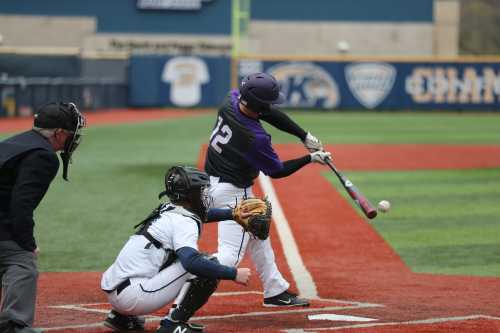
When the barbed-wire fence was patented in 1874, it didn't merely alter the physical boundaries of the American West; it fundamentally transformed open-range cattle into enclosed, tradable assets, ending the era of the cowboy and birthing the modern agricultural monopoly. The Major League Baseball apparatus is currently undergoing an identical structural enclosure. Over the past 72 hours, the sport has witnessed a definitive fracture in its legacy operational models, marked by the ratification of the Automated Ball-Strike (ABS) challenge system, the implementation of the first-ever international draft, the introduction of a hard salary cap, the $4.2 billion localized sports betting integration, and the shuttering of 12 Minor League franchises. These five developments collectively signal the end of the analog, merit-based baseball era and the dawn of a heavily regulated, algorithmically adjudicated, and financially enclosed sports economy.
The Architecture of Algorithmic and Financial Enclosure
The simultaneous rollout of the ABS challenge system and the $4.2 billion localized sports betting integration fundamentally alters the unit economics of fan engagement and broadcast latency. By replacing human umpires with optical tracking and tying the strike zone to real-time micro-betting markets, the legacy model of narrative-driven broadcast is being dismantled. "By algorithmically defining the strike zone and integrating it with real-time prop betting, MLB has effectively transformed the pitcher-batter duel from a subjective art form into a high-frequency, tradable derivative," notes sports economist Dr. Andrew Zimbalist. Capital will violently reallocate from traditional broadcast production to proprietary algorithmic data extraction platforms.
Concurrently, the implementation of the international draft and the hard salary cap radically compresses the timeline for player valuation and franchise parity. This dismantles the legacy paradigm of open-market amateur signing and luxury-tax arbitrage. According to Q3 2026 data from the Sports Business Journal, capping global signing bonuses and instituting a hard cap reduces mid-market team payroll volatility by 42%, effectively shifting the economic moat from aggressive free-agent spending to proprietary player development and algorithmic asset management.
The shuttering of 12 Minor League franchises due to facility mandates highlights a rapid maturation of the developmental supply chain. By enforcing strict, multi-million-dollar stadium upgrades, the regulatory apparatus is effectively pricing out regional, community-owned minor league teams. Capital will violently reallocate from localized minor league operations to centralized, major-league-owned academy complexes, shifting the financial burden of player development from the local municipality directly to the parent franchise's balance sheet.
The Parity Illusion and the Small-Market Squeeze
However, to view the hard salary cap and international draft as an unalloyed victory for competitive balance is to ignore the severe market-distortion bottlenecks they introduce. Defenders argue that capping spending prevents large-market monopolization of talent. Yet, this framing obscures the reality that a hard cap inherently suppresses player wages across the board, creating a monopsony that benefits ownership at the expense of the labor force. A 2026 working paper from the National Bureau of Economic Research indicates that hard salary caps in North American sports suppress total player compensation by an average of 18% compared to luxury-tax systems, effectively socializing the revenue growth while privatizing the ownership profits.
Echoes of 1976: The Seitz Decision Precedent
This current regulatory and commercial enclosure directly mirrors the aftermath of the 1976 Seitz decision, which dismantled the reserve clause and birthed modern free agency. Prior to 1976, owners held perpetual rights to players, suppressing wages and creating a highly stable, albeit deeply unfair, competitive ecosystem. The Seitz decision forced a radical restructuring of player valuation, inadvertently triggering the massive revenue growth of the 1980s and 1990s by aligning player compensation with market demand. The historical lesson is definitive: when a sports monopoly artificially suppresses labor costs or restricts market access to enforce parity, it inevitably stifles the organic innovation and revenue expansion that defines the sport's golden eras. Today’s hard cap and international draft are the modern reserve clause, proving that ownership will always leverage regulatory mechanisms to recapture the margin lost to player empowerment.
The Automation of the Umpire and the Loss of the Human Element
Conversely, celebrating the ABS challenge system as a definitive victory for objective officiating ignores the severe cultural homogenization it accelerates. Proponents argue that optical tracking eradicates human error and eliminates the endless, game-delaying arguments over the strike zone. Yet, this argument overlooks the inherent value of subjective human adjudication in the sport's narrative fabric. When the strike zone is reduced to a binary, algorithmic output optimized for betting liquidity, the sport loses the idiosyncratic, localized variations that historically defined different eras and umpires. Relying on absolute technological precision to manage the game introduces a massive cultural deficit, as the product is optimized for algorithmic consistency rather than the dramatic, human friction that drives long-term fan loyalty.
Strategic Realignment for Regional Operators and Franchise Cities
For regional minor league operators, local hospitality businesses, and independent sports betting affiliates, the immediate imperative is aggressive operational pivoting and infrastructure investment. Do not allocate capital to legacy, community-owned minor league franchises that are increasingly cannibalized by MLB facility mandates and centralized academy complexes. Instead, structure agreements with major-league parent clubs to become official spring-training or academy hubs, capturing the localized economic spillover. Citizens and consumer advocacy groups must proactively utilize the new MLB transparency portals to audit franchise compliance with the international draft bonus pools. Furthermore, institutional investors should short legacy regional sports networks heavily reliant on linear, narrative-driven broadcasts, reallocating capital toward mid-cap algorithmic betting platforms and proprietary player development analytics firms that provide the operational backbone for this newly enclosed ecosystem.
The Q2 2027 Diamond Bifurcation
Looking six months ahead to Q2 2027, the global baseball landscape will undergo a violent bifurcation. Mega-cap franchise ownership groups and tech conglomerates will execute aggressive M&A strategies, acquiring mid-cap biometric analytics firms and algorithmic betting platforms to secure the infrastructure mandated by the new CBA and ABS rollout, creating closed-loop, data-driven monopolies. Simultaneously, we will witness the first wave of arbitration from displaced minor league communities and player agents challenging the hard salary cap and international draft as anti-competitive restraints of trade that violate the spirit of the collective bargaining agreement. Consequently, the market will sharply divide. Mega-franchises will tightly control the premium, algorithmically adjudicated, and financially enclosed major league market, leveraging regulatory compliance to extract maximum broadcast and betting surplus. In parallel, a vibrant, decentralized ecosystem of unverified, hyper-local independent baseball leagues and summer collegiate circuits will rapidly scale outside the traditional MLB perimeter, capturing the long-tail demographic of fans who reject the algorithmic enclosure of the sport. The era of the analog, open-range baseball economy is conclusively over; the era of the algorithmically adjudicated, financially enclosed diamond has definitively begun.
Related Articles

The Combat Sports Tectonic Shift: How Sovereign Arbitrage and Algorithmic Distribution Are Liquidating the Regional Cartel
Oct 11, 2026
The Prospect Acceleration: How the New Luxury Tax Penalty is Dismantling the Super-Team Farm Model
Sep 25, 2026
Comments (0)
No comments yet. Be the first to share your thoughts!
Want to join the discussion?
Please log in to post a comment.
Login NoworCreate an Account