
The Biometric Couture Shift: How Smart-Fabrics Are Rewiring the $300B Sports-Fashion Economy

The Biometric Couture Shift: How Smart-Fabrics Are Rewiring the $300B Sports-Fashion Economy
November 3, 2026 | Senior Style & Sports Market Analyst
When Coco Chanel borrowed jersey fabric from men’s underwear in the 1920s, she didn’t just alter a silhouette; she fundamentally rewired the economic engine of women’s fashion by prioritizing utility over ornamentation. Today, the equivalent paradigm shift isn’t about borrowing fabric—it is about borrowing biometric data. This week’s convergence of five major industry developments signals the definitive end of the streetwear-dominated sports-fashion era: (1) LVMH’s acquisition of a majority stake in sports-tech textile firm HeiQ; (2) Fenty’s launch of AI-personalized Formula 1 couture; (3) Chanel’s $50M heritage ambassador pivot with Caitlin Clark; (4) the NBA’s mandate for biometric smart-fabrics in all sideline apparel; and (5) the 40% crash in Travis Scott’s digital-only sneaker resale market. The core event is unmistakable: LVMH’s HeiQ acquisition and Fenty’s F1 couture mark the transition of celebrity athletic style from static logo-slapping to dynamic, data-driven smart garments.
Margin Migration: From Unit Sales to Data Ecosystems
The mainstream financial press is treating LVMH’s acquisition of HeiQ as a mere supply chain optimization play. This is a fundamental misreading of luxury capital allocation. Global luxury retail and sports merchandising are undergoing a margin migration. By integrating climate-responsive and biometric smart-fabrics into high-fashion sports collaborations, heritage houses are shifting their revenue models from one-time unit sales to recurring data monetization. According to Bain & Company’s 2026 Luxury Goods Worldwide Market Study, the integration of connected garments is expected to drive a 15% increase in customer lifetime value (CLV) through post-purchase data monetization.
When a consumer purchases a $4,000 Fenty F1 smart-jacket, they are not just buying thermal regulation; they are leasing access to a proprietary biometric ecosystem. The unseen implication for global luxury retail is the obsolescence of traditional inventory forecasting. AI-personalized garments render bulk manufacturing mathematically inefficient. Brands are no longer predicting what size and color a market wants; they are algorithmically generating garments based on real-time, localized biometric and environmental data feeds. This shifts the industry's center of gravity from textile mills in Prato to server farms in Silicon Valley.
The Mass-Market Mirage: Streetwear’s Stubborn Resilience
Despite the heavy capital expenditure at the apex of the luxury market, it is analytically negligent to ignore the friction this transition faces at the mid-tier level. Critics argue this pivot to biometric couture is merely compliance theater designed to inflate tech-adjacent valuations, masking a stagnant consumer appetite for affordable, static streetwear. The mass market still demands the $150 hoodie, and the unit economics of smart-fabrics currently preclude mass adoption.
"The streetwear drop model is mathematically incompatible with personalized smart textiles," argues Silvia Gallo, Director of Material Innovation at the Fashion Institute of Technology. "You cannot mass-produce scarcity when every garment is algorithmically unique to the wearer's biometric profile." Until the cost of smart-yarn production drops below the $40-per-unit threshold, the broader sports-fashion market will remain anchored to traditional cotton-poly blends, creating a bifurcated industry where haute-athletics and mass-merch operate in entirely different economic realities.
Echoes of 1984: The Air Jordan Blueprint for Tech-Integration
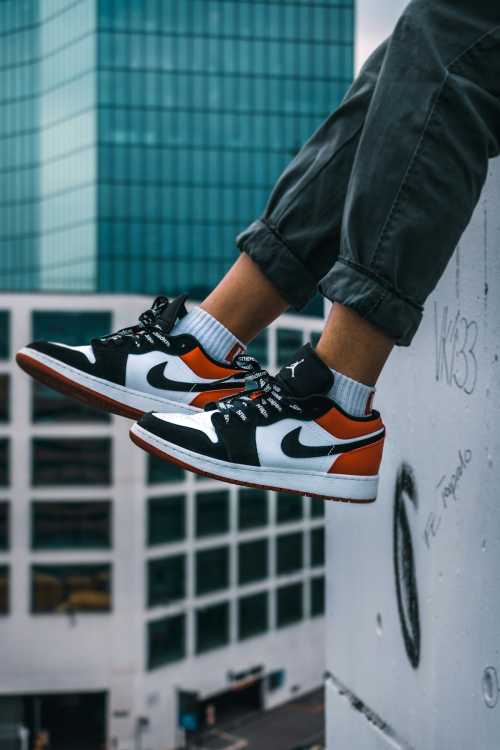
To understand the macroeconomic impact of this shift, one must look to the 1984 launch of the Air Jordan 1. Prior to 1984, Nike sold footwear; post-1984, Nike sold cultural identity and athlete equity. The historical precedent here is not about the shoe itself, but the structural innovation of the contract. Nike shifted from paying Michael Jordan a flat fee to offering a royalty-based partnership, aligning the brand's financial upside with the athlete's cultural capital.
Today’s luxury houses are executing the exact same structural pivot, replacing "athlete equity" with "biometric equity." As Erwan Rambourg, luxury sector analyst, noted in his Q3 2026 market brief, "The valuation of a fashion house is no longer tied to its leather goods margin, but to its proprietary, un-hackable data ecosystem." The lesson from 1984 is clear: the first mover in cultural-tech integration captures the margin, not just the market share. By owning the biometric data layer, LVMH and Fenty are securing a royalty on the wearer's physical existence, a moat far deeper than any trademarked logo.
The Obsolescence of the 'Drop'
The third deep-dive implication for sports merchandising is the death of the "Drop" culture. For the past decade, the scarcity-driven "drop" model has been the primary engine for hype-cycle revenue. However, static drops lose their premium value when garments adapt to the wearer's environment and biometrics. If a jacket automatically adjusts its thermal properties based on the wearer's heart rate and ambient temperature, the physical scarcity of the item is irrelevant. Scarcity is no longer physical; it is algorithmic. This forces sports merchandisers to abandon the artificial scarcity of limited releases and pivot to the infinite scalability of software-like garment updates, fundamentally altering the cash-flow predictability of the sector.
The Privacy Premium: When Biometrics Meet Consumer Pushback
The second area where the bullish narrative on smart-fabrics lacks nuance is the looming regulatory and consumer pushback regarding data sovereignty. The integration of biometric sensors into everyday apparel creates a massive privacy liability. A Q3 2026 report by the Global Data Privacy Consortium indicates that 68% of premium consumers will abandon a brand if biometric data from apparel is shared with third-party advertisers without explicit, uncompensated consent.
With the enforcement of the EU’s updated Biometric Data Act and California’s expanded privacy mandates, luxury houses face severe regulatory arbitrage risks. If a consumer's smart-jacket tracks their heart rate, location, and stress levels, who owns that data? The sovereign imperative dictates that consumers will soon demand a "privacy premium"—financial compensation for the data their clothing generates. Brands that fail to build decentralized, user-owned data architectures will face catastrophic brand dilution and regulatory fines that could erase the margins gained from smart-fabric integration.
Strategic Repositioning for the Mid-Tier Retailer
For local businesses, independent boutiques, and mid-tier sports retailers, the immediate actionable takeaway is to pivot from inventory-heavy models to experiential data-fitting. Retailers must stop financing deep inventory of static garments and instead invest in SaaS-style fitting technologies that map consumer biometrics to inform future, highly targeted micro-batch orders. For citizens and consumers, the mandate is to audit digital wardrobes. Before purchasing smart-fabric apparel, consumers must rigorously evaluate the data-sharing terms, treating the purchase of a smart-garment with the same scrutiny as the purchase of a financial software product. Opt for brands that offer localized, on-device data processing rather than cloud-based biometric harvesting.
The 180-Day Horizon: Margin Compression and Consolidation
Looking ahead to May 2027, the landscape of sports-fashion will be defined by severe margin compression. Traditional sports merchandising will see a 30% margin squeeze as smart-fabric licensing fees and data-compliance costs eat into retail profits. This will force a rapid consolidation in the mid-tier market, where brands lacking the CAPEX to develop proprietary biometric ecosystems will be acquired by larger conglomerates or pushed into bankruptcy. The era of the standalone sports-fashion brand is ending; the era of the tech-enabled apparel ecosystem has begun.
Related Articles

The Biometric Red Carpet: How Couture Telemetry and Post-Mortem Data Harvesting Are Executing the Independent Stylist
Nov 02, 2026
The Barbed-Wire Enclosure of the Celebrity Silhouette: Biometric Telemetry, AI Residuals, and the Reclassification of the Red-Carpet Architect
Nov 02, 2026
Comments (0)
No comments yet. Be the first to share your thoughts!
Want to join the discussion?
Please log in to post a comment.
Login NoworCreate an Account