
The Broadcast Illusion: How Awards Shows and Live Events Are quietly Rewiring Entertainment Economics

Like a legacy retail chain that continues to measure success by foot traffic while its most profitable customers shop exclusively online, the traditional awards and events industry is clinging to broadcast viewership metrics that no longer reflect its true cultural or economic footprint.
The Core Metric Paradox
The 2026 awards season concluded with a paradoxical landscape: while the 98th Academy Awards drew 17.9 million viewers, this figure reflects a broader ratings downtick across virtually every other major ceremony www.thewrap.com . Concurrently, structural shifts are accelerating, with legacy institutions like the SAG Awards rebranding to "The Actor" to modernize their identity, and early negotiations signaling a potential migration of top-tier awards away from traditional broadcast television toward digital platforms like YouTube www.facebook.com , www.facebook.com .
The Decoupling of Prestige from Linear Ratings
Mainstream media fixation on Nielsen ratings obscures a fundamental decoupling of cultural prestige from linear television metrics. The industry is quietly transitioning into a fragmented, multi-platform ecosystem where "viewership" is measured in cumulative streaming hours, social media clip virality, and second-screen engagement rather than live broadcast tuning. As traditional broadcast ratings decline, the real value of an awards show now lies in its ability to generate weeks of ancillary content, driving subscription retention for streaming partners and sustaining "For Your Consideration" campaigns long after the ceremony concludes adimpact.com . The televised broadcast is no longer the product; it is merely the loss-leader marketing engine for a broader, year-round content ecosystem.
The Live Events Economic Anchor
While televised ceremonies struggle with audience fragmentation, the physical infrastructure of awards and live events has become an indispensable economic engine. The live events industry currently employs over 12 million people and contributes over $1 trillion annually to the global economy www.facebook.com . For local economies, an awards gala or industry summit is no longer just a vanity project; it is a high-yield catalyst. Data indicates that 48% of marketers now dedicate at least 21% of their total marketing budget to in-person events, elevating live gatherings from supplemental activations to primary customer acquisition channels www.kandephotobooths.com . This financial gravity ensures that even if television audiences shrink, the physical gatherings will remain heavily capitalized.
The Sponsorship Paradigm Shift
The financial architecture underpinning these events is undergoing a radical recalibration. Red carpet sponsorships and step-and-repeat branding are no longer passive logo placements; they are integrated, data-driven experiential marketing campaigns. Brands are demanding measurable return on investment, forcing event organizers to pivot from selling mere "exposure" to offering comprehensive audience analytics, VIP experiential access, and post-event digital content rights. This shift pressures smaller, niche award shows to either professionalize their sponsorship packages with robust data tracking or face obsolescence as corporate budgets consolidate around mega-events with proven demographic reach.
Echoes of the Early 2000s VMA Disruption
This current inflection point mirrors the television industry's disruption in the early 2000s, specifically the rise of the MTV Video Music Awards as a counter-cultural, youth-driven alternative to the staid Grammy Awards. Just as the VMAs leveraged controversy, live stunts, and non-traditional broadcasting to capture a demographic that had abandoned legacy formats, today's awards shows are being forced to abandon the rigid, three-hour broadcast template. The historical lesson is clear: when a format becomes predictable and disconnected from its audience's consumption habits, survival requires radical structural innovation, not merely cosmetic updates to the hosting lineup or category additions.
The Streaming Stabilization Effect
Critics of the "linear TV death" narrative argue that migrating awards shows to streaming platforms like YouTube or exclusive streaming network deals does not signify decline, but rather a necessary stabilization of viewership. Proponents note that streaming provides global, on-demand access, eliminating geographic broadcast restrictions and capturing international audiences that linear TV cannot measure effectively. From this perspective, the fragmentation of viewership is actually an expansion of the total addressable market, allowing niche awards to find highly targeted, engaged global audiences rather than competing for dwindling domestic cable subscribers.
The Democratization of Industry Recognition
Furthermore, some industry analysts contend that the rebranding and format changes of legacy awards represent a positive democratization of industry recognition rather than a desperate grasp for relevance. This viewpoint suggests that stripping away archaic, gatekept traditions allows these institutions to better reflect the diverse, globalized reality of modern entertainment. By aligning their identity with the actual workers they honor, these organizations are building long-term cultural legitimacy that will outlast temporary fluctuations in broadcast ratings, fostering deeper loyalty among the next generation of industry professionals.
Strategic Imperatives for Stakeholders
For local businesses and hospitality operators, the immediate directive is to proactively package "awards season" or "industry summit" hospitality bundles, targeting mid-tier events that offer higher ROI for attending corporations than bloated mega-galas. Citizens and independent creators should leverage the ancillary content ecosystem by producing targeted, short-form analysis and reaction content during these events, capitalizing on the algorithmic surge in awards-related search traffic. Event organizers must immediately audit their sponsorship decks, replacing vague "brand exposure" metrics with concrete, post-event data on attendee demographics, social media impressions, and direct lead generation.
The Six-Month Horizon
Within six months, the awards and events landscape will experience accelerated format fragmentation. We will likely see the first major, legacy "Big Four" entertainment award ceremony announce a permanent, exclusive migration to a digital-first streaming platform, permanently severing its traditional broadcast television contract. Simultaneously, the live events sector will see a surge in micro-award ceremonies and industry-specific summits, as brands seek highly targeted, lower-cost alternatives to traditional galas. The era of the monolithic, three-hour televised awards show is ending; the next phase will be defined by modular, globally distributed, and heavily monetized experiential events.
Key Data Points: The live events industry employs over 12 million people and contributes over $1 trillion annually to the global economy www.facebook.com . 48% of marketers dedicate at least 21% of their marketing budget to in-person events www.kandephotobooths.com . The 98th Academy Awards drew 17.9 million viewers, reflecting a broader industry ratings downtick www.thewrap.com .
Related Articles

The Decentralized Podium: How Algorithmic Meritocracy, Blind Lotteries, and Token-Gated Footprints Are Dismantling the Legacy Events Monopoly
Oct 16, 2026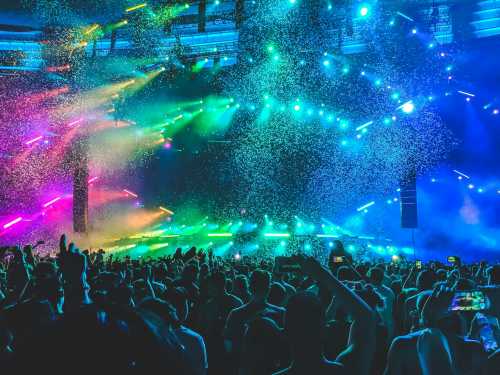
The Prestige Cartel: How Blockchain Mandates, Spatial Computing, and Sovereign Financing are Obliterating the Legacy Awards Paradigm
Oct 15, 2026
Comments (0)
No comments yet. Be the first to share your thoughts!
Want to join the discussion?
Please log in to post a comment.
Login NoworCreate an Account