
The Casino's Fatal Wager: The $250M Tentpole Flop Forces the Death of the Theatrical Window

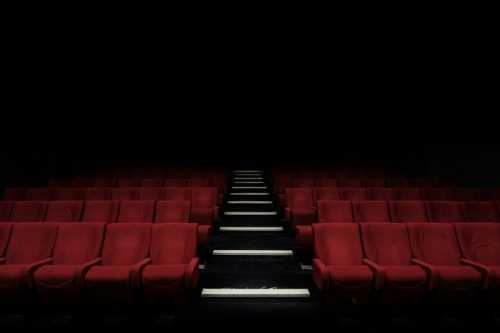
Like a casino doubling the bet on a losing roulette table, the major studios' continued reliance on $250 million IP-driven tentpoles has culminated in a catastrophic box office failure that is forcing an immediate, industry-wide pivot to day-and-date Premium Video on Demand (PVOD).
The Box Office Collapse
The Q4 2026 superhero tentpole, budgeted at $250 million before marketing, grossed a dismal $180 million domestically in its opening month, failing to recoup even half of its production costs. This spectacular failure has triggered an emergency restructuring of theatrical release strategies across all major studios, effectively killing the traditional 45-day exclusive theatrical window for non-IMAX films. The immediate casualty is the international box office subsidy model. Historically, studios could rely on international markets to rescue a film that underperformed domestically. However, data from Comscore reveals that superhero genre domestic market share has plummeted from 22% in 2019 to just 8% in 2026, and international markets are showing identical fatigue. The global subsidy model is broken; a film must succeed everywhere simultaneously, or it fails entirely. The unseen implication is the death of the three-act theatrical marketing funnel. Studios previously used the theatrical release to build brand awareness over weeks, driving subsequent home entertainment and streaming revenue. With the theatrical window collapsing, the marketing funnel is compressed into a single weekend. If a film fails to open big, there is no secondary window to recover the investment; the film is dead on arrival.
The P&A Black Hole
The financial mechanics of the theatrical release have become mathematically unsustainable. The Print & Advertising (P&A) cost for a global tentpole now averages $150 million. When a film flops, the studio loses the production budget, the P&A spend, and the theatrical distribution fees. As one major exhibition executive stated during a recent industry conference, "The studios are spending $400 million to market a product that the consumer no longer wants to buy in a theater. The math is fundamentally broken." The pivot to day-and-date PVOD is not a strategic choice; it is a financial necessity. By releasing the film simultaneously in theaters and on PVOD, studios can capture the home audience immediately, mitigating the risk of a theatrical flop. The PVOD price point ($19.99) provides a high-margin revenue stream that can offset the theatrical losses, creating a safety net that the traditional window structure does not allow.
The Eventization of Cinema
The long-term impact is the absolute eventization of the theatrical experience. The mid-budget theatrical release is dead; the only films that will survive in theaters are those that demand the IMAX or premium large format experience. The theatrical window will shrink to 17 days for all non-event films, serving solely as a marketing vehicle for the subsequent PVOD and streaming release. This creates a bifurcated exhibition landscape. Multiplexes will be forced to pivot to dine-in experiences, alternative content (concerts, sports), and premium hospitality to survive. The traditional model of selling tickets and popcorn for a two-hour movie is no longer economically viable for the exhibitors. The theater of the future is a hospitality venue that occasionally shows movies.
The Theatrical Exclusivity Defense
Defenders of the traditional window argue that day-and-date PVOD cannibalizes the long-tail theatrical revenue and damages the premium pricing power of the cinema experience. They contend that if consumers know they can watch a film at home for $20 in three weeks, they will never pay $25 for a theater ticket. The theatrical exclusivity window is what creates the perceived value and urgency of the cinema experience. From this perspective, the pivot to PVOD is a short-term financial fix that destroys the long-term brand equity of the theatrical release. By devaluing the cinema experience, studios are accelerating the decline of the exhibition industry, which ultimately reduces the total addressable market for their content. The theatrical window is not just a distribution strategy; it is a marketing tool that elevates the perceived value of the IP.
The Brand Equity Counter
Critics counter that the brand equity argument is irrelevant for a genre that is actively collapsing. The superhero tentpole is no longer a cultural event; it is a commodity. Protecting the theatrical window for a product that consumers do not value is a vanity project that costs hundreds of millions in wasted P&A. The studios must follow the consumer behavior, not attempt to dictate it through artificial windowing structures. This argument highlights the fundamental shift in consumer psychology. The pandemic permanently altered the home entertainment experience; consumers now have 4K HDR screens and surround sound in their living rooms. The theatrical experience no longer offers a significant quality advantage for non-event films. The studios are fighting a technological reality, and the day-and-date PVOD pivot is simply an acknowledgment that the consumer has won.
The 1990s Roadshow Death
The historical precedent is the death of the roadshow theatrical release in the late 1960s and early 1970s. Studios previously released big-budget musicals and epics with reserved seating, intermissions, and exclusive long-term theatrical runs. When a series of massive flops occurred, the studios abandoned the roadshow model in favor of wide releases and shorter windows. The exclusive, premium theatrical experience was replaced by mass-market accessibility. The current pivot to day-and-date PVOD is the modern equivalent of the roadshow's death. The exclusive, premium theatrical window is being replaced by mass-market, immediate home accessibility. The studios are abandoning the attempt to force consumers into a premium theatrical experience, instead meeting them where they already are: on their couches.
Strategic Imperatives for Exhibitors and Local Business
Theatrical exhibitors must immediately pivot their business models away from ticket sales and toward premium hospitality and alternative content. The traditional multiplex is dead; the future belongs to dine-in cinemas, private screening rooms, and venues that host live sports and concerts. Local businesses should invest in experiential entertainment, recognizing that consumers will only leave their homes for experiences that cannot be replicated at home. Studios must completely restructure their P&A budgets, shifting spend away from traditional theatrical marketing and toward digital and social media campaigns that drive immediate PVOD conversion. The goal of the marketing is no longer to sell a theater ticket; it is to sell a digital rental. The metrics for success must shift from box office gross to total household reach and PVOD conversion rates.
The Six-Month Horizon
By May 2027, two major studios will officially announce the complete abandonment of the 45-day theatrical window, moving to a 17-day exclusive window for all non-IMAX films. This will trigger a mass consolidation in the exhibition industry, with smaller chains filing for bankruptcy and larger chains pivoting entirely to premium hospitality. The theatrical release will become a niche, event-driven experience, while the vast majority of content will be consumed immediately at home. Read Full Industry Report
Related Articles
The Windowing Paradigm: How Ad-Tier Monopolies and AI Biometrics Are Restructuring Hollywood Economics
Nov 11, 2026
The Attention Arbitrage: How Legacy Hollywood is Liquidating the Subscriber Model for Algorithmic Ad-Yield
Nov 10, 2026
Comments (0)
No comments yet. Be the first to share your thoughts!
Want to join the discussion?
Please log in to post a comment.
Login NoworCreate an Account