
The Cultural Liquidity Crisis: AI Regulation, Broadcast Attrition, and the Live Events Reckoning

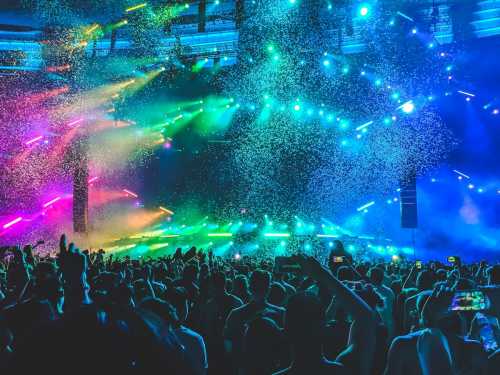
Like a legacy financial institution facing a decentralized fintech revolution, the traditional awards and live events ecosystem is experiencing a severe liquidity crisis of cultural relevance and economic viability. The foundational mechanics of how the entertainment industry celebrates, broadcasts, and monetizes live spectacle are fracturing under the weight of technological disruption, regulatory intervention, and shifting consumer economics.
The Broadcast Attrition and the Streaming Mirage
The 2026 awards season has crystallized a stark reality: linear broadcast viewership for major ceremonies is in structural decline, with the 98th Academy Awards drawing approximately 17.9 million viewers, marking a continued erosion of historical dominance [[42]]. While networks pivot to streaming integrations to capture fragmented audiences, this transition masks a deeper systemic issue. Mainstream media frequently celebrates streaming growth as a successful adaptation, ignoring that digital viewership lacks the unified, high-value advertising metrics that traditionally subsidized these lavish productions. The unbundling of the live audience fractures the cultural monoculture, transforming awards shows from must-see communal events into asynchronous, niche content streams that struggle to justify nine-figure production budgets.
The Algorithmic Labor Shift in Live Production
Simultaneously, the live event and production sectors are navigating a profound labor recalibration. As of July 1, 2026, SAG-AFTRA’s AI enforcement provisions entered an active phase, strictly prohibiting studios and event producers from utilizing AI-generated replicas of performers without explicit consent [[25]]. This regulatory firewall extends to IATSE workers, who are increasingly demanding contractual protections against algorithmic displacement in stage design, lighting, and post-production workflows [[27]].
The Innovation Defense: Proponents of generative AI in live events argue that these tools democratize high-fidelity production, allowing mid-tier festivals and independent award shows to achieve blockbuster visual spectacles at a fraction of the traditional cost. They contend that union restrictions stifle innovation and price smaller productions out of the market. However, this perspective fundamentally misreads the power dynamics of the industry. Without strict contractual guardrails, the deployment of AI in live events does not democratize production; it consolidates it. It allows major conglomerates to bypass unionized labor pools entirely, replacing highly skilled, local event technicians with centralized, automated software licenses, thereby hollowing out the middle class of the entertainment workforce.
Regional Festival Contraction and the Sustainability Mandate
Beyond the Hollywood epicenter, the broader live events industry is confronting a dual crisis of macroeconomic pressure and regulatory compliance. Regional music festivals are facing unprecedented cancellation rates, with recent terminations causing localized economic losses exceeding $20 million per event [[32]]. Concurrently, corporate event planners and major festival organizers are being forced to integrate stringent sustainability mandates, shifting events from a mere expense line item to a complex, compliance-heavy growth strategy [[12]].
The Environmental Imperative: Industry advocates for rapid sustainability mandates argue that the live events sector, historically a massive contributor to carbon emissions and single-use waste, must bear the cost of environmental correction to ensure long-term planetary viability. They assert that the short-term economic pain of festival cancellations is a necessary market correction. Yet, this view ignores the disproportionate impact on regional economies. When a major festival cancels due to the compounded costs of green compliance and inflationary supply chains, it is not the multinational corporate sponsor that suffers most; it is the local hospitality workers, independent vendors, and municipal tax bases that rely on these transient economic injections to survive the fiscal year.
Echoes of the 2007-2008 Labor Reckoning
This current inflection point directly mirrors the structural upheaval of the 2007-2008 Writers Guild of America strike. Just as the 2008 strike was fundamentally a battle over the undefined economic value of "new media" and digital residuals, the 2026 event landscape is a fight over the ownership of digital likeness and the valuation of live, un-automated human performance. The historical lesson is unequivocal: when a creative industry attempts to deploy new technology to circumvent established labor compensation models without a negotiated framework, the result is not seamless innovation, but protracted institutional paralysis and lasting reputational damage.
Strategic Imperatives for Stakeholders
For Regional Event Organizers and Municipalities: The immediate operational imperative is to diversify revenue models beyond ticket sales and traditional sponsorships. Local governments must establish "event resilience funds" to subsidize the compliance costs of sustainability mandates for mid-tier festivals, recognizing them as critical economic infrastructure rather than discretionary entertainment.
For Production Companies and Unions: Labor representatives must proactively draft "Algorithmic Impact Assessments" into all 2026-2027 collective bargaining agreements. Failing to define the boundaries of AI-generated content in live events will result in irreversible erosion of jurisdictional work rules and wage standards [[23]].
For Broadcasters and Rights Holders: Networks must abandon the pretense that linear television can recapture its 20th-century monopoly. Instead, they should restructure awards programming as interactive, multi-platform experiences that offer exclusive, behind-the-scenes access, thereby creating a new, defensible value proposition for the streaming era.
The Six-Month Horizon
Within the next six months, the awards and live events landscape will undergo a definitive bifurcation. We will witness the formalization of "hybrid compliance" protocols, where major award shows will be legally required to disclose the percentage of AI-generated versus human-executed production elements, mirroring emerging media transparency laws. Furthermore, the regional festival market will experience accelerated consolidation, as only those entities backed by private equity or major corporate sponsors will possess the capital to absorb the rising costs of green mandates and union-compliant labor. The era of the frictionless, low-cost spectacle is concluding, replaced by a highly regulated, transparent, and labor-protected events ecosystem.
Related Articles

The Illusion of the Digital Panacea: How AI and Web3 Are Dismantling the 2026 Awards Economy
Sep 28, 2026
The Algorithmic Ledger of Prestige: How Quotas, Biometric Ticketing, and IP Valuations are Dismantling the Legacy Awards and Live Events Economy
Sep 25, 2026
Comments (0)
No comments yet. Be the first to share your thoughts!
Want to join the discussion?
Please log in to post a comment.
Login NoworCreate an Account