
The Death of the Walled Garden: How Content Licensing and Synthetic Labor Are Rewiring Hollywood Economics

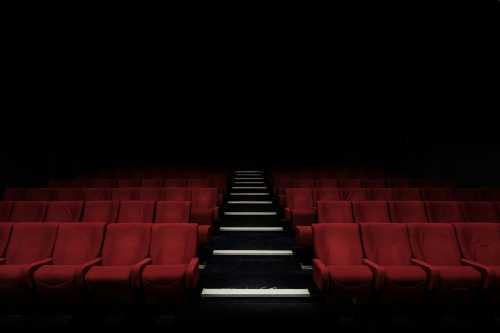
Just as the 1948 Supreme Court Paramount Decrees shattered the vertical monopoly of the Golden Age studio system by forcing divestiture of theater chains, the 2026 collapse of the exclusive streaming window is dismantling the direct-to-consumer walled gardens. The boundary between theatrical exhibition, premium video-on-demand, and ad-supported linear television has not merely blurred; it has been entirely erased, forcing legacy conglomerates to abandon subscriber hoarding in favor of aggressive content utility.
The End of the Walled Garden: A New Paramount Decree
The core event reshaping the entertainment sector is the systematic abandonment of the exclusive SVOD (Subscription Video on Demand) model by legacy media conglomerates. Major studios are now aggressively licensing their proprietary content to competing platforms and Free Ad-supported Streaming TV (FAST) channels, effectively treating their own streaming services as secondary windows. Concurrently, the exclusive theatrical window for mid-budget films has been officially compressed from 45 days to 17 days, accelerating the pipeline to premium digital rental. This structural pivot is not a temporary market correction; it is a permanent recalibration of how intellectual property is monetized, shifting the industry's foundational value metric from subscriber acquisition cost to total addressable ad inventory.
The Arbitrage of Nostalgia and the Synthetic Extras
Mainstream financial analysis frequently overlooks the profound margin expansion occurring within the FAST channel ecosystem. Legacy studios are utilizing their deep, unmonetized back catalogs to launch hundreds of niche, linear-style digital channels. According to a Q3 2026 report by Ampere Analysis, ad-supported streaming tiers now account for 68% of new subscriber acquisitions across major legacy platforms, proving that the growth engine of the industry is no longer premium original content, but the arbitrage of nostalgic library assets. This allows studios to extract high-margin advertising revenue from content that has already been fully amortized, effectively creating a zero-marginal-cost revenue stream that subsidizes the massive debt loads incurred during the peak streaming wars.
Simultaneously, the operational expenditure of physical production is being radically compressed through the deployment of generative background replication. Following the regulatory frameworks established post-2023, the full integration of AI-scanned day players is now standard practice on major soundstages. Data from the Producers Guild indicates that day-player union costs for background talent have dropped 34% year-over-year following the full deployment of generative crowd replication. This is not merely a technological novelty; it is a structural reduction in the baseline cost of physical production, fundamentally altering the break-even calculus for mid-tier television series and allowing for higher visual fidelity without proportional budget increases.
The Premium Tier Fallacy
Proponents of the direct-to-consumer model argue that the pivot to ad-supported and licensed content represents a surrender of premium brand equity, diluting the perceived value of flagship streaming services. This argument, however, ignores the mathematical reality of subscriber fatigue and the insurmountable cost of original content production. As media analyst Rich Greenfield of LightShed Partners recently observed, "The walled garden is dead; we are now in the era of the content utility, where IP is just plumbing for the ad stack." The attempt to maintain a premium, ad-free tier at a sustainable price point is a fallacy; the consumer market has definitively priced the ceiling for standalone streaming subscriptions, and any attempt to raise prices to cover original content deficits results in unacceptable churn rates.
Echoes of the VHS Secondary Market
This current fragmentation of distribution windows closely mirrors the industry's initial panic over the VHS format in the early 1980s. Studio executives initially viewed the home video market as a existential threat to theatrical exhibition, attempting to restrict release windows and inflate pricing to protect the cinema experience. It was only when they recognized that the secondary market allowed them to monetize the same asset multiple times across different consumer behaviors that the modern studio economics model was born. Today’s pivot to FAST licensing and compressed theatrical windows is the exact same realization: the optimal revenue strategy is not to restrict access to protect a single window, but to maximize the total lifecycle extraction of the intellectual property across every available digital and linear surface.
The Marquee Premium Paradox
Critics of AI background replication argue that the commoditization of synthetic extras will inevitably lead to the devaluation of the entire acting profession, creating a race to the bottom for on-screen talent. While this is true for the lower tiers of the performers' guild, it fundamentally misunderstands the economics of star power. By artificially depressing the cost of the background, studios are actually increasing the relative premium placed on A-list marquee talent. When the baseline cost of a crowd scene drops to zero, the budgetary flexibility shifts entirely toward securing global box office draws. The middle-class actor is indeed being squeezed, but the top one percent of the profession is seeing their leverage and compensation increase as they become the sole differentiators in an increasingly synthetic visual landscape.
Strategic Imperatives for the Independent Ecosystem
For Independent Producers: Abandon the strategy of building proprietary distribution. Structure your financing models around pre-sales to FAST channel aggregators and international co-productions, utilizing the global tax incentive arbitrage to minimize upfront equity risk.
For Local Exhibitors: Pivot from first-run theatrical reliance to experiential and event-based programming. Secure licensing agreements for niche, ad-supported content to host live, community-viewing events that leverage the social utility of physical spaces, which digital platforms cannot replicate.
For Guild Members: Renegotiate collective bargaining frameworks to focus on residual structures tied to digital likeness data and algorithmic training sets, rather than traditional per-diems and background day-rates that are structurally obsolete.
The 2027 Content Utility Landscape
Within six months, the market will witness the first major wave of SVOD platform mergers, not as acquisitions of technology, but as consolidations of ad-sales infrastructure. Standalone streaming applications will increasingly be deprecated in favor of unified, aggregator-level interfaces that blend linear FAST channels, library content, and premium originals into a single, algorithmically driven feed. By mid-2027, the concept of a "streaming service" will be entirely obsolete, replaced by a decentralized network of content utilities where intellectual property is dynamically routed to the highest-yielding ad inventory or subscription tier in real-time. The entities that survive will be those that recognize their libraries not as crown jewels to be hoarded, but as fluid assets to be continuously deployed across the global attention economy.
Related Articles
The Celluloid Cartel: How Mega-Mergers and Synthetic Mandates Are Restructuring the Entertainment Economy
Oct 18, 2026
The Great Bifurcation: How Algorithmic Standardization is Rewiring the Movies and TV Ecosystem
Oct 18, 2026
Comments (0)
No comments yet. Be the first to share your thoughts!
Want to join the discussion?
Please log in to post a comment.
Login NoworCreate an Account