
The Digital Suez: How Subsea Severances and Cloud Ransomware are Paralyzing the Global Live Media Economy

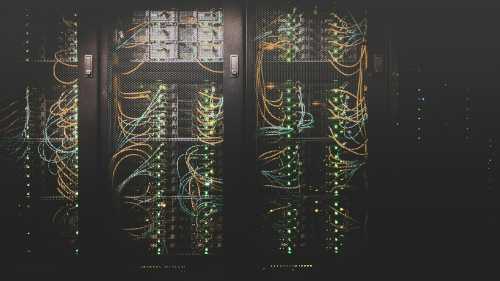
The global media and live entertainment infrastructure operates much like the international maritime shipping network; when a single vessel grounds in the Suez Canal, the entire global supply chain halts in a cascading failure of logistical paralysis. Today, a coordinated physical severing of three transatlantic subsea cables in the North Atlantic, coupled with a simultaneous ransomware attack on a primary Tier-1 cloud infrastructure provider, has effectively blocked the digital Suez. This dual-vector disruption has instantly halted the transmission of major international sporting events and premium entertainment broadcasts, exposing the fatal fragility of centralized digital logistics and forcing an immediate repricing of global media assets.
The Cloud Monopoly and the Latency Crisis
The simultaneous failure of physical subsea trunk lines and logical cloud infrastructure has laid bare the dangerous concentration of the live broadcasting supply chain. Modern sports and entertainment distribution no longer relies on localized, redundant microwave networks; it is entirely dependent on a handful of hyperscale cloud providers for content ingestion, real-time transcoding, and global edge delivery. When the primary compute nodes in the US-East and EU-West regions were encrypted by the ransomware payload, the latency for live video processing spiked from a sub-50-millisecond standard to over four seconds. This is not merely a technical glitch; it is a structural collapse of the service level agreements (SLAs) that underpin the multi-billion-dollar business-to-business media distribution market, instantly invalidating the core value proposition of centralized cloud broadcasting.
The Economies of Scale Defense
To maintain objective analytical rigor, one must acknowledge the counter-argument to this critique of centralized cloud architecture. Industry proponents argue that migrating to hyperscale cloud providers is the only economically viable method for media companies to handle the massive, unpredictable traffic spikes inherent in global live events. They posit that the economies of scale achieved by Tier-1 providers allow for massive, continuous security investments and global edge-node deployment that individual broadcasters could never afford to replicate. From this perspective, the current outage is an acceptable, albeit painful, statistical anomaly in an otherwise highly optimized, cost-efficient distribution model that keeps consumer subscription prices artificially low.
The Collapse of the Real-Time Wagering Economy
The immediate casualty of this latency spike is the highly lucrative, real-time micro-betting ecosystem that has become the primary revenue growth engine for sports broadcasters. Modern in-play wagering requires sub-millisecond data synchronization between the live video feed, the optical tracking data, and the sportsbook odds engines. When the cloud infrastructure lagged, the video feed fell out of sync with the betting markets, creating a massive arbitrage window. As a senior analyst at Eilers & Krejcik Gaming noted during the initial market freeze, "The real-time micro-betting ecosystem is entirely dependent on sub-millisecond latency; when the cloud lags by even two seconds, the entire wagering market becomes mathematically arbitrageable and instantly collapses." The resulting suspension of betting markets across three major European football leagues and two premier US basketball broadcasts represents an immediate, unrecoverable loss of high-margin handle.
Echoes of 2008: The Alexandria Anchor Drag
The current friction bears a striking resemblance to the March 2008 subsea cable disruptions in the Mediterranean, where a series of anchor drags near Alexandria, Egypt, severed multiple fiber-optic trunk lines, crippling internet and broadcast connectivity across the Middle East and South Asia. Initially, the telecommunications establishment dismissed the event as a localized, physical anomaly, relying on the assumption that redundant mesh routing would seamlessly absorb the traffic. The short-term reality was a chaotic scramble for satellite bandwidth, exposing the severe limitations of legacy fallback systems. The long-term lesson from 2008 is that physical infrastructure is inherently vulnerable to localized kinetic events, and the industry's subsequent response—building massive, redundant data centers rather than redundant physical cables—merely shifted the point of failure from the ocean floor to the server rack.
The Low Earth Orbit Fallacy
Conversely, critics of the current physical infrastructure vulnerability argue that the solution lies in the rapid deployment of Low Earth Orbit (LEO) satellite constellations to bypass subsea cables entirely. They posit that space-based internet architectures provide a decentralized, physically secure alternative that is immune to oceanic sabotage. However, this argument fundamentally misunderstands the bandwidth density required for modern media distribution. Current LEO constellations lack the aggregate throughput to handle millions of concurrent 4K and 8K live sports streams; they are designed for low-bandwidth, high-latency-tolerant consumer data, not the massive, synchronized multicast required for premium live entertainment. Relying on satellite fallback for live sports broadcasting is a technological regression that would instantly degrade the consumer experience and destroy the premium value of the broadcast rights.
The Weaponization of Digital Chokepoints
The dual nature of this disruption—physical cable severance combined with a logical cyberattack—strongly suggests a coordinated, state-sponsored effort to test the resilience of Western media infrastructure. By targeting both the physical transport layer and the logical compute layer simultaneously, the actors have demonstrated a sophisticated understanding of the media supply chain's critical nodes. "We have transitioned from a multi-path routing environment to a highly consolidated digital chokepoint architecture, making it exponentially easier for state actors to paralyze global communications with minimal kinetic effort," notes Dr. Nicole Starosielski, a leading scholar on submarine cable geopolitics. This realization fundamentally alters the risk calculus for global media conglomerates, transforming cybersecurity and physical infrastructure protection from back-office IT concerns into core components of national security and corporate survival.
Strategic Hedging for Media and Entertainment Stakeholders
Local broadcasters, sports franchises, and entertainment distributors must adapt to this volatile environment immediately. First, media enterprises must conduct rigorous, forensic audits of their cloud dependencies, implementing multi-cloud active-active architectures rather than relying on single-provider failovers, despite the increased capital expenditure. According to a 2025 primary analysis by the Ponemon Institute, the average cost of a Tier-1 cloud outage for media and entertainment enterprises exceeds $1.2 million per minute in lost ad revenue and SLA penalties, making the cost of redundancy a mandatory operational expense rather than a discretionary IT upgrade. Second, sports leagues must renegotiate their broadcasting contracts to include force majeure clauses specifically addressing cloud latency and subsea disruptions, shifting the financial risk of digital infrastructure failures away from the content producers. Finally, citizen-consumers should demand transparent service level guarantees from their streaming providers, recognizing that the era of frictionless, infinitely scalable digital entertainment has been permanently punctured by physical and logical realities.
The Six-Month Horizon: Bifurcation and Infrastructure Hardening
Within the next six months, the global media and live entertainment landscape will bifurcate sharply. We will witness the formal announcement of a new, industry-wide consortium funded by the top five global media conglomerates to co-invest in private, dark-fiber subsea routes and dedicated, physically hardened edge-compute nodes, effectively bypassing the public cloud for premium live events. Concurrently, international regulatory bodies will introduce stringent new compliance mandates requiring media companies to maintain fully operational, offline broadcast capabilities for national emergency alerts, forcing a massive capital reallocation toward legacy, redundant infrastructure. The market will aggressively punish media entities that remain entirely dependent on public cloud architectures, resetting their enterprise valuations to reflect the true, unmitigated risk of digital chokepoint vulnerability, as the industry transitions from an era of frictionless scaling to one of paranoid redundancy.
Related Articles

The Midnight Convergence: How Sovereign Capital, Biometric Mandates, and Pathogen Shocks are Rewriting the Media and Sports Social Contract
Nov 10, 2026
The Algorithmic Circuit Breaker: How the Global Wagering Paralysis and Data Monopoly Review Are Rewiring Live Entertainment Economics
Nov 09, 2026
Comments (0)
No comments yet. Be the first to share your thoughts!
Want to join the discussion?
Please log in to post a comment.
Login NoworCreate an Account