
The Exclusion Ledger: How Tariff Absorption, Boutique Liquidation and Provenance Ledgers Are Rewiring the Luxury Balance Sheet

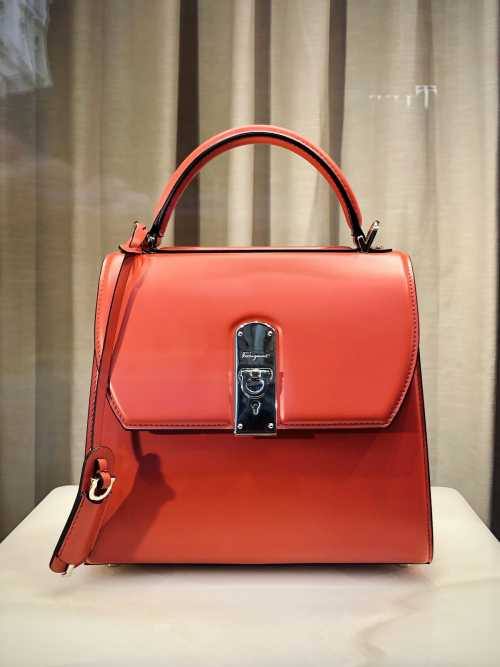
Imagine a private members' club that triples its annual dues, quietly evicts forty percent of its waitlist, and then sells the architectural blueprints of its dining room to a chain operator — while blaming the empty tables on the renovation. This is the arithmetic currently governing the global luxury complex in the fourth quarter of 2026, where the spectacle of heritage is routinely subordinated to the reconciliation of a broken customer pyramid.
The Arithmetic of the Eleven Percent
LVMH has implemented an eleven percent across-the-board increase on leather goods, absorbing the majority of transatlantic tariff exposure rather than passing it through in full, while Kering closes fifteen percent of its street-level boutiques in favor of appointment-only salons. Simultaneously, Hermès has deployed a blockchain-backed provenance ledger governing authentication and secondary-market transfer, Richemont has taken majority control of an independent Swiss horological atelier, and European competition authorities have opened a formal review into coordinated pricing behavior among the five largest leather houses.
The Deliberate Liquidation of the Aspiration Class
Mainstream trade coverage frames the pricing action as resilience. It is not. The aspirational customer — the purchaser who financed a monogrammed tote over fourteen months — is not churning; that cohort is being deliberately liquidated as a liability. The cost of acquiring and servicing that buyer now exceeds their lifetime contribution once tariff absorption and boutique occupancy are loaded into the model. According to the 2026 Bain & Company Worldwide Luxury Market Study, the aspirational segment has contracted from forty-two percent of category revenue in 2022 to thirty-one percent, while the top one percent of clients now account for nearly half of group profit. Claudia D'Arpizio, the firm's global luxury practice lead, has been explicit on the consequence: "Luxury is no longer selling scarcity. It is selling the right to be excluded from the mass, and exclusion requires a customer base small enough to police." The implication that the press has missed is that the eleven percent increase is not margin recovery — it is a inelasticity test, measuring how much of the pyramid can be removed before the remaining base can no longer subsidize the distribution network.
The Provenance Ledger as Private Banking
The Hermès authentication ledger is the more consequential development, and it has been reported almost entirely as a counterfeit-suppression tool. It is a balance-sheet instrument. By recording every transfer of every asset it has ever manufactured, the house converts a depreciating consumer good into a tracked, transferable instrument on which it can levy a transaction fee at each resale. The brand thereby becomes the exchange, the registrar, and the tax authority of its own secondary market. What the coverage omits is the capital-markets consequence: authenticated inventory becomes eligible for collateralized lending, and the maison becomes the counterparty. A handbag that can be financed, insured, and rehypothecated is no longer a retail SKU. It is an alternative asset class with the manufacturer acting as clearinghouse — a structural shift that moves luxury from consumer discretionary into the oligopsony of private wealth management, with all the regulatory exposure that classification invites.
The Retail Footprint as a Sunk Liability
The boutique closures are routinely described as a pivot to exclusivity. Read the leases instead. Street-level luxury real estate was underwritten against aspiration-class footfall; that footfall is gone, and the square footage is now a sunk obligation carried at historical rent. Converting those units into appointment-only salons does not reduce occupancy cost — it reduces revenue per square meter while raising service cost per transaction. The third-order effect lands on landlords and mall operators, whose anchor leases were priced on the assumption of perpetual luxury expansion. Prime high-street cap rates in Milan, Paris and Mayfair are already repricing as the sector's largest tenant class shrinks by a sixth. This is a commercial real estate story that the fashion press has entirely ceded to the property desk, and it is the larger of the two.
The Case for Pricing as Discipline
The critique of coordinated price escalation is not without its rebuttal, and the strongest version of it comes from brand theory rather than from the houses themselves. Jean-Noël Kapferer has argued for years that a luxury brand which never raises its real price has, by definition, discounted itself — that nominal stability is the fastest route to fungibility with accessible premium. On this reading, the eleven percent is not extraction but maintenance: the mechanism by which a house prevents its flagship from drifting into the merchandise that surrounds it. There is also a defensible tariff argument. Absorbing rather than passing through cost is, in the short run, a subsidy to the client funded by the shareholder — a decision that protects the price floor on which every future increase depends. The mistake is not the increase. It is executing it simultaneously across the sector, which converts a brand decision into a signal that regulators can read as collusion.
Echoes of the Tokyo Unwinding
The current configuration bears an uncomfortable resemblance to the Japanese luxury collapse of 1989 to 1992, when the unwinding of asset inflation removed the aspirational buyer overnight and left European houses holding distribution built for a customer base that no longer existed. The parallel is precise: in both episodes, the conglomerates had expanded retail density in anticipation of a broadening pyramid, and in both cases the pyramid narrowed rather than deepened. The lesson the industry failed to absorb then is that luxury demand is not a function of desire; it is a function of collateral. When asset values stop rising, the aspirational tier does not trade down — it exits. The houses that survived the Tokyo unwinding were those that converted exposure to a smaller, wealthier base and cut square footage aggressively. The ones that held inventory and leases through the contraction required a decade to recover. Marie Driscoll, senior luxury analyst at Bernstein, has drawn the connection directly: "The current salon strategy is the 1993 playbook, and it works only if the group is willing to lose the volume permanently rather than wait for it to return."
The Atelier Defense
On the Richemont acquisition, the monopolization reading is also incomplete. Independent Swiss ateliers are not failing for want of craft; they are failing on working capital. Movement manufacturing requires eighteen to thirty months of inventory carry before first delivery, a financing burden no family-owned operation can sustain through a rate cycle without either consolidation or collapse. Conglomerate ownership is, in this specific instance, the mechanism by which a two-hundred-year-old skill set survives a balance-sheet problem it never created. The genuine risk is not the loss of independence — it is the loss of amortization patience, where an atelier acquired for its heritage is eventually restructured to meet group margin targets, and the heritage becomes the asset that is quietly written down.
Allocation in a Narrowing Pyramid
For independent resellers, consignment operators and regional jewelers, the immediate directive is to secure authenticated inventory now, while the provenance ledgers are still voluntary and the secondary market remains partially un-taxed. Every month of delay narrows the arbitrage window between authenticated and unauthenticated stock. For local landlords and high-street operators, stop underwriting renewals to luxury tenants on historical turnover assumptions and re-tenant toward service and experience categories that do not depend on aspirational credit. For consumers, the discipline is simple: an item without ledger provenance is now a depreciating good, and an item with it is a transferable one — the price differential at resale will widen materially. For allocators, the exposure worth owning is not the houses but the clearing infrastructure: authentication, custody, insurance and collateralization of certified luxury assets.
The Six-Month Ledger
Over the next two quarters the sector will complete its conversion from a retail business into a private client business. Department store concessions will be the first casualty, withdrawn in bulk as houses refuse to share the floor with the merchandise they are trying to escape. Expect the first collateralized lending facility against ledger-authenticated inventory, which will formalize the asset-class argument and draw immediate prudential attention. The pricing review in Brussels will produce a settlement rather than a prohibition, because the houses will argue — correctly — that simultaneous increases followed a common cost shock. What will not return is the aspirational customer, and the houses that understand this will stop building for them entirely. The defining metric of 2027 will not be revenue. It will be clients served, and the number will be deliberately, permanently smaller.
Related Articles

The Provenance Paradigm: How Digital Passports, Bio-Fabrication, and AI Injunctions Are Fracturing the Luxury Brand Economy
Oct 13, 2026
The Death of Accessible Luxury: How 'Fortress' Strategies Are Rewriting the Rules of Brand Equity
Oct 12, 2026
Comments (0)
No comments yet. Be the first to share your thoughts!
Want to join the discussion?
Please log in to post a comment.
Login NoworCreate an Account