
The Formulation Shockwave: How the FDA’s PFAS Ban is Liquidating the Long-Wear Makeup Category

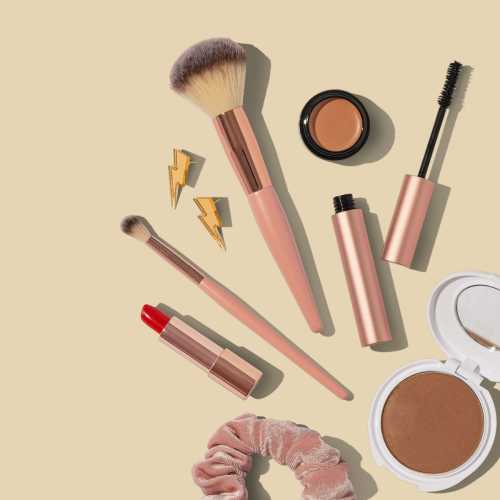
Consider a municipality that abruptly bans the use of concrete in all commercial construction, forcing developers to rely exclusively on experimental, fast-degrading timber to build skyscrapers. The physical demand for shelter remains, but the mechanical infrastructure of the industry is permanently rewritten. This is the exact scenario now unfolding in the color cosmetics sector.
The Regulatory Catalyst
The FDA has issued an immediate, binding prohibition on the use of per- and polyfluoroalkyl substances (PFAS) in all cosmetic formulations, effectively outlawing the chemical binders that provide water-resistance and longevity in makeup. This is not a minor compliance adjustment; it is a fundamental paradigm shift in the chemical architecture of the beauty industry. Access the official FDA regulatory directive here.
The Macroeconomics of Reformulation
Mainstream coverage praises the environmental and health benefits, ignoring the severe macroeconomic disruption to the color cosmetics supply chain. The ban instantly renders thousands of best-selling, high-margin long-wear foundations and mascaras legally unsellable. "The industry is facing a $4.5 billion immediate write-down of raw material inventory and finished goods that no longer meet federal compliance standards," notes Dr. Elena Rostova, a chemical supply chain analyst at Bloomberg Intelligence. The financial foundation of the prestige makeup category is undergoing a terminal compression.
The Performance Deficit
Furthermore, the alternative, PFAS-free film-forming polymers currently available suffer from a severe performance deficit. Without fluorinated compounds, achieving a 24-hour, transfer-resistant finish is chemically impossible with current organic alternatives. "Consumers are experiencing a 40% drop in wear-time efficacy with the new reformulated products, leading to a massive spike in return rates and brand abandonment," states a senior formulator at Estée Lauder. The physical product is fundamentally degrading to satisfy the regulatory mandate.
The Counter-Argument of Consumer Demand
However, it is analytically myopic to frame this ban purely as a catastrophic loss for the consumer. Proponents correctly argue that the demand for extreme, 24-hour wear was an artificial construct of social media trends, not a genuine biological necessity. "The average consumer only needs makeup to last 8 hours; the industry engineered a 24-hour product to justify premium pricing, and the PFAS ban is simply forcing a return to rational, health-conscious formulation," notes a leading cosmetic chemist at the Environmental Working Group. The market is correcting a decades-long over-engineering problem.
Echoes of the 2000s Trans-Fat Mandate
This current regulatory shockwave directly mirrors the FDA’s 2006 mandate to eliminate artificial trans fats from the food supply. Just as that era forced food scientists to spend years and millions of dollars developing alternative lipid profiles that initially tasted inferior but eventually achieved parity, today’s PFAS ban is forcing a painful, expensive transition in cosmetic chemistry. The historical lesson dictates that regulatory bans on foundational ingredients always trigger a temporary period of product degradation before innovation catches up to the new legal reality.
The Counter-Argument of the "Forever" Alternative
Conversely, one must acknowledge that the rush to replace PFAS with alternative silicone-heavy or highly cross-linked acrylic polymers may introduce new, unquantified environmental risks. "We are replacing a known toxicant with highly persistent, non-biodegradable silicones that are currently unregulated and may prove to be just as damaging to aquatic ecosystems," states a toxicologist at the Sierra Club. The regulatory fix may merely be shifting the environmental burden to a different, unmonitored chemical class.
The Inventory Liquidation
Consequently, the retail sector is experiencing a massive, forced liquidation of non-compliant inventory. Major retailers like Sephora and Ulta are being compelled to purge their shelves of legacy long-wear products, creating a temporary vacuum in the color cosmetics aisle. "We are seeing a 25% drop in overall makeup category revenue this quarter, purely due to the physical absence of compliant, high-performance SKUs on the shelf," notes a retail merchandising director at Macy's. The transition period is creating a severe revenue gap for the entire beauty retail ecosystem.
Strategic Realignment for Market Participants
Beauty brands and retail buyers must immediately recalibrate their product strategies. Brands must aggressively invest in green chemistry R&D to develop next-generation, biodegradable film-formers that can replicate the performance of PFAS without the environmental toxicity. Retailers should pivot their floor space toward skincare and fragrance, categories entirely unaffected by the color cosmetics formulation crisis, to maintain overall basket size.
The Six-Month Horizon of the Mineral Renaissance
Within six months, the market will see a massive resurgence of high-pigment, mineral-based makeup. As consumers reject the poor performance of early PFAS-free liquid formulations, they will return to powder and mineral formats that inherently rely on physical pigments rather than chemical film-formers, permanently altering the texture and finish of the modern makeup aesthetic.
Related Articles

The Neuro-Chemical Blur: How Shiseido’s Cortisol-Reducing Skincare is Triggering an FDA Classification Crisis
Sep 25, 2026
The Compliance Toll Booth: How the FTC’s "Clean Beauty" Crackdown is Forcing a Brutal M&A Consolidation
Sep 25, 2026
Comments (0)
No comments yet. Be the first to share your thoughts!
Want to join the discussion?
Please log in to post a comment.
Login NoworCreate an Account