
The Fragmentation of Spectacle: How Streaming and AI Are Rewiring the Awards Economy

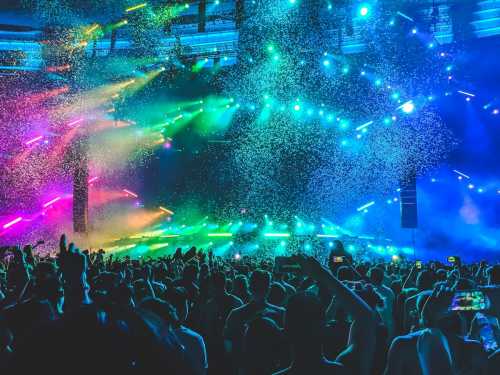
Just as the invention of the supermarket self-checkout machine quietly shifted the labor cost of retail directly onto the consumer, the modern awards and mega-event ecosystem has transferred the cognitive and financial burden of cultural curation onto the audience. The era of the monolithic, shared cultural broadcast is dead, replaced by a hyper-commercialized, fragmented landscape where algorithmic targeting and synthetic media dictate the terms of artistic recognition.
The Inflection Point: The Streaming and AI Pivot
The defining catalyst of the 2026 event calendar is the simultaneous acceleration of linear broadcast viewership declines and the aggressive integration of artificial intelligence into event production and voting workflows. Major ceremonies, including the Oscars, are experiencing notable linear audience contractions, with recent data indicating the broadcast averaged just 15.6 million viewers, ending a three-year streak of growth www.facebook.com . Concurrently, institutions like the Recording Academy are actively rewriting rulebooks to address the fact that AI is no longer a future consideration, but a present reality in music production and awards eligibility www.reprtoir.com . This dual shift marks the definitive end of the traditional broadcast monopoly, forcing a ruthless recalibration of how cultural prestige is manufactured and monetized.
The Algorithmic Erosion of Cultural Consensus
Mainstream media frequently fixates on the raw viewership drop of legacy telecasts, framing it as a simple failure of programming. However, the unseen implication is the profound fragmentation of cultural consensus. When audiences are siloed across disparate, password-protected streaming platforms, the historical "watercooler moment" is replaced by algorithmic micro-targeting. This structural shift degrades the collective cultural capital that traditionally made these events valuable to mass-market advertisers. Instead of a unified national audience, brands are now purchasing fragmented, ephemeral attention spans, fundamentally altering the ROI calculus of high-budget event sponsorships.
The Direct-Response Red Carpet
Simultaneously, the physical execution of these events is undergoing a violent financial realignment. The red carpet and halftime stages are no longer primarily about fashion journalism or musical artistry; they have been transformed into direct-response marketing funnels. This is starkly evident in the evolving sponsorship matrix of elite gatherings. For instance, the 2026 Met Gala raised a record $42 million, heavily subsidized as Silicon Valley tech conglomerates displaced traditional luxury fashion houses as the primary underwriters fortune.com . Similarly, the Super Bowl Halftime Show operates strictly as a brand and exposure platform, where artists forgo traditional performance fees in exchange for massive, integrated digital commerce visibility www.linkedin.com . The spectacle is now a transactional data-harvesting exercise.
The Pragmatism of Tech Capital
Cultural purists frequently argue that the infiltration of Silicon Valley capital into prestigious events like the Met Gala inherently dilutes their artistic integrity and historical prestige. They contend that tech sponsorships prioritize viral, meme-able moments over genuine curatorial excellence. While this concern is valid, this perspective overlooks the pragmatic economic realities of modern event production. Traditional luxury fashion houses are currently facing severe margin compression and supply chain volatility. Tech sponsorship provides the requisite, massive capital injection needed to maintain the lavish, museum-quality production standards that define these events, effectively subsidizing the arts and preserving institutional solvency through corporate wealth.
The Compliance Theater of AI Meritocracy
Beneath the shifting sponsorship models lies a deteriorating foundation of artistic meritocracy. As AI tools are deployed for predictive voting modeling, synthetic media generation, and post-production efficiency, the industry is engaging in a dangerous form of compliance theater. Human oversight committees are increasingly reduced to rubber-stamping algorithmic curation, creating a regulatory vacuum where the line between human artistry and machine generation is deliberately blurred. This lack of transparent, standardized disclosure protocols threatens to alienate the core voting bodies and audiences who fundamentally value human creative endeavor.
The Legacy Metrics Fallacy
Conversely, industry analysts who declare an existential crisis for the awards sector based solely on Nielsen linear ratings are relying on dangerously outdated metrics. This argument ignores the multi-platform reality of modern media consumption. When factoring in authorized streaming platform engagement, second-screen social media interactions, and the viral velocity of post-event clip distribution, the total addressable audience reach for major ceremonies remains robust. The consumption model has evolved from passive, linear viewing to active, fragmented engagement, suggesting a structural transformation rather than a collapse in cultural relevance.
Tactical Directives for Market Participants
For local event planners, regional brands, and independent creators, the current environment demands strategic decoupling from expensive, broad-reach broadcast sponsorships. Capital should be reallocated toward hyper-targeted, experiential activations that capture first-party consumer data and foster direct community engagement. Artists, stylists, and performers must proactively negotiate explicit digital rights and AI-likeness protections into their event contracts, ensuring their biometric and performance data is not harvested for unauthorized synthetic training models. Furthermore, citizens and consumers should actively curate their media diets, directing their attention and financial support toward niche, creator-owned industry guild awards that prioritize transparent artistic integrity over algorithmic engagement metrics.
The Six-Month Horizon: Bifurcation and Mandatory Disclosure
Looking ahead six months, the awards and events landscape will experience a pronounced and irreversible bifurcation. We will anticipate the first major industry guild to implement a mandatory, standardized "AI-Generated Content" disclosure label for all nominated works, setting a binding precedent for artistic transparency. Concurrently, the market will split definitively: ultra-premium, invite-only physical events will cater exclusively to the elite and high-net-worth sponsors, while mass-market ceremonies will evolve into highly interactive, gamified streaming experiences. Traditional linear broadcast will be permanently relegated to a secondary, archival role, cementing the new reality of the fragmented spectacle.
The 2026 awards season marks a definitive pivot: linear viewership declines are being offset by fragmented streaming engagement and aggressive Silicon Valley event sponsorship. #AwardsSeason#MediaTrends
— Event Industry Analytics (@EventAnalytics) August 28, 2026
Related Articles

The Prestige Paradigm Shift: How AI, Streaming, and Spatial Reconfiguration Are Fracturing the Global Awards Economy
Oct 13, 2026
The Death of the Curator: How Algorithmic Populism and AI are Dismantling the Global Awards Economy
Oct 13, 2026
Comments (0)
No comments yet. Be the first to share your thoughts!
Want to join the discussion?
Please log in to post a comment.
Login NoworCreate an Account