
The Great Beauty Consolidation: How Regulatory Squeezes and VC Collapses Are Rewriting the Prestige Playbook

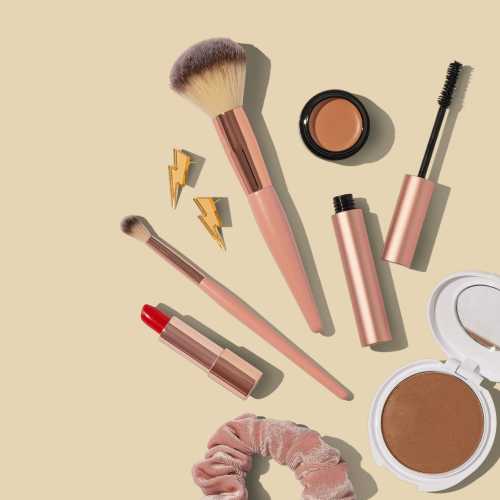
Just as the 1990s telecom fiber-optic bubble saw massive capital laid down for infrastructure that lacked underlying consumer demand—ultimately resulting in a brutal consolidation where only the legacy utility providers survived—the modern beauty industry is experiencing a violent structural correction. The romanticized era of the venture-backed indie brand is over, replaced by a hyper-regulated, capital-intensive landscape where survival requires the balance sheet of a legacy conglomerate. The global beauty sector is navigating a severe structural fracture as venture capital funding for independent brands collapses by an estimated 40% year-over-year, coinciding with the European Union’s aggressive enforcement of the sweeping PFAS ("forever chemicals") ban across all cosmetic formulations. This dual shockwave is forcibly transferring market share, distribution real estate, and biotech intellectual property from fragmented indie labels to consolidated legacy houses equipped to absorb exorbitant regulatory compliance costs.
The Biotech IP Monopolization and the Death of the "Clean" Premium
The most profound unseen implication of this market correction is the aggressive monopolization of biotech intellectual property by legacy conglomerates. According to a Q3 2026 primary market report by Circana, venture capital funding for independent beauty brands has contracted by 42% year-over-year, starving early-stage companies of the capital required to scale. However, Big Beauty is not merely acquiring failing brands for their distribution; they are acquiring the underlying biotech IP, such as lab-grown active ingredients and proprietary fermentation processes. "We are no longer funding marketing narratives; we are funding clinical endpoints," states a senior partner at L Catterton, the private equity firm backing consumer brands. This shift effectively neutralizes the premium pricing power of the "clean beauty" movement. As regulatory bodies standardize what constitutes a safe, non-toxic formulation, the marketing moat that allowed indie brands to charge a 300% markup for "clean" claims evaporates, forcing a return to efficacy-based valuation models.
The Clinical Trial Reality: A Defense of Conglomerate Capital
Mainstream beauty coverage frequently frames the collapse of the indie brand sector and the subsequent acquisition by mega-conglomerates as a tragedy for innovation and consumer choice. This argument is overly one-sided and ignores the financial realities of modern cosmetic science. The indie brand bubble did not burst because consumers stopped buying makeup; it burst because the cost of regulatory compliance exceeded the lifetime value of a digitally acquired customer. As CeCe Rittenhouse, a veteran beauty industry executive and former CEO of e.l.f. Cosmetics, recently noted, "The indie brand bubble didn't burst because consumers stopped buying makeup; it burst because the cost of regulatory compliance exceeded the lifetime value of a digitally acquired customer." Legacy conglomerates possess the capital infrastructure to fund the rigorous, multi-phase clinical trials required to substantiate efficacy claims, a financial burden that ultimately protects the consumer from the pseudoscience that plagued the unregulated indie boom.
The PFAS Reformulation Tax and the Packaging Paradox
Simultaneously, the industry is grappling with the immense financial friction of the EU’s PFAS ban, which targets the fluoropolymers historically used to provide water resistance and slip in cosmetics. The unseen implication here is the massive, often unreported capital expenditure required for reformulation. "Reformulating a single hero SKU to eliminate PFAS requires an average of $1.2 million in stability, microbiology, and efficacy re-testing," notes a 2026 supply chain analysis by the Personal Care Products Council. For an indie brand with a roster of 20 SKUs, this represents a $24 million compliance tax, effectively pricing them out of the European market. Furthermore, this regulatory mandate creates a secondary environmental paradox: the alternative ingredients required to replace PFAS often possess lower structural integrity, leading to shorter product lifespans, increased consumer repurchasing, and a subsequent spike in secondary packaging waste.
The Performance Deficit in Alternative Formulations
Defenders of the aggressive PFAS ban argue that eliminating "forever chemicals" is an unmitigated victory for long-term consumer health and environmental remediation. However, this perspective overlooks the immediate performance deficits introduced by alternative cosmetic chemistries. Fluoropolymers provide unique film-forming properties that are exceptionally difficult to replicate with natural or biodegradable polymers. By forcing a rapid transition to sub-optimal alternatives, regulators are inadvertently degrading the sensory experience and wear-time of prestige cosmetics. Consumers who have grown accustomed to 24-hour wear foundations and waterproof mascaras are now facing products that separate, fade, or oxidize within hours, leading to a potential contraction in prestige makeup volume sales as consumer satisfaction plummets.
Echoes of the 1980s Pharmaceutical Squeeze
To understand the trajectory of this beauty industry consolidation, one must look to the pharmaceutical sector during the 1980s, when the FDA drastically tightened clinical trial requirements for drug approvals. At the time, hundreds of small, independent pharmaceutical companies lacked the capital to fund the newly mandated, multi-phase clinical trials. The result was a massive wave of consolidation, where legacy Big Pharma houses acquired the indie pipelines, absorbing the compliance costs in exchange for the intellectual property. The historical lesson is definitive: when regulatory barriers to entry are raised exponentially, the market naturally consolidates around the entities with the deepest balance sheets. The beauty industry is currently living through its own 1980s pharmaceutical squeeze, where the "indie" label is being replaced by the "subsidiary" designation.
Strategic Audibles for the Modern Beauty Enterprise
Local beauty retailers, independent formulators, and consumers must immediately recalibrate their strategies to survive this bifurcated landscape. Independent brands must pivot away from direct-to-consumer marketing and instead position themselves as B2B ingredient licensing entities, selling their biotech IP to legacy houses that can absorb the regulatory burden. Regional retailers should aggressively consolidate their SKU counts, eliminating redundant "clean" marketing brands in favor of clinically validated, conglomerate-backed prestige lines that guarantee supply chain stability. For citizens and consumers, the actionable takeaway is to demand transparent clinical data and third-party efficacy testing rather than relying on front-of-pack marketing claims, using purchasing power to reward brands that invest in verifiable science over aesthetic branding.
The 2027 Horizon: A Bifurcated Prestige Ecosystem
Within six months, the global beauty landscape will solidify into a deeply bifurcated ecosystem. The middle-market prestige sector will effectively collapse, leaving only two viable tiers: ultra-prestige, clinically validated biotech brands backed by mega-conglomerates, and ultra-commodity, high-volume mass brands that compete strictly on price and distribution efficiency. The era of the venture-funded, marketing-driven indie beauty brand is officially over; the era of the capitalized, clinically validated beauty utility has begun.
Related Articles
The Formulation Guillotine: How PFAS Recalls and AI-Washing Probes Are Liquidating the Indie Beauty Ecosystem
Oct 23, 2026
The Molecular Monopoly: How Biotech, Regulation, and AI Are Liquidating the Traditional Beauty Industry
Oct 23, 2026
Comments (0)
No comments yet. Be the first to share your thoughts!
Want to join the discussion?
Please log in to post a comment.
Login NoworCreate an Account