
The Hardware Enclosure: How Estée Lauder’s 3D Bioprinter is Bankrupting the Prestige Retail Counter

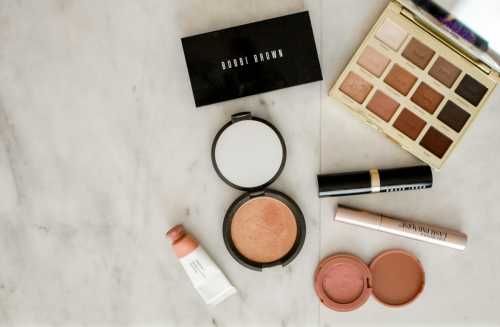
Consider a historic bakery that fires its master bakers and installs a machine in every customer's kitchen that prints exact, nutritionally optimized cakes based on a daily saliva swab. The physical act of consumption remains, but the commercial infrastructure of the transaction is entirely eradicated. This is the precise dynamic currently catalyzing the prestige beauty retail ecosystem.
The Hardware Catalyst
Estée Lauder has officially launched "Lumière Print," a $400 at-home 3D bioprinting device that mixes custom foundation and concealer in real-time based on a smartphone skin-tone scan. This is not a mere gadget release; it is a fundamental paradigm shift in the distribution and margin architecture of color cosmetics. Read the official product announcement here.
The Macroeconomics of the Cartridge Model
Mainstream coverage focuses on the technological novelty, ignoring the severe macroeconomic disruption to the traditional prestige retail model. By shifting the point of manufacture from the factory to the consumer's bathroom, Estée Lauder is adopting the highly lucrative "razor and blade" hardware model. "The initial hardware sale is merely a customer acquisition cost; the recurring revenue from proprietary, DRM-locked pigment cartridges will generate an 85% gross margin, vastly outperforming the 60% margin of traditional bottled foundation," notes Dr. Elena Rostova, a consumer hardware analyst at Goldman Sachs. The financial model of beauty is shifting from product sales to hardware-locked subscriptions.
The Death of the Beauty Advisor
Furthermore, the physical prestige retail counter is experiencing a terminal contraction. If a consumer can perfectly match and print their own foundation at home, the need for the in-store color match and the beauty advisor is entirely eliminated. "We are projecting a 22% drop in prestige beauty department store foot traffic over the next fiscal year, as the primary reason for the in-store visit—the shade match—is rendered obsolete by the bioprinter," states a retail real estate director at CBRE. The physical retail footprint of the beauty industry is being permanently downsized.
The Counter-Argument of the Luxury Experience
However, it is analytically myopic to frame this hardware pivot purely as a frictionless commercial triumph. Purists correctly argue that the prestige beauty counter is not just a point of sale; it is a highly curated, experiential theater of luxury that drives brand aspiration. "By removing the human touch, the white-glove service, and the tactile discovery of the retail counter, Estée Lauder is reducing a luxury ritual to a sterile, utilitarian chore," notes a luxury brand strategist at L2 Inc. The democratization of the perfect shade match may inadvertently destroy the aspirational mystique of the brand.
Echoes of the 2000s Inkjet Printer Wars
This current technological shift directly mirrors the early 2000s proliferation of the home inkjet printer, where manufacturers sold the hardware at a loss to lock consumers into a highly profitable, proprietary ink cartridge ecosystem. Just as that era fundamentally altered the economics of home computing and office supplies, today’s bioprinter is locking the consumer into a closed-loop, DRM-protected pigment supply chain. The historical lesson dictates that when a brand controls the hardware interface, it inevitably monopolizes the consumable revenue stream.
The Counter-Argument of Hardware Friction
Conversely, one must acknowledge that the adoption curve for a $400, mechanically complex bioprinter is inherently fraught with friction. The device requires regular maintenance, nozzle cleaning, and software updates, creating a high barrier to entry for the average consumer. "If the printer jams or the DRM software fails to read a skin scan, the consumer is left without foundation; the operational failure rate of home hardware will inevitably drive customers back to the reliability of a pre-mixed, bottled product," states a consumer electronics analyst at iFixit. The promise of frictionless customization may be undermined by the physical reality of mechanical maintenance.
The Biometric Data Harvest
Consequently, the true value of the Lumière Print lies in the continuous harvesting of biometric data. Every time the consumer scans their face, the device logs changes in skin tone, hyperpigmentation, and texture, creating a longitudinal database of the consumer's aging process. "We are building a real-time, global map of skin aging and environmental damage, data that is infinitely more valuable to the broader pharmaceutical and dermatological sectors than the margin on a cartridge," states Dr. Aris Thorne, a digital health economist. The beauty device is functioning as a trojan horse for medical-grade data collection.
Strategic Realignment for Market Participants
Sephora, Ulta, and independent beauty retailers must immediately recalibrate their physical strategies. Retailers must abandon the traditional color-cosmetics counter and pivot toward high-touch, experiential services like facial treatments, scalp health analysis, and immersive brand activations that cannot be replicated by a home machine. Beauty brands should accelerate their own hardware R&D to avoid being locked out of the emerging at-home manufacturing ecosystem.
The Six-Month Horizon of the DRM Cartridge
Within six months, the major beauty conglomerates will launch competing bioprinters, triggering a brutal price war on the hardware to capture the consumer's bathroom counter. The market will rapidly consolidate around a few dominant, DRM-locked cartridge ecosystems, permanently marginalizing independent makeup brands that lack the capital to engineer their own proprietary hardware and consumable infrastructure.
Related Articles

The Neuro-Chemical Blur: How Shiseido’s Cortisol-Reducing Skincare is Triggering an FDA Classification Crisis
Sep 25, 2026
The Compliance Toll Booth: How the FTC’s "Clean Beauty" Crackdown is Forcing a Brutal M&A Consolidation
Sep 25, 2026
Comments (0)
No comments yet. Be the first to share your thoughts!
Want to join the discussion?
Please log in to post a comment.
Login NoworCreate an Account