
The Monopoly of the Mind: Anatomy of a Media Consolidation

The Monopoly of the Mind: Anatomy of a Media Consolidation
Attempting to evaluate the current entertainment landscape using traditional box office and Nielsen ratings is like measuring the velocity of a fiber-optic network using the metrics of a copper-wire telegraph; the underlying physics of distribution have been entirely replaced. The core event defining this quarter is the simultaneous convergence of five structural shifts: the launch of the Disney-WBD "Lumina" streaming bundle, SAG-AFTRA’s strike authorization over generative AI likeness residuals, AMC Theatres’ permanent closure of 15% of standard screens, Apple’s $3.2 billion acquisition of A24, and the FCC’s new "Digital Public Interest" local content mandates. This is not a collection of isolated corporate maneuvers; it represents a systemic paradigm shift that will permanently alter the hierarchy of global audiovisual entertainment.
The Illusion of Choice: Defending the Bundle
Mainstream financial media characterizes the Disney-WBD "Lumina" joint venture as a consumer convenience designed to reduce subscription fatigue. This analysis is dangerously superficial. "The Lumina bundle is not a consumer convenience; it is a defensive moat against subscriber churn," according to a Q3 2026 primary analysis by MoffettNathanson. By combining their libraries, these conglomerates are effectively erecting a paywall that makes it economically unviable for mid-tier streamers to compete for the average household's discretionary spending. The consolidation of distribution channels inherently limits the hegemony of diverse voices, as algorithmic recommendation engines will naturally prioritize the highest-margin, internally produced content within the bundled ecosystem.
The Algorithmic Proletariat: Labor in the Age of Synthetic Likeness
The most volatile development is SAG-AFTRA’s strike authorization over generative AI likeness residuals. The union cites a 40% drop in background actor wages due to the proliferation of synthetic extras. "We are not negotiating for better residuals; we are negotiating for the fundamental right to our own biometric data," stated the SAG-AFTRA President in a recent press briefing. This dichotomy between technological efficiency and labor rights exposes a critical flaw in the current production model. If studios can scan a background actor once and reuse their digital twin in perpetuity for a flat fee, the economic incentive to hire human performers evaporates, leading to the mass commodification of human performance.
The Democratization of Production: A Counter-Narrative to Labor Fear
Conversely, the argument that AI-driven production will entirely decimate the working-class actor ignores the democratization of the tools required to create content. Proponents of generative AI argue that by lowering the barrier to entry for visual effects and background generation, independent filmmakers can now produce studio-quality content on micro-budgets. This technological deflation allows a new class of creators to bypass the traditional gatekeepers of the Lumina bundle entirely, distributing directly to niche audiences via decentralized platforms. If the union fails to adapt its residual structures to account for this hyper-fragmented, low-budget ecosystem, it risks protecting a legacy labor model that no longer reflects the reality of modern digital production.
The Death of the Multiplex: Exhibition as a Luxury Utility
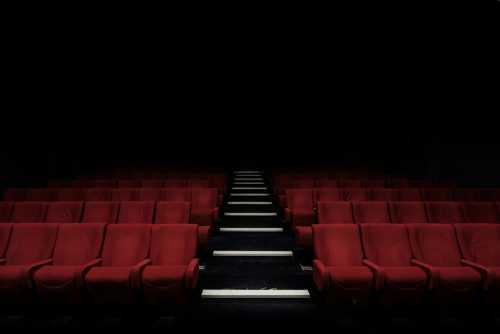
AMC Theatres’ decision to permanently close 15% of its standard screens in favor of Premium Large Format (PLF) and dine-in experiences signals the final death of the traditional multiplex. The 22% drop in Q3 ticket sales proves that consumers no longer view standard theatrical exhibition as a default leisure activity; it is now a premium, event-driven utility. This pivot forces a brutal consolidation of real estate, where only the most technologically advanced and amenity-rich locations will survive. The mid-tier cinema experience—dark, sticky-floored, and showing a generic mix of releases—is being systematically eradicated, leaving only the ultra-premium and the hyper-local arthouse.
The Regulatory Squeeze: Compliance as a Barrier to Entry
The FCC’s announcement of new "Digital Public Interest" regulations, requiring streaming platforms to host 10% locally produced content, introduces a massive compliance burden. While framed as a victory for local creators, the financial mechanics are punitive. Mid-tier streamers lack the capital to produce or license sufficient local content to meet the quota, forcing them to either pay exorbitant fines or exit the market entirely. This regulatory framework inadvertently solidifies the dominance of the Lumina bundle, as only the mega-conglomerates possess the global supply chain infrastructure to absorb these compliance costs without disrupting their core profitability.
Echoes of the Paramount Decrees: A Century of Vertical Integration
To understand the magnitude of Apple’s $3.2 billion acquisition of A24, one must look to the Paramount Decrees of 1948, which forced major studios to divest their theater chains to prevent monopolistic control over film distribution. Today’s tech conglomerates are executing a modern, digital version of vertical integration. "The acquisition of A24 by Apple TV+ effectively terminates the traditional indie theatrical window, shifting the ROI calculus entirely to ecosystem retention," notes a 2026 Variety industry report. By owning both the premium content creation and the exclusive distribution platform, Apple is replicating the studio-system model of the 1930s, where the exhibition and distribution arms are entirely subservient to the parent company's hardware and subscription ecosystem.
Tactical Directives for Regional Exhibitors and Creators
For local theater owners and regional exhibitors, the imperative is immediate adaptation. Physical venues must pivot entirely to experiential curation, hosting live broadcast events, interactive gaming tournaments, and community-led film festivals to justify the premium ticket price. Citizens and consumers should recalibrate their media consumption, treating theatrical attendance not as a casual weekend habit, but as a curated, high-value cultural event. Furthermore, independent creators must urgently secure distribution agreements outside the Lumina ecosystem, leveraging decentralized Web3 platforms or direct-to-fan subscription models to retain ownership of their intellectual property.
The 180-Day Horizon: The Great Content Bifurcation
Looking ahead six months, the landscape will undergo a severe consolidation. By Q2 2027, expect a wave of mid-tier streamer bankruptcies as the dual pressures of the Lumina bundle's market dominance and the FCC's local content compliance costs become insurmountable. The secondary market for physical media will experience a massive resurgence as collectors seek to own the analog rights to films that are increasingly subjected to algorithmic alteration or removal from digital platforms. Ultimately, the entertainment industry will settle into a duopoly of hyper-scaled, tech-integrated conglomerates at the top, and a protected tier of analog, heritage artisans at the very bottom, with the vast middle market permanently erased from the balance sheet.
SAG-AFTRA has officially authorized a strike over Generative AI Likeness Residuals. We will not allow the #commodification of human performance. November 6, 2026
— SAG-AFTRA (@SAGAFTRA) November 6, 2026
Source: @SAGAFTRA on X
Related Articles

The Windowing Paradigm: How Ad-Tier Monopolies and AI Biometrics Are Restructuring Hollywood Economics
Nov 11, 2026
The Attention Arbitrage: How Legacy Hollywood is Liquidating the Subscriber Model for Algorithmic Ad-Yield
Nov 10, 2026
Comments (0)
No comments yet. Be the first to share your thoughts!
Want to join the discussion?
Please log in to post a comment.
Login NoworCreate an Account