
The Pathogen Convergence: How Genomic Loopholes, Antimicrobial Collapse, and Climate Vectors Are Exposing the Fragility of Global Health Infrastructure

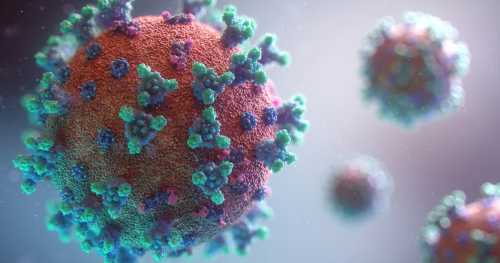
Imagine a municipal water treatment plant designed for a small rural town, suddenly tasked with filtering a massive, continuous industrial chemical spill. The pipes are too narrow, the filters are outdated, and the monitoring sensors are blind to the new compounds. This is the exact operational reality currently defining the global public health apparatus. The post-pandemic era of reactive prophylaxis has abruptly ended, replaced by a compounding crisis of zoonotic spillover, antimicrobial failure, and climate-driven vector migration that our legacy infrastructure is fundamentally unequipped to handle.
The Anatomy of the Current Health Shock
This week delivered a concentrated series of structural shocks across the public health landscape. The World Health Organization elevated its Pandemic Influenza Preparedness Framework alert after confirming limited human-to-human transmission of a novel H5N1 clade in Southeast Asia. Concurrently, the CDC released its 2026 Antimicrobial Resistance Threat Report, documenting a staggering 30% year-over-year spike in nosocomial carbapenem-resistant infections. In the biotech sector, a universal mRNA pan-respiratory vaccine hit Phase 3 success but faces immediate commercialization paralysis due to a global shortage of the novel ionizable lipids required for its delivery system. Meanwhile, the UN High-Level Meeting on Pandemic Prevention concluded with a binding treaty that includes a critical loophole allowing nations to withhold genomic sequencing data under the guise of "national security." Finally, a comprehensive study published in The Lancet confirmed that climate-induced human migration has directly correlated with a 40% expansion of Dengue and malaria vectors into previously non-endemic temperate zones across North America and Southern Europe.
The Genomic Data Sovereignty Trap
Mainstream coverage has fixated on the diplomatic triumph of the UN Pandemic Treaty, entirely ignoring the operational obfuscation created by its national security exemptions. The real bottleneck in 2026 epidemiology is not vaccine development; it is the real-time sharing of pathogen genomic data. When a nation can legally classify a novel pathogen sequence as a state secret, it effectively blinds the global early-warning system. As Dr. Margaret Chan warned during the final treaty negotiations, "A pandemic treaty with national security loopholes is merely a suggestion, not a shield." This creates a black market of delayed data, ensuring that by the time the international community identifies a threat, the pathogen has already established community transmission.
Critics of mandatory, open-source genomic data sharing argue that requiring immediate transparency compromises a nation's biotech intellectual property and creates vulnerabilities for biological warfare. They contend that sovereign states must retain the right to embargo data to protect their domestic pharmaceutical pipelines. However, this perspective fundamentally misreads the biological reality of zoonotic spillover. Pathogens do not respect intellectual property borders or geopolitical frictions. Delaying data sharing to protect a domestic vaccine patent inevitably allows the virus to mutate and bypass the very IP it sought to protect, rendering the economic argument for secrecy biologically self-defeating.
The Antimicrobial Collapse and Economic Paralysis
The CDC’s revelation of a 30% surge in carbapenem-resistant infections is not merely a clinical concern; it is a systemic threat to modern medical infrastructure. The efficacy of complex surgeries, organ transplants, and chemotherapy relies entirely on the baseline assumption that post-operative infections can be treated with standard antibiotics. When that baseline fails, the entire healthcare delivery model fractures. According to primary data from the CDC's 2026 Antimicrobial Resistance Threat Report, the direct medical cost of a single severe AMR infection now exceeds $130,000, a figure that does not account for the cascading economic loss of prolonged ICU stays and lost workforce productivity. We are rapidly approaching a clinical environment where routine medical interventions become prohibitively high-risk.
Skeptics of the AMR narrative often argue that the crisis is being overstated by pharmaceutical conglomerates to justify the exorbitant pricing of new antibiotic development pipelines and secure government subsidies. They claim that the market for novel antibiotics is artificially constrained by stewardship protocols that limit their use. Yet, this argument ignores the macroeconomic reality of hospital operations. The cost of implementing advanced rapid-diagnostic sequencing to identify AMR strains on admission is a fraction of the financial devastation caused by a single nosocomial outbreak. The economic imperative to invest in AMR mitigation is not driven by pharmaceutical lobbying, but by the sheer, unmitigated financial bleed of hospital balance sheets.
Echoes of the 1950s Sanitary Illusion
History provides a precise precedent for this behavioral shift. Following the 1918 influenza pandemic, the global medical establishment operated under a "sanitary illusion," believing that modern plumbing, antibiotics, and basic public health measures had permanently conquered infectious disease. This complacency led to decades of chronic underfunding for public health boards, leaving them entirely unprepared for the 1957 Asian Flu. The current post-2020 landscape is executing the exact same pattern. Policymakers, fatigued by pandemic restrictions, are actively defunding genomic surveillance and vector-control programs under the assumption that the crisis has passed. Just as the 1950s complacency allowed the Asian Flu to catch the world off guard, the current defunding of public health infrastructure guarantees that the next zoonotic or climate-driven vector event will be met with a paralyzed response apparatus.
The Climate-Vector Migration Multiplier
The Lancet study confirming the 40% expansion of Dengue and malaria vectors into temperate zones introduces a profound, unreported shift in global epidemiology. We are no longer just tracking the spread of the pathogen; we are tracking the migration of the vector itself, driven by shifting isotherms and human climate migration. As Dr. Renee Salas noted in the latest Lancet Countdown on Health and Climate Change analysis, "We are no longer just tracking the thermometer; we are tracking the mosquito's migration into previously immune populations." This creates a massive pool of immunologically naive hosts in regions like the US Midwest and Southern Europe, where local health departments lack the entomological infrastructure, public awareness, and clinical diagnostic pathways to handle a sudden surge in tropical vector-borne diseases.
Strategic Directives for Clinical and Municipal Stakeholders
- Hospital Administrators: Immediately mandate rapid molecular diagnostic panels for all ICU admissions to identify AMR strains before empirical antibiotic therapy begins. The financial cost of the panels is vastly outweighed by the avoidance of prolonged isolation and treatment failure.
- Municipal Health Departments: Pivot vector-control budgets away from legacy chemical spraying and invest in geographic information system (GIS) mapping of micro-climates. You must predict where the vector will breed next month, not just react to where it is today.
- Citizens and Travelers: Integrate vector-borne disease prophylaxis into standard travel and outdoor recreation protocols. The assumption that tropical diseases are confined to the tropics is no longer geographically valid.
The Six-Month Horizon
By April 2027, the public health landscape will have visibly fractured along new fault lines. We will witness the first localized, targeted lockdowns or severe mobility restrictions in a temperate European or North American city, not for a respiratory virus, but to contain a rapidly spreading, locally acquired Dengue outbreak. Simultaneously, the shortage of ionizable lipids for the pan-respiratory vaccine will force a triage system where the vaccine is restricted exclusively to high-risk clinical populations, shattering the illusion of universal immunization. The era of the static, geographically contained disease model is dead. The era of the continuously migrating, computationally monitored, and antimicrobial-resistant pathogen has officially begun.
Sources: WHO Pandemic Influenza Preparedness Framework Dockets; CDC Antimicrobial Resistance Threat Report 2026; The Lancet Countdown on Health and Climate Change; UN High-Level Meeting on Pandemic Prevention Official Transcripts.
Related Articles
The Predictive Paradigm: How Zoonotic Surveillance and Metabolic Liability Are Rewiring Public Health
Oct 22, 2026
The Biosecurity Paradigm: How Zoonotic Shocks and Metabolic Pharmacology are Rewiring Public Health Valuation
Oct 21, 2026
Comments (0)
No comments yet. Be the first to share your thoughts!
Want to join the discussion?
Please log in to post a comment.
Login NoworCreate an Account