
The Prestige Default: Navigating the Structural Reset of the Awards and Live Events Economy


Treating the modern awards and live events industry like a thriving cultural institution is a categorical error. It operates less like a celebrated gala and more like a legacy municipal bond: widely recognized, seemingly stable on the surface, but quietly suffering from eroding underlying yield and a complete loss of relevance among the next generation of stakeholders. We are no longer witnessing a simple cyclical dip in television ratings; we are observing a fundamental rewiring of how prestige, attention, and live experiential capital are extracted and monetized.
The Catalyst: A Structural Fracture
The 2026 awards season has exposed a deep structural fracture in the entertainment event economy, highlighted by the Oscars' viewership plummeting to just 17 million and the Emmys excising five major categories from their main broadcast to stem ratings declines [[1]], [[9]]. Concurrently, legacy broadcasters are preparing for an inevitable exodus, with the Academy Awards reportedly negotiating an exclusive streaming migration to platforms like YouTube starting in 2029 [[16]].
The Devaluation of the Prestige Halo
The first unseen implication is the rapid devaluation of the "prestige halo" for corporate sponsors. Historically, brands paid a premium to associate with the cultural gravity of a linear broadcast event. However, as audiences fragment, the return on investment for traditional logo placement has collapsed. Sponsors are now demanding granular, measurable experiential activations, forcing event organizers to pivot from passive broadcast advertising to integrated, data-driven consumer engagements that prove tangible business impact [[34]].
The Bifurcation of Live Event Production
Secondly, the live events sector is experiencing aggressive bifurcation. While mega-corporations absorb market share, the middle tier of independent festivals and mid-sized award ceremonies is being systematically squeezed out. Private equity firms continue to invest heavily in large-scale live experiences, fueling rapid industry consolidation that prioritizes predictable, high-yield assets over diverse, community-driven programming [[28]]. This creates a paradoxical environment where production values at the top tier reach cinematic heights, while local, grassroots events face existential funding crises.
The Consolidation Defense
A prevailing narrative suggests that this live event consolidation inherently benefits consumers by delivering superior production value and streamlined ticketing experiences. Proponents argue that economies of scale allow major operators to invest in better security, technology, and artist amenities. However, this perspective fundamentally misinterprets the mechanics of monopolistic market control. As seen with dominant players in the live events space, consolidation inevitably leads to anti-competitive practices and dynamic pricing models that extract maximum surplus from captive audiences, effectively pricing out the middle-class consumer [[30]].
Echoes of the Cable Ceiling
To contextualize this inflection point, analysts must examine the Tony Awards' migration from network television to cable in the early 2000s. Initially hailed as a necessary cost-saving measure that would cater to a dedicated, niche theatrical audience, the move permanently capped the ceremony's cultural ceiling. The historical precedent teaches us that once a prestige event abandons the frictionless accessibility of free, over-the-air broadcast, it transitions from a shared cultural moment to a compartmentalized commodity. The impending 2029 streaming exclusivity of the Oscars mirrors this trajectory, trading mass cultural ubiquity for narrow, platform-specific engagement [[16]].
Algorithmic Cannibalization of the Live Moment
Thirdly, the migration to streaming platforms introduces a new layer of algorithmic cannibalization. Unlike linear television, which guarantees a shared, synchronous viewing experience, streaming platforms optimize for individual retention and asynchronous consumption. This means that even when an awards show is hosted on a major digital platform, its clips and highlights are immediately fractured into micro-content to feed recommendation engines, further eroding the event's cohesive narrative and diminishing the perceived value of the live broadcast itself.
The Democratization Illusion
Critics of the linear broadcast decline argue that migrating awards shows to digital platforms democratizes access, allowing global audiences to engage with content on their own terms without the constraints of traditional scheduling. They contend that interactive digital features and lower barriers to entry will ultimately expand the total addressable market for these events. While this argument holds theoretical merit, it ignores the reality of digital attention economics. Streaming platforms are designed to maximize overall platform engagement, meaning a three-hour awards ceremony is often algorithmically deprioritized in favor of shorter, higher-retention content, effectively burying the event unless heavily promoted through paid platform real estate.
Strategic Directives for Stakeholders
For local businesses and event organizers, the immediate directive is to decouple revenue models from traditional broadcast sponsorship. Instead, invest in proprietary, direct-to-consumer data capture and micro-event experiences that offer tangible, measurable ROI for regional partners. For citizens and cultural consumers, supporting independent, locally owned venues and festivals is no longer just a matter of preference; it is a necessary economic intervention to preserve diverse live entertainment options before they are fully absorbed by private equity conglomerates. Furthermore, industry professionals should recognize the growing influence of prediction markets, as platforms like Kalshi now allow users to trade federally regulated contracts based on Oscars, Grammys, and Emmys outcomes, creating a new, data-rich layer of audience engagement that traditional broadcasters have failed to capitalize on [[22]].
The Six-Month Horizon: Accelerated Truncation
Looking six months ahead, the awards and live events landscape will be defined by accelerated format truncation and the formalization of hybrid monetization models. We will likely see at least two additional major award ceremonies announce the permanent removal of technical categories from their primary broadcasts, relegating them to pre-show digital streams. Furthermore, the gap between mega-event ticket prices and mid-tier event viability will widen, leading to the first major bankruptcy of a legacy mid-sized festival operator. The industry is not collapsing, but it is fundamentally rewiring into a bifurcated reality where cultural relevance is determined by algorithmic manipulation and private equity backing rather than organic artistic merit.
Related Articles

The 2026 Awards Paradigm Shift: Why Legacy Institutions Are Losing Their Grip and How Convergence Offers a Lifeline
Oct 11, 2026The Illusion of the Digital Panacea: How AI and Web3 Are Dismantling the 2026 Awards Economy
Sep 28, 2026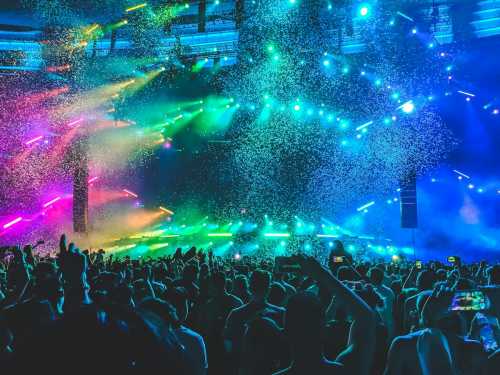
Comments (0)
No comments yet. Be the first to share your thoughts!
Want to join the discussion?
Please log in to post a comment.
Login NoworCreate an Account