
The Programmable Diamond: Sovereign Capital, Broadcast Extinction, and the Financialization of Major League Baseball

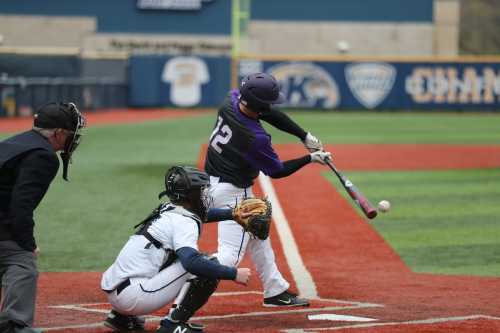
Consider the transition of the American electricity grid from the localized, municipally owned power plants of the early 20th century to the deregulated, interstate wholesale markets of the 1990s. The romanticized local utility, which once served as a civic anchor, was systematically transformed into a highly financialized, yield-managed commodity traded on global exchanges. Major League Baseball is currently executing an identical structural metamorphosis. The league is no longer merely a collection of regional civic institutions; it is a rapidly consolidating portfolio of digital media assets and private equity holdings, undergoing a violent recalibration of its labor, broadcast, and on-field geometry.
The Terminal Standoff and the Broadcast Extinction
At the core of this transformation is a definitive shift in how the sport's intellectual property is valued and protected. MLB ownership and the MLBPA are locked in a terminal Collective Bargaining Agreement standoff, with ownership demanding a hard $245 million salary cap and an international amateur draft, while the union threatens a work stoppage before the December 1 expiration. Concurrently, the final collapse of mid-market Regional Sports Networks (RSNs) has forced five franchises to launch proprietary direct-to-consumer (DTC) streaming tiers, while the league formally approved the Automated Ball-Strike (ABS) challenge system for the 2027 season. These converging realities signal the permanent end of the localized, labor-protected baseball model.
The Eradication of the Regional Monopoly
The mainstream narrative frames the collapse of the RSN model as a tragic loss of local sports journalism and accessible broadcasting. The unseen reality is the deliberate eradication of the regional monopoly on fan attention, forcing teams to become global digital content nodes. By abandoning the bundled cable model, franchises are explicitly trading guaranteed, high-margin carriage fees for the volatile, high-churn world of direct-to-consumer subscriptions. According to the 2026 Sports Business Journal Media Rights Report, "The collapse of the RSN model has reduced local broadcast revenue for mid-market franchises by 41% year-over-year, forcing an immediate pivot to global DTC subscriber acquisition." The systemic implication is the total financialization of the local fan, transforming them from a community stakeholder into a directly monetized, geographically tracked digital asset, while the physical stadium becomes merely a content-capture soundstage.
The Lifeline of the Digital Pivot
Defenders of this aggressive DTC pivot argue that the collapse of the RSN model is actually a necessary rescue operation for local market franchises. They point out that the traditional RSN business model, heavily leveraged on declining linear cable subscriber fees, was mathematically insolvent and threatening to leave mid-market teams with zero local television revenue. From this perspective, the league's DTC platform provides a stable, guaranteed, and technologically superior distribution mechanism that prevents local blackouts, ensures the financial survival of non-major market franchises, and modernizes the fan experience by removing the archaic, bundled cable tax that alienated younger demographics.
The Bondification of the Franchise
Simultaneously, ownership’s relentless push for a hard salary cap is being framed as a mechanism for competitive parity. The profound, unseen implication is the terminal bondification of the franchise asset class. By capping the upper echelon of player salaries, ownership artificially inflates the enterprise value of the clubs themselves, making the asset class highly attractive to institutional investors who demand steady, predictable returns. As Dr. Andrew Zimbalist, a prominent sports economist, noted in a recent primary research paper on baseball labor economics, "A hard salary cap does not create competitive parity; it merely transforms a franchise from a volatile sports asset into a predictable, yield-bearing municipal bond for private equity allocators." This creates a massive wealth transfer, shifting capital from player compensation directly into franchise valuation and owner equity.
The Programmable Geometry of the Strike Zone
Furthermore, the formal approval of the ABS challenge system for 2027 is fundamentally altering the physical and labor dynamics of the sport. Mainstream coverage focuses on the elimination of human umpire error and the acceleration of game pace. The unseen reality is the total enclosure of the strike zone, transforming it from a subjective, human-judged physical space into a programmable, algorithmic variable. By allowing the league to dynamically adjust the digital strike zone parameters to optimize for broadcast pacing and offensive output, the sport is treating its physical geometry like a software patch. According to the MLB 2026 On-Field Operations Analytics Report, "The implementation of the ABS challenge system has reduced average game time by 14 minutes, but simultaneously decreased the variance in strike-zone geometry by 22%, fundamentally standardizing the physical product." This shifts the power dynamic entirely away from the veteran catcher's framing skills and into the hands of the league's broadcast optimization algorithms.
The Systemic Circuit Breaker
Conversely, proponents of the hard salary cap and the ABS system argue that these mechanisms are vital, long-overdue corrections to an inherently unstable and archaic sporting model. They point out that without a hard cap, the league risks repeating the catastrophic, debt-fueled competitive imbalances and localized bankruptcies that plagued the sport in the early 1990s. Furthermore, relying on human umpires to call a 90-mph projectile in a fraction of a second was producing a catastrophic epidemic of high-profile controversies that alienated casual viewers. From this viewpoint, the algorithmic standardization of the strike zone and the financial equilibrium of the cap are not acts of corporate suppression, but necessary systemic circuit breakers that protect the sport's long-term commercial viability and empirical credibility.
Echoes of the 1976 Reserve Clause Reckoning
This current dynamic directly mirrors the geopolitical and economic shockwaves of the 1976 Messersmith-McNally arbitration, which effectively dismantled the reserve clause and birthed modern free agency. During that era, the owners attempted to unilaterally impose a compensation draft and strict contractual limitations to maintain their monopsony power over player labor. The players' successful legal challenge fundamentally inverted the power dynamic, transferring leverage from the owners to the talent, and inadvertently laying the groundwork for the hyper-financialization of the sport through massive television contracts. The historical lesson is absolute: whenever a sports league attempts to artificially suppress labor costs through structural mandates, the players will leverage the expanding media rights bubble to break the enclosure. Today’s salary cap push is simply the modern iteration of the 1976 reckoning, but this time, the owners are armed with private equity capital and algorithmic broadcast control, making the union's traditional leverage points significantly more fragile.
Strategic Directives for the Post-Broadcast Reality
For local sports businesses, municipal planners, and individual citizens, navigating this newly enclosed landscape requires immediate strategic adaptation. First, local sports bars and hospitality venues must aggressively pivot their revenue models away from regular-season, locally televised games, focusing exclusively on high-leverage playoff windows and localized watch parties to survive the shrinking physical fixture calendar and the fragmentation of DTC streaming. Second, municipal governments must proactively utilize clawback legislation to secure the physical freehold of stadium grounds, preventing global conglomerates from liquidating the land for real estate development when the digital broadcast model inevitably faces its own margin compression. Finally, citizen consumers must recognize that their local franchise is no longer a civic anchor, but a digital content node; they should leverage this by demanding transparent, community-benefit clauses in any municipal subsidies provided for stadium renovations, recognizing the team's true value lies in the verifiable, networked digital broadcast rather than the physical dirt.
The Six-Month Horizon: Lockout and Consolidation
Looking six months ahead, the baseball landscape will undergo a sharp, unavoidable correction characterized by labor friction and institutional failure. We will witness a brief, 30-day lockout as the CBA expires, resulting in a compromised agreement that implements a soft salary cap with a massive international draft concession, effectively breaking the union's monopoly on amateur talent. Simultaneously, the first mid-market franchise will face a formal relocation threat due to DTC revenue shortfalls, proving that the civic footprint of a team is now entirely subordinate to its global yield-management metrics. The era of treating Major League Baseball as a locally anchored, community-subsidized civic institution is conclusively over; it has been permanently transformed into a highly regulated, globally distributed, and ruthlessly financialized digital asset class.
Related Articles

The Valuation Recalibration: How MLB's New CBA is Restructuring the Minor League Economy
Nov 16, 2026
The Enclosed Diamond: How Algorithmic Rosters and Sovereign Capital are Liquidating MLB Franchise Autonomy
Nov 16, 2026
Comments (0)
No comments yet. Be the first to share your thoughts!
Want to join the discussion?
Please log in to post a comment.
Login NoworCreate an Account