
The Rezoning of Vanity: How Regulatory Shocks and Retail Cannibalization are Rewiring Beauty Unit Economics

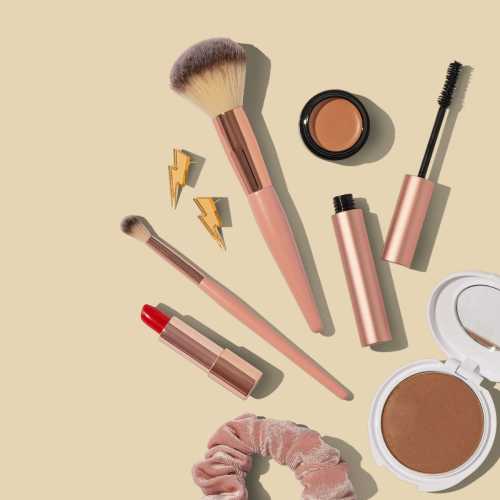
Think of the global beauty industry not as a glamorous runway, but as a high-stakes commercial real estate market undergoing sudden, aggressive rezoning. The old commercial districts—traditional department store counters and basic color cosmetics—are being structurally condemned, while new mixed-use zones like biotech formulations and prestige-in-mass retail corridors are experiencing explosive, unforgiving growth. The global beauty sector is executing a violent structural realignment, characterized by Estée Lauder’s historic profit warnings and travel retail collapse [1], the aggressive regulatory phase-out of synthetic polymers in the EU [2], and the relentless expansion of prestige beauty into mass-market corridors via Sephora’s big-box partnerships [3]. This triad of regulatory, retail, and formulation shocks is fundamentally rewriting the unit economics of consumer care.
The Rheology Crisis and the Microplastic Mandate
The EU's ban on synthetic polymer microplastics is not merely environmental compliance theater; it is a multi-billion-dollar formulation crisis that mainstream financial media is entirely mispricing. Replacing synthetic polymers with natural rheology modifiers fundamentally alters product texture, stability, and shelf-life, forcing massive capital expenditure in research and development. "The EU's synthetic polymer ban is the most significant formulation challenge since the parabens controversy of the early 2000s," warned a recent regulatory briefing by the Personal Care Products Council, emphasizing the sheer technical friction involved in maintaining product efficacy without synthetic binders. Brands that fail to absorb these R&D costs will face immediate product failure and consumer rejection.
Channel Cannibalization and the Death of the Prestige Monopoly
Sephora’s aggressive expansion into Kohl’s and JCPenney is systematically destroying the prestige department store monopoly, but it is simultaneously cannibalizing the mass-prestige hybrid model pioneered by Ulta Beauty. By bringing high-margin prestige brands into big-box environments, the industry is effectively commoditizing the "prestige" label, compressing the customer acquisition cost while eroding the exclusive brand mythology that historically justified premium pricing. "The travel retail channel is undergoing a permanent structural reset, not a cyclical dip," stated Melissa Mitter, senior analyst at Bernstein, highlighting the margin compression facing legacy houses that over-indexed on airport transit hubs. The physical point of sale is being stripped of its exclusivity, forcing brands to compete purely on formulation efficacy rather than retail environment.
The Biotech Oligopoly and Supply Chain Squeeze
The industry's pivot toward biotech and fermented ingredients is creating a new, highly concentrated oligopoly in the upstream supply chain. Brands that do not own their proprietary biotech intellectual property will be systematically squeezed by contract manufacturers who control the fermentation capacity. "We are witnessing the 'skinification' of the entire supply chain, where biotech ingredients are no longer a niche differentiator but the baseline requirement for premium pricing," noted Barbara Stegen, a prominent private equity partner specializing in consumer goods, highlighting the new barrier to entry for indie brands. This vertical integration of ingredient science is shifting the financial power from brand marketing teams to biochemical engineers.
The Defense of the Aspirational Acquisition Funnel
Traditional brand managers argue that placing prestige fragrances and skincare in big-box retailers irreparably dilutes brand equity and alienates the core luxury consumer. However, this perspective ignores the shifting demographic reality of the Gen Z consumer, who actively rejects the intimidating, gatekept environment of legacy department stores. For these brands, the big-box partnership is not a dilution of equity, but a highly optimized customer acquisition funnel that captures the aspirational wallet before the consumer ever considers entering a traditional luxury corridor. The physical retail environment is being repositioned from a temple of exclusivity to a high-volume conversion engine.
The Regulatory Moat and Market Consolidation
Independent beauty founders argue that the stringent EU microplastic regulations and impending MoCRA compliance in the US will bankrupt small players due to prohibitive reformulation and testing costs. Conversely, this regulatory friction acts as a massive protective moat for legacy conglomerates. Houses like L'Oréal and Estée Lauder have already absorbed the hundreds of millions in R&D required to stabilize new natural formulations; when the compliance deadline hits, it will effectively wipe out undercapitalized indie competitors, accelerating market consolidation rather than stifling innovation. The regulatory burden is being weaponized as a strategic tool to clear the competitive landscape.
Echoes of the 1990s Specialty Retail Disruption
This current retail and formulation fracturing closely mirrors the specialty retail disruption of the early 1990s, when brands like The Limited and Gap bypassed traditional department stores to capture the youth demographic directly. That shift permanently altered the power dynamics of apparel, forcing legacy department stores into a marginalized, promotional role. Today’s beauty industry is executing the exact same playbook, moving the point of cultural relevance away from centralized, gatekept counters toward decentralized, accessible, and technologically integrated environments. The lesson from the 1990s is clear: brands that fail to control their direct-to-consumer distribution channels will inevitably lose pricing power and brand narrative.
Strategic Imperatives for Local Operators and Consumers
For local indie beauty brands, the immediate imperative is to secure proprietary biotech IP or exclusive licensing agreements, as reliance on generic contract manufacturing will result in fatal margin compression. Local retail businesses must pivot away from traditional shelf-space models and invest heavily in experiential, service-based beauty consultations, which cannot be replicated by e-commerce or big-box aisles. Citizens and consumers, recognizing the impending texture and efficacy shifts due to regulatory reformulations, should identify and stockpile their legacy, high-performance formulations before the industry-wide transition alters their efficacy profiles.
The Bifurcated Prestige Horizon
Within the next six months, the market will formalize a strictly bifurcated prestige ecosystem. The "mass-prestige" segment will become entirely saturated and promotional, driving a permanent 15% market share loss for traditional color cosmetics as consumers pivot entirely to hybrid skincare-makeup. Concurrently, the "ultra-niche" segment will retreat behind extreme price points and exclusive, invitation-only distribution channels to protect their margins. The traditional middle-market beauty brand will effectively cease to exist, replaced by a polarized duopoly of accessible biotech hybrids and ultra-exclusive heritage houses.
Related Articles
The Bifurcated Vanity: How MoCRA Audits, Biometric 3D Printing, and Medical Spa Pivots Are Dismantling the Aspirational Beauty Economy
Oct 31, 2026
The Molecular Arbitrage: How MoCRA Mandates and Bio-Identical Acquisitions Are Liquidating the Legacy Beauty Supply Chain
Oct 30, 2026
Comments (0)
No comments yet. Be the first to share your thoughts!
Want to join the discussion?
Please log in to post a comment.
Login NoworCreate an Account