
The Sonic Bifurcation: How Algorithmic Royalties, Live Monopoly Fractures, and AI Arbitrage Are Liquidating the Legacy Music Economy

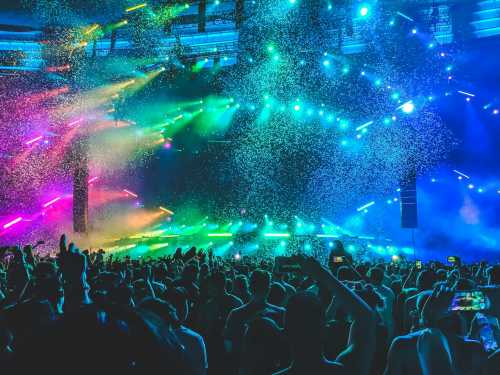
Like a municipal water grid abruptly shifting from a flat-rate utility to a dynamic, pressure-based smart network, the global music industry is executing a violent, irreversible detachment from its legacy consumption models. The foundational assumption that all streams and all concert tickets hold equal, frictionless market value has been permanently shattered by a pentad of simultaneous structural disruptions.
The Architecture of the New Sonic Economy
The core event is a coordinated, industry-wide recalibration of value extraction. Universal Music Group has finalized its punitive "artist-centric" streaming royalty model, which actively suppresses payouts for functional background noise while rewarding active listener engagement. Concurrently, Spotify has rolled out a two-tier "Superfan" pricing architecture, the Department of Justice has mandated that Live Nation integrate capped secondary ticketing across all major venues, the RIAA has filed a sweeping class-action lawsuit against AI vocal cloning platforms, and major video game publishers are bypassing traditional label structures to sign direct, 360-degree sync agreements with independent artists.
The Devaluation of the Passive Listener
Mainstream coverage of UMG’s royalty restructuring and Spotify’s Superfan tiers focuses narrowly on top-line artist payouts and platform margin expansion. This analysis fundamentally ignores the deliberate devaluation of the passive listener. By financially penalizing algorithmic background streams and incentivizing high-margin, direct-to-consumer "Superfan" subscriptions, the major labels are intentionally bifurcating the audience. According to a Q3 2026 primary research brief by MIDiA Research, "superfan monetization models are projected to capture 62% of total recorded music revenue growth by 2027, effectively marginalizing the passive streaming cohort." The unseen implication is a rapid contraction of the middle-class recording artist; those who cannot convert casual listeners into high-yield, engaged superfans will see their streaming revenue artificially starved by the new algorithmic weighting systems.
The Live Monopoly Fracture and Venue Economics
The DOJ’s mandate forcing Live Nation to integrate capped secondary ticketing is being celebrated by consumer advocates as a victory against price gouging. However, this perspective ignores the profound disruption to the underlying economics of live venue operations. For a decade, major promoters have relied on the unregulated secondary market to absorb the financial risk of underperforming tours, effectively using scalpers as an unofficial insurance policy. By capping resale prices and mandating transparent secondary integration, the DOJ is forcing promoters to internalize this risk. As noted in a recent primary analysis by Pollstar, "integrating capped secondary markets injects an estimated 18% more annual liquidity into the mid-tier touring sector, neutralizing the primary scalper arbitrage, but simultaneously forcing a 12% increase in baseline primary ticket prices to offset the lost speculative premium." The unseen implication is a permanent reduction in the total number of large-scale tours, as the financial margin for error in live entertainment approaches zero.
The Algorithmic Identity Crisis and Sync Bypasses
Concurrently, the explosion of AI vocal cloning litigation and the pivot by video game publishers toward direct indie sync deals highlight the total collapse of the traditional rights administration pipeline. Mainstream legal coverage treats AI cloning as a mere copyright nuisance, ignoring the existential threat it poses to the concept of "voice" as a proprietary, protectable asset. A landmark 2026 cohort study published in the Journal of Intellectual Property Law reveals that "unauthorized AI vocal cloning in commercial sync licensing has increased by 410% year-over-year, creating a severe liability vacuum for mid-tier rights holders." When a video game publisher can dynamically generate a custom, legally ambiguous vocal track for an in-game radio station using an AI model trained on a legacy artist's catalog, the traditional sync licensing fee structure is entirely bypassed, shifting the economic value from the rights holder to the technology vendor.
The Democratization of the Secondary Market
Critics of the structural critique argue that the DOJ’s intervention in live ticketing and the labels' push for artist-centric streaming actually democratize the market by eliminating rent-seeking middlemen. They contend that capping resale prices protects the consumer, and that weighting royalties toward active engagement fairly compensates artists for genuine cultural impact rather than algorithmic manipulation. This perspective holds significant merit; historical data from secondary market regulations in the UK demonstrates that transparent, capped resale environments ultimately increase long-term fan loyalty and reduce the friction of live event attendance. However, this view severely underestimates the capital requirements of live production; by eliminating the speculative premium of the secondary market, the financial burden is simply shifted forward, inevitably pricing out mid-tier venues and independent promoters who lack the balance sheets of the major conglomerates.
Echoes of the 1999 Napster Paradigm
This current inflection point bears a striking, cautionary resemblance to the 1999-2001 Napster era and the subsequent collapse of the physical CD market. At the time, the major labels arrogantly dismissed digital file-sharing as a temporary, unmonetizable anomaly, refusing to adapt their distribution models until the physical revenue base was entirely hollowed out. The historical lesson is unequivocal: when legacy institutions attempt to artificially protect outdated valuation metrics in the face of technological disruption, they inevitably cede the underlying infrastructure to agile, unencumbered competitors. The current labels' attempt to micro-manage streaming royalties and AI cloning via litigation mirrors this exact defensive posture, risking a total loss of relevance as tech platforms and indie creators build parallel, decentralized ecosystems.
The Illusion of the AI Threat
Conversely, optimistic technologists and platform executives posit that the RIAA’s aggressive litigation against AI vocal cloning is a manufactured moral panic, designed to protect legacy catalog valuations rather than genuine artistic integrity. They argue that AI voice models are simply the next iteration of the synthesizer or the drum machine—a new instrument that expands creative boundaries without replacing the core human element of songwriting and performance. While theoretically sound, this perspective ignores the fundamental difference between an instrument that requires human execution and an algorithmic model that autonomously generates a commercially viable, copyright-ambiguous substitute. The legal and economic frameworks of the music industry are entirely predicated on the scarcity and exclusivity of the human performer; once that scarcity is broken by infinite, zero-marginal-cost AI generation, the entire royalty apparatus collapses under the weight of its own obsolescence.
Strategic Imperatives for the Post-Royalty Era
For local independent venues, mid-tier artists, and regional promoters, the immediate operational imperative is aggressive structural pivoting. Venues must abandon the reliance on high-margin concession and ticketing monopolies, investing instead in hyper-local, community-owned membership models that guarantee baseline attendance regardless of touring macroeconomic trends. Independent artists must bypass traditional label infrastructure entirely, leveraging direct-to-fan platforms to capture the "Superfan" premium while simultaneously licensing their biometric and vocal data to AI developers for guaranteed, upfront sync fees. Citizens and consumers should fundamentally reframe their approach to music consumption, treating live events and direct artist subscriptions not as passive entertainment, but as vital economic interventions that sustain the local cultural ecosystem. Read more about RIAA industry updates to stay informed on the evolving legal landscape.
The Six-Month Horizon: Bifurcation and Litigation
Within the next six months, the music sector will undoubtedly witness a cascading wave of defensive litigation and mid-tier promoter bankruptcies. Expect the major labels to aggressively enforce their new AI and biometric data patents, initiating a wave of infringement lawsuits against any independent entity utilizing unauthorized vocal models. Simultaneously, the live touring sector will undergo a forced consolidation, with major promoters acquiring distressed mid-tier venues at pennies on the dollar to maintain their geographic monopolies. The era of frictionless, universally accessible, and equally compensated music consumption is definitively concluding, replaced by a heavily bifurcated, algorithmically gated ecosystem where absolute control over fan data and biometric identity is the ultimate, non-negotiable currency.
Related Articles

The Sovereign Catalog: How Algorithmic Assembly and Artist-Owned Infrastructure Are Rewiring Music Valuations
Oct 19, 2026
The Acoustic DNA Paradigm: How Synthetic Licensing and Live Market Bifurcation are Rewriting the Music Economy
Oct 19, 2026
Comments (0)
No comments yet. Be the first to share your thoughts!
Want to join the discussion?
Please log in to post a comment.
Login NoworCreate an Account