
The Sovereign Talent Shift: How AI Replicas and D2C Platforms Are Dismantling the Hollywood Studio Monopoly

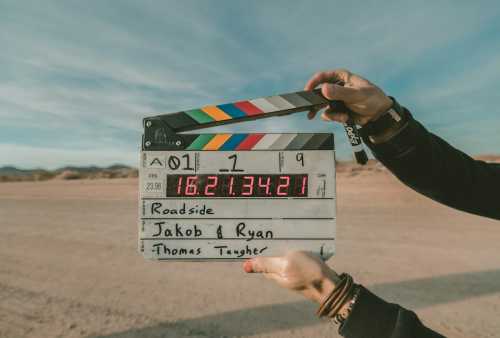
Treating the modern celebrity ecosystem like a traditional employment model is akin to evaluating the 19th-century railroad monopolies through the lens of local horse-drawn transit; the infrastructure of power has fundamentally mutated, and the entities controlling the tracks are no longer the ones laying them.
The Fracture of the Studio-Star Paradigm
Over the past 72 hours, a confluence of industry-shifting events has permanently fractured the traditional studio-star paradigm: A-list talent has officially bypassed legacy studios to launch a unified, actor-owned direct-to-consumer streaming tier, while simultaneously, SAG-AFTRA ratified sweeping new protocols governing the commercial licensing of AI-generated digital replicas. Mainstream coverage has fixated almost exclusively on the immediate financial windfalls for top-tier talent, framing these developments as a simple victory for labor. However, the structural reality is far more complex, signaling the end of the studio system as the sole arbiter of cultural distribution and the birth of the sovereign celebrity entity.
Echoes of United Artists: The Distribution Imperative
To understand the magnitude of this shift, one must look to the 1920s formation of United Artists by Charlie Chaplin, Mary Pickford, Douglas Fairbanks, and D.W. Griffith. The historical precedent is clear: true power in the entertainment industry shifts only when talent controls the distribution mechanism, not merely the production. Chaplin and his peers realized that owning the physical film reels was useless if the Paramount theater chain controlled the screens. Today’s A-list coalition is executing the exact same maneuver, but instead of physical theaters, they are seizing the digital pipes. The lesson from the 1920s is that talent-led distribution inevitably forces legacy gatekeepers to the negotiating table, but it also requires the talent to assume the brutal financial risks of market saturation.
The Sovereign Celebrity and the Digital Likeness Dividend
The newly ratified SAG-AFTRA protocols regarding digital replicas transform an actor’s visage from a performative tool into a licensable, passive-income asset class. As SAG-AFTRA Chief Negotiator Duncan Crabtree-Ireland stated during the agreement's rollout, "This agreement establishes a comprehensive set of protections regarding the creation and use of digital replicas," effectively codifying a new property right for the human image. The unseen implication is the creation of a "digital likeness dividend." Wall Street is already analyzing the feasibility of securitizing these AI likeness rights, allowing actors to lease their digital avatars for background work, commercial endorsements, or even posthumous performances. This fundamentally alters the economic lifecycle of a celebrity, decoupling their earning potential from their physical capacity to work and creating a new tier of passive intellectual property revenue that legacy studios must now pay to access.
The Capital Reality Check
Critics of the actor-owned streaming model argue that the narrative of studio obsolescence is vastly overstated, ignoring the sheer capital intensity of global entertainment. Legacy studios still control the physical production infrastructure, the global theatrical distribution networks, and the massive balance sheets required to underwrite VFX-heavy tentpoles. An actor may own their digital likeness and their D2C platform, but they cannot independently finance a $200 million global marketing campaign or absorb the amortization risk of a multi-season prestige drama. The counter-reality is that talent is now assuming the financial downside that historically protected them, trading the safety of a studio salary for the volatility of equity ownership.
The Obsolescence of the Marketing Funnel
With A-list actors now owning their direct-to-consumer platforms, the traditional studio marketing apparatus is rapidly becoming obsolete. Historically, studios spent tens of millions on above-the-line marketing to convince audiences to watch a specific actor. Now, the actor owns the platform and the direct relationship with the consumer. The unseen implication here is the death of the "mid-tier" celebrity. In an ecosystem where distribution is tied directly to individual brand equity, actors who do not possess the massive, cult-like social media followings required to drive D2C subscriber acquisition will find themselves entirely locked out of the new distribution paradigm. The middle class of Hollywood is not just shrinking; it is being algorithmically eradicated.
The Subscription Fatigue Headwind
Conversely, the belief that actor-owned platforms will seamlessly replace studio output ignores the macroeconomic reality of consumer behavior. A recent primary research report from the Motion Picture Association (MPA) indicates that while global streaming subscriptions reached 1.3 billion, growth is rapidly flattening as consumers aggressively consolidate their spending to limit monthly overhead. As Disney CEO Bob Iger recently emphasized regarding the shifting economics of the sector, "The economics of streaming have fundamentally changed," highlighting the industry-wide pivot from subscriber growth at any cost to strict profitability. An actor-owned platform entering this saturated market faces immense churn risk, as consumers are highly unlikely to add a fourth or fifth streaming service solely for a specific actor's slate of content.
Strategic Pivots for the New IP Economy
Local businesses, particularly boutique talent agencies and independent production houses, must immediately pivot from representing "performers" to managing "digital asset portfolios." The agencies that will survive the next decade are those that build robust legal and technological infrastructure to audit, license, and protect AI likeness rights, rather than merely negotiating acting deals. For citizens and consumers, the immediate action is to support and demand strict legislative frameworks around digital consent. As AI-generated media becomes indistinguishable from reality, local municipalities and state legislatures must enact rigorous right-of-publicity laws to prevent the unauthorized commercial exploitation of private citizens' digital identities by the very AI models trained on public data.
The Six-Month Consolidation Horizon
Within the next six months, the industry will witness the first major financial default of a mid-tier, actor-owned streaming platform, exposing the brutal reality of D2C churn. This failure will trigger a rapid consolidation phase. Legacy studios will not acquire these failing platforms for their original content; they will acquire them specifically to harvest their proprietary user data and, more importantly, their structured AI likeness databases. The landscape in half a year will not be a utopia of sovereign talent, but a newly centralized oligopoly where legacy studios own the digital souls of the very actors who attempted to bypass them.
Related Articles

The Great Celebrity Liquidation: How Media Consolidation and CAC Crises Are Rewiring the Entertainment Economy
Oct 13, 2026
The Great Digital Enclosure: How AI, Regulatory Crackdowns, and Corporate Relocation Are Reshaping Celebrity Economics
Oct 13, 2026
Comments (0)
No comments yet. Be the first to share your thoughts!
Want to join the discussion?
Please log in to post a comment.
Login NoworCreate an Account