
The Spectacle Deficit: How Carbon Mandates and Audience Fragmentation Are Rewiring Live Events


The Grand Hotel Illusion: A Systemic Decay of Prestige Treating the modern awards and live events industry like a decaying grand hotel that continuously repaints its lobby while the foundational plumbing corrodes perfectly encapsulates the current trajectory of global entertainment spectacles. The 2026 awards season saw broadcast viewership hit multi-year lows, while simultaneously, live event organizers faced unprecedented regulatory pressure to decarbonize operations and justify massive sponsorship expenditures. This convergence marks a definitive end to the era of unchecked, prestige-driven spectacle, forcing a structural recalibration of how cultural capital is manufactured and monetized.
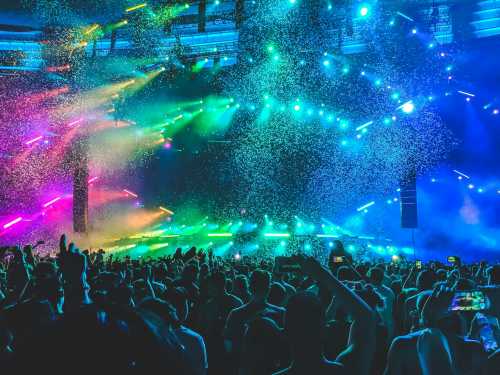
The Carbon Mandate and the Logistics of Spectacle Mainstream coverage frequently celebrates sustainability initiatives at major festivals as a triumph of corporate social responsibility, obscuring the severe operational and financial friction these mandates introduce. The reality is that audience travel can account for up to 80% of an event's carbon footprint, creating a logistical paradox for destination gatherings www.instagram.com . While pioneering events like the Ultra Music Festival are making history by powering stages with zero-emission batteries, the capital expenditure required to retrofit legacy infrastructure is prohibitive for mid-tier organizers umfworldwide.com . The unseen implication is a rapid consolidation of the live events market. Only mega-corporations with the balance sheets to absorb the cost of renewable energy transitions and carbon-offset compliance will survive, effectively pricing out independent promoters and homogenizing the cultural landscape into a handful of sanitized, corporate-approved experiences.
The Weaponization of the Mega-Event Concurrently, the cultural function of flagship events has mutated from unifying national spectacles into polarized brand-risk liabilities. The selection of artists for premier platforms, such as the 2026 Super Bowl halftime show, has become a flashpoint in broader cultural debates, transforming entertainment into a vector for ideological friction www.statista.com . Despite this volatility, the financial machinery remains robust, with reports indicating that Apple Music pays the NFL $50 million annually to sponsor the Super Bowl halftime show, underscoring the immense, albeit risky, value of concentrated attention www.facebook.com . The unseen implication for brands is an asymmetric risk profile. The potential for viral backlash now necessitates exhaustive, multi-layered vetting processes that inflate production overhead and encourage risk-averse, algorithmically safe programming, ultimately sterilizing the creative spontaneity that once made these events culturally resonant.
The Fragmentation of the Broadcast Funnel The traditional television awards show model is experiencing terminal decay, yet industry analysts continue to treat it as a temporary cyclical downturn rather than a structural obsolescence. Major ceremonies, including the Oscars, recently reported viewership figures hitting a four-year low, reflecting a permanent shift in audience consumption habits people.com . The unseen implication is the collapse of the legacy advertising funnel. For decades, the three-hour broadcast served as a highly lucrative, captive-audience vehicle for premium advertisers. As viewership splinters across fragmented digital platforms and short-form clips, the return on investment for traditional 30-second broadcast spots plummets. Networks are left holding expensive, long-term broadcast rights contracts for assets that no longer command the mass attention required to justify their cost basis.
The ROI of Green Infrastructure Critics of this bearish assessment argue that the stringent environmental mandates are ultimately a catalyst for long-term operational efficiency rather than a destructive burden. Proponents emphasize that transitioning to renewable energy sources and implementing rigorous waste-reduction protocols significantly lowers variable utility costs over the lifecycle of a venue. From this perspective, the initial capital outlay for green infrastructure is not a regulatory penalty, but a strategic investment that future-proofs assets against volatile fossil fuel markets and aligns with the purchasing values of a younger, environmentally conscious demographic, thereby securing long-term brand loyalty.
The Enduring Value of Physical Congregation Furthermore, assertions of a total industry collapse ignore the resilient, irreplaceable value of in-person professional networking and cultural validation. Despite the absence of traditional blockbuster premieres, the 2026 Cannes Film Festival and Cannes Market announced official attendance figures reporting that some 40,000 industry professionals from 140 countries convened in person www.hollywoodreporter.com . This demonstrates that high-stakes B2B dealmaking and the cultural cachet of physical presence cannot be fully replicated by digital alternatives. The live event industry is not dying; it is merely shedding its reliance on passive, mass-audience broadcasting in favor of high-yield, exclusive, in-person experiences.
Echoes of the Vaudeville-to-Television Pivot History provides a stark warning regarding the refusal of legacy formats to adapt to shifting technological paradigms. The current crisis in televised awards shows directly mirrors the 1950s transition from vaudeville and radio to television. During that era, legacy vaudeville producers initially dismissed television as a novelty, attempting to force theatrical, broad-stroke performances onto a medium that demanded intimacy and realism. The format only survived when producers completely reinvented the structure to suit the new medium's constraints. The lesson is unequivocal: clinging to the three-hour, commercial-heavy broadcast format in an era of on-demand, short-form attention is a futile defense of a dead medium. Adaptation requires fundamental structural reinvention, not superficial cosmetic updates.
Strategic Imperatives for Stakeholders Local businesses and municipal organizers must immediately decouple their event strategies from the legacy broadcast model. Hospitality and retail entities should pivot from broad, expensive event sponsorships toward hyper-targeted, community-level activations that capture the decentralized foot traffic of micro-festivals and localized award ceremonies. Citizens and investors should rigorously audit the financial health of event-centric hospitality stocks, demanding transparent, audited carbon accounting and avoiding entities overly leveraged on the assumption of perpetual, mass-audience growth. Independent creators should bypass traditional award circuits entirely, leveraging direct-to-consumer platforms to build niche, highly engaged communities that offer superior monetization per capita.
The Six-Month Horizon: Regulatory and Format Fracture Within the next six months, the live events and awards landscape will undergo a violent structural correction. Major broadcast networks will likely announce the formal decoupling from traditional three-hour award show formats, replacing them with multi-day, platform-specific micro-events and digital-first highlight reels to salvage advertising revenue. Simultaneously, municipal governments in major cultural hubs will enact strict "green permits," legally mandating comprehensive carbon footprint disclosures and emission caps for any gathering exceeding a specific attendance threshold. The era of treating live spectacles as frictionless, infinitely scalable attention machines is conclusively over; the next phase will be defined by aggressive regulatory oversight, the bifurcation of mass digital content versus exclusive physical experiences, and a premium valuation placed on verifiable, sustainable event production.
Industry Resource:Festival de Cannes: Official Industry Attendance and Market Reports
Related Articles
The Prestige Cartel: How Blockchain Mandates, Spatial Computing, and Sovereign Financing are Obliterating the Legacy Awards Paradigm
Oct 15, 2026
The Fiat Currency of Prestige: How Biometric Access, AI Certification, and Dynamic Pricing are Rewiring the Live Events Economy
Oct 14, 2026
Comments (0)
No comments yet. Be the first to share your thoughts!
Want to join the discussion?
Please log in to post a comment.
Login NoworCreate an Account