
The Streaming Extraction Engine: How Bundles, Ad-Tiers, and Fragmented Sports Are Rewiring Viewer Economics

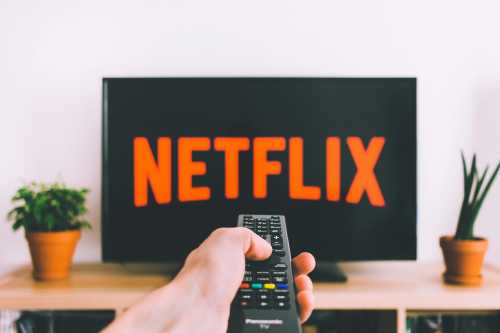
Like a utility company that gradually replaces transparent flat-rate billing with a labyrinth of dynamic, usage-based surcharges, the modern streaming ecosystem has quietly transitioned from a consumer-friendly utility to an extractive monetization engine. The era of subsidized growth is over, replaced by aggressive margin optimization that fundamentally alters how audiences access and pay for digital entertainment.
The Monetization Pivot and Margin Extraction
The streaming industry has definitively pivoted from a growth-at-all-costs subscriber acquisition model to aggressive margin extraction, characterized by password-sharing crackdowns, the proliferation of ad-supported tiers, and the strategic consolidation of content into mega-bundles. This structural shift is no longer theoretical; it is empirically dominant. Recent data confirms that 45% of Netflix U.S. households now watch on the ad-supported tier, a significant jump from 34% in 2024 [[37]]. Mainstream coverage celebrates this as a victory for corporate profitability, but it ignores the unseen implication: the systematic degradation of the baseline user experience. Platforms are intentionally engineering friction into ad-free tiers—through price hikes and feature gating—to funnel price-sensitive consumers into data-harvesting advertising models. The consumer is no longer the customer; they are the inventory being sold to programmatic advertisers.
The FAST Channel Illusion and Content Devaluation
Concurrently, the rise of Free Ad-supported Streaming TV (FAST) channels is frequently mischaracterized as a democratizing force for cord-cutters. In reality, it represents a secondary market for devalued intellectual property. The number of FAST channels rose 21% in 2025 alone, with programming increasing by 11% during the same period, according to Gracenote's analysis [[35]]. While marketed as "free," these platforms monetize viewer attention through high-frequency, unskippable ad loads and extensive behavioral data collection. Legacy studios use FAST channels as a dumping ground for underperforming library content, effectively creating a digital ghetto that normalizes low-bitrate, algorithmically programmed linear feeds. This bifurcates the market: premium, narrative-driven content remains behind paywalls, while the masses are pacified with synthetic, low-cost programming that generates high-margin ad revenue for platform operators.
The Fragmentation of Live Sports Rights
The most severe disruption to consumer economics is the aggressive fragmentation of live sports broadcasting. Tech-native platforms are systematically dismantling the traditional cable bundle by acquiring exclusive, high-value sports rights. As industry analysts note, sports streaming is no longer just the future; it is the present, with leagues spreading rights across Amazon, Apple, ESPN, Netflix, Peacock, YouTube, and more [[18]]. This decentralization forces consumers to subscribe to multiple specialized services to follow a single team or league. The unseen implication is the erosion of shared cultural moments. When a marquee event is siloed behind a proprietary tech ecosystem, it ceases to be a communal experience and becomes a fragmented, pay-to-view commodity, disproportionately excluding lower-income demographics from participating in mainstream cultural discourse.
Counter-Argument: The Consumer Sovereignty Defense
Critics of the "extractive engine" narrative argue that the current wave of mega-bundles (such as the Disney+, Hulu, and Max consolidations) actually represents a net benefit for consumer sovereignty. Proponents correctly note that the à la carte streaming model of the early 2020s resulted in subscription fatigue and higher aggregate monthly costs for households attempting to access diverse content libraries. By re-bundling services at a discounted aggregate rate, platforms are offering a mathematically superior value proposition compared to maintaining five or six standalone subscriptions. From this perspective, the industry is not regressing to cable-era monopolies, but rather evolving toward a rationalized, efficient market structure that aligns with actual consumer viewing habits and budget constraints.
Counter-Argument: The Sports Accessibility Dividend
Similarly, defenders of sports rights fragmentation argue that tech platforms bring superior user experience, global distribution, and innovative production values that legacy broadcasters could never match. While the initial transition requires consumers to navigate new apps, the long-term effect is the democratization of niche sports. Leagues like women's professional basketball or international soccer, which were historically marginalized by traditional cable networks, are now securing lucrative, dedicated streaming deals that guarantee production quality and global visibility. Therefore, the short-term friction of platform migration is an acceptable trade-off for the long-term expansion and financial viability of diverse sporting properties.
Echoes of the 1990s Cable Consolidation
This current convergence of bundling, ad-tier pressure, and rights fragmentation directly mirrors the cable television consolidation of the 1990s. During that era, the promise of "500 channels of choice" rapidly devolved into opaque pricing, forced carriage of underperforming networks, and the erosion of à la carte purchasing. The historical lesson is unambiguous: when a fragmented market becomes operationally inefficient for both providers and consumers, capital will inevitably force consolidation. However, the entity that controls the aggregation layer (the bundle) captures the majority of the economic surplus. Streaming is not disrupting the cable model; it is recursively becoming it, complete with the same anti-competitive tendencies and consumer disenfranchisement, merely delivered over IP protocols instead of coaxial cables.
Strategic Imperatives for Stakeholders
Local businesses, independent creators, and consumers must proactively adapt to this volatile media landscape. Consumers should immediately audit their subscription portfolios, adopting a "rotational viewing" strategy where services are subscribed to for a single month to consume specific content and then canceled, rather than maintaining perpetual, dormant subscriptions. Local hospitality venues, such as independent bars and community centers, have a unique opportunity to capitalize on sports fragmentation by offering centralized, multi-screen viewing experiences that alleviate the burden of consumers needing multiple personal streaming subscriptions. For content creators, diversifying revenue streams away from platform-dependent ad-revenue shares toward direct-to-consumer patronage and owned intellectual property is now an operational necessity, not a strategic option.
The Six-Month Horizon: Regulatory Friction and Market Bifurcation
Within the next six months, the streaming sector will experience intensified regulatory scrutiny and acute market bifurcation. Federal trade authorities will likely launch formal investigations into the anti-competitive nature of exclusive sports streaming bundles and the data privacy practices of ad-supported tiers. Simultaneously, we will witness the first major wave of casualties among mid-tier, standalone streaming services that lack the capital reserves to compete in the bundling wars. The market will definitively split into two tiers: a consolidated oligopoly of tech-media giants offering comprehensive, high-cost bundles, and a sprawling, low-margin FAST ecosystem. The entities that survive this transition will be those that successfully decouple their financial viability from opaque algorithmic metrics, building resilient, direct-value relationships with their audience base.
Related Articles

The Railroad Barons of Attention: How September 2026 Killed the Streaming Gold Rush
Sep 30, 2026The Streaming Reckoning: How the Mega-Bundle and Synthetic Localization Are Dismantling the Standalone Platform Era
Sep 29, 2026
Comments (0)
No comments yet. Be the first to share your thoughts!
Want to join the discussion?
Please log in to post a comment.
Login NoworCreate an Account