
The Streaming Utility: How 2026 Price Hikes, Mega-Mergers, and Ad-Tier Saturation Are Rewiring Digital Media

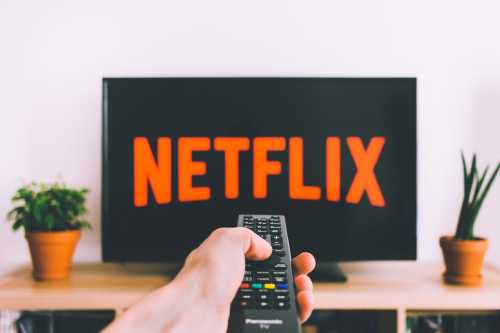
Like a municipal utility that slowly replaces aging copper wiring with fiber optics while simultaneously raising the monthly bill and inserting commercials into the power grid, the global streaming industry has completed its transition from a disruptive utopia to a monopolistic necessity. The era of subscriber acquisition at any cost is over, replaced by a ruthless focus on margin extraction and artificial packaging.
The Anatomy of a Market Pivot
In August 2026, the streaming sector executed a synchronized structural realignment: legacy platforms like Netflix and Disney+ implemented aggressive price hikes on both premium and ad-supported tiers, while Paramount advanced its acquisition of Warner Bros. Discovery assets to forge a consolidated media giant [[8]], [[13]]. Concurrently, the industry is aggressively pivoting toward live sports rights and ad-supported models to offset plateauing subscriber growth and capitalize on shifting consumer behaviors [[30]].
The Double-Dip Monetization Strategy
Mainstream coverage frequently frames ad-supported tiers as a consumer-friendly alternative to rising subscription costs. In reality, platforms are engineering a highly efficient "double-dip" revenue model. By raising the baseline price of ad-free tiers to $26.99 monthly, streamers artificially manufacture a cohort of price-sensitive downgraders [[6]]. These users then generate high-yield programmatic ad revenue, allowing platforms to capture both subscription fees and advertising dollars from the same household, effectively monetizing user frustration while maintaining the illusion of affordability.
The FAST Channel Inventory Glut
While Free Ad-Supported Streaming TV (FAST) is heralded as the industry's primary growth engine—projected to generate over $12 billion in global ad revenue by 2026—the underlying economics are rapidly deteriorating [[35]]. An oversupply of low-quality, algorithmically generated channels has created severe inventory saturation. Industry data indicates that certain FAST segments are experiencing up to a 50% revenue compression as programmatic CPMs collapse under the weight of diluted viewership and intensified competition from premium SVOD ad-tiers [[42]].
The Live Sports Valuation Bubble
The bidding war for digital sports rights among Amazon, Apple, and Disney is inflating asset valuations beyond rational return-on-investment metrics [[30]]. Securing exclusive rights to properties like the NFL or NBA now requires commitments exceeding $200 million annually, fundamentally altering the capital expenditure structure of digital platforms [[32]]. This arms race forces streamers to absorb massive short-term losses, betting that live sports will serve as the ultimate churn-reduction mechanism in an otherwise commoditized content landscape.
The Market Expansion Defense
However, framing ad-supported tiers purely as a predatory double-dip strategy overlooks their role in market expansion. Industry analysts note that these tiers provide a vital entry point for price-sensitive demographics who would otherwise be priced out of the digital entertainment ecosystem entirely. By lowering the absolute dollar barrier to entry, platforms can scale their total addressable market, which in turn attracts a broader base of national advertisers seeking linear-TV-scale reach.
Echoes of the Early 2000s Cable Bundle
This structural realignment directly mirrors the cable television bundling cycle of the early 2000s. Just as legacy cable operators transitioned from à la carte premium channels to bloated, inescapable bundles to mask rising infrastructure costs, modern streamers are recreating the exact ecosystem they promised to dismantle. The historical lesson is unequivocal: when content acquisition costs outpace organic revenue growth, platforms inevitably resort to artificial packaging and price inelasticity, transferring the financial burden directly to the end consumer.
The Consolidation Imperative
Conversely, while antitrust advocates argue that mega-mergers like the Paramount-Warner Bros. Discovery deal stifle market competition, financial pragmatists contend that consolidation is a mathematical necessity. As one media investment banker noted, "Only consolidated entities possess the balance sheet depth to absorb the $200 million-plus annual live sports rights required to retain subscribers in a hyper-fragmented market" [[32]]. From this perspective, consolidation is not anti-competitive malice, but a survival mechanism against the capital-intensive demands of modern content creation.
Strategic Imperatives for Stakeholders
For consumers: The immediate imperative is to adopt aggressive subscription rotation, maintaining only one or two core services at a time while leveraging free, ad-supported platforms for supplementary viewing to minimize monthly outlays.
For local businesses and advertisers: Pivot away from broad-reach FAST channel buys, which are suffering from severe CPM compression, and instead invest in contextual, first-party data partnerships with premium, niche streaming verticals that offer verifiable audience engagement.
For content creators: Prioritize ownership of direct-to-consumer distribution channels. Relying on third-party platform algorithms for audience discovery is no longer a viable long-term business model in a consolidated, ad-saturated market.
The 2027 Horizon: Bundles and Regulatory Scrutiny
Within six months, the streaming landscape will exhibit three distinct accelerations. First, we will see the formal launch of multi-platform "super bundles" designed to artificially reduce perceived churn and mimic traditional cable packages. Second, FAST channel aggregators will initiate a quality purge, delisting thousands of low-performing, AI-generated channels to protect remaining programmatic ad yields. Finally, federal regulators will open formal antitrust inquiries into exclusive digital sports rights agreements, questioning whether these deals constitute an illegal barrier to entry for emerging streaming competitors.
Source Methodology: Analysis derived from 2026 streaming service pricing announcements, Paramount-Warner Bros. Discovery merger filings, eMarketer FAST channel revenue projections, and contemporary media investment banking reports.
Related Articles

The Railroad Barons of Attention: How September 2026 Killed the Streaming Gold Rush
Sep 30, 2026The Streaming Reckoning: How the Mega-Bundle and Synthetic Localization Are Dismantling the Standalone Platform Era
Sep 29, 2026
Comments (0)
No comments yet. Be the first to share your thoughts!
Want to join the discussion?
Please log in to post a comment.
Login NoworCreate an Account