
The Structural Bifurcation of Cultural Validation: How Awards Shows Are Fragmenting and Monetizing

Just as a legacy retail giant that ignores the shift to e-commerce will eventually find its flagship stores empty while its online competitors capture the market, the traditional broadcast awards ecosystem is undergoing a structural collapse. The Structural Bifurcation: Legacy award ceremonies are experiencing steep linear viewership declines and skyrocketing campaign costs, while simultaneously being disrupted by the rapid legitimization of creator-led award ecosystems. This bifurcation forces traditional institutions to pivot toward hyper-monetized, experiential live events and fragmented streaming distribution to maintain cultural relevance.
The "For Your Consideration" Arms Race and Indie Extinction
The first unseen implication of this industry-wide pivot is the weaponization of awards campaigning, which has become detached from actual production budgets, creating an insurmountable barrier to entry for mid-budget and independent films. The mainstream narrative celebrates the artistic merit of nominees, deliberately ignoring the financial engineering required to secure a nomination. Recent industry analysis reveals that independent distributor Neon spent $18 million on prints, advertising, and awards campaign efforts for the film Anora, representing three times its $6 million production budget www.facebook.com . This inflationary spiral means that awards recognition is no longer a pure reflection of critical consensus, but a function of capital deployment. Consequently, the "prestige" economy is actively cannibalizing the mid-budget film sector, as studios reallocate finite marketing dollars toward a handful of guaranteed frontrunners, leaving nuanced, lower-budget projects without the financial oxygen required to compete.
The Illusion of Institutional Obsolescence
However, declaring the traditional awards show entirely "dead" based solely on linear television ratings is an analytically flawed, one-sided perspective. Mainstream media frequently cites dropping broadcast viewership—such as the Oscars falling to approximately 18 million viewers—as proof of irrelevance www.marketingbrew.com . This ignores the massive, fragmented viewership that occurs across streaming platforms and social media clips. An August AP-NORC survey found that 61% of adults aged 18-44 reported watching a clip from an awards show at least once, suggesting that significant cultural vitality remains, albeit in decentralized, asynchronous formats www.ap.org . The institution is not dying; it is merely migrating from a monolithic broadcast event to a distributed, multi-platform content engine.
The Gentrification of Live Spectacle
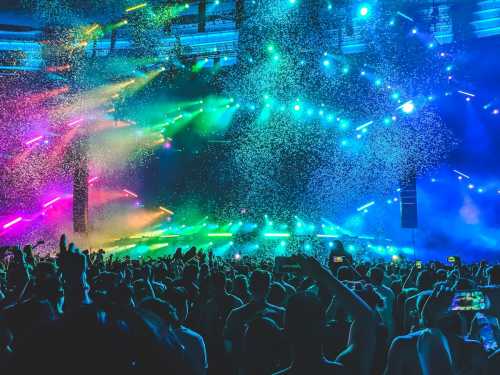
A second, compounding implication is the aggressive monetization of the live event component of awards shows through dynamic pricing and exclusive VIP tiers. As traditional broadcast advertising revenue wanes, organizers are extracting maximum yield from the physical audience. The cost of staging a live event has risen by approximately 30% in recent years, a burden that is disproportionately passed down to consumers through algorithmic pricing models www.linkedin.com . This "VIP-ification" effectively gentrifies the awards experience, pricing out middle-class fans and industry workers who historically populated these events. The red carpet is no longer a democratic celebration of art; it is a highly curated, high-yield hospitality product designed for corporate sponsors and ultra-high-net-worth individuals, fundamentally altering the cultural ethos of the event.
The Cross-Subsidization Defense
Critics who condemn dynamic pricing and premium VIP packages as purely predatory often overlook the complex financial realities of modern event production. Event organizers and ticketing platforms argue that these premium tiers are a necessary mechanism to cross-subsidize base production costs. In an environment of high inflation and rising logistical expenses, extracting maximum revenue from a small segment of price-inelastic buyers allows organizers to keep general admission tickets artificially lower than they would be in a purely unsegmented, free-market scenario. Without these high-margin VIP sales, many large-scale live productions would be financially unviable, leading to a net reduction in the total number of events produced.
The Epistemological Shift to Creator-Led Validation
The third critical implication is the erosion of traditional institutions' monopoly on cultural validation. Legacy awards bodies are losing their gatekeeper status to decentralized, creator-led ceremonies like the Streamy Awards, which now command the demographic attention that traditional shows have abandoned. This is not merely a niche trend; it represents a fundamental shift in where cultural capital is generated. Industry projections indicate that by 2028, brands are expected to spend more money boosting creator content than the creators themselves earn from producing it www.instagram.com . When traditional institutions begin recognizing creator work as legitimate, it signals that the awards are simply legacy organizations catching up to a reality that the digital ecosystem has already normalized mail.creatoreconomynyc.com . The center of gravity for cultural influence has permanently shifted from Los Angeles banquet halls to digital community hubs.
Echoes of the 1990s Music Industry Gatekeeper Collapse
To understand the trajectory of this cultural realignment, one must examine the historical precedent of the late 1990s music industry. During that era, radio programmers and MTV executives operated under the delusion that their curated playlists were indispensable to an artist's success. They believed their institutional prestige guaranteed audience compliance. However, the advent of peer-to-peer file sharing and early internet forums decentralized music discovery, rendering the traditional A&R gatekeeping model obsolete almost overnight. The lesson from that era is stark: when cultural institutions assume their historical prestige is sufficient to command attention in a decentralized media landscape, they are swiftly bypassed. Legacy awards shows are currently repeating this exact error, clinging to broadcast traditions while the audience has already migrated to algorithmic and community-driven validation.
Strategic Imperatives for Market Participants
For local businesses and brand marketers, the immediate imperative is to reallocate sponsorship dollars away from traditional, high-cost broadcast ad buys toward integrated, creator-led award activations or experiential VIP hospitality, where audience engagement is directly measurable and less susceptible to linear ratings decay. For citizens and consumers, the actionable takeaway is to treat legacy award nominations as indicators of marketing expenditure rather than objective artistic merit, while utilizing secondary market price-alert tools to avoid the worst excesses of dynamic ticketing traps. Finally, independent filmmakers and creators must pivot campaign budgets toward grassroots, digital-first community building and targeted social media engagement, as traditional "For Your Consideration" billboards and print ads now yield rapidly diminishing returns.
The Six-Month Horizon
Looking ahead to the next two quarters, the awards and live events landscape will be defined by regulatory friction and structural adaptation. We anticipate the Federal Trade Commission will intensify its scrutiny around "junk fees" and dynamic pricing in live event ticketing, building upon its recent all-in pricing mandates for the live-event sector www.mordorintelligence.com . Concurrently, we expect at least one major legacy awards organization to announce a permanent shift to a hybrid, multi-night streaming format, officially abandoning the single-night, linear broadcast model that is no longer financially sustainable. Most significantly, a major traditional Hollywood studio will publicly partner with a top-tier digital creator collective to co-produce an awards campaign, permanently blurring the line between legacy prestige and digital influence. The era of the monolithic, broadcaster-controlled awards show is definitively ending; the age of fragmented, hyper-monetized, and creator-driven cultural validation has begun.
Related Articles

The Illusion of the Digital Panacea: How AI and Web3 Are Dismantling the 2026 Awards Economy
Sep 28, 2026
The Algorithmic Ledger of Prestige: How Quotas, Biometric Ticketing, and IP Valuations are Dismantling the Legacy Awards and Live Events Economy
Sep 25, 2026
Comments (0)
No comments yet. Be the first to share your thoughts!
Want to join the discussion?
Please log in to post a comment.
Login NoworCreate an Account