
The Subprime Style Bubble: How Celebrity Capital and Regulatory Friction are Rewiring Fashion Economics

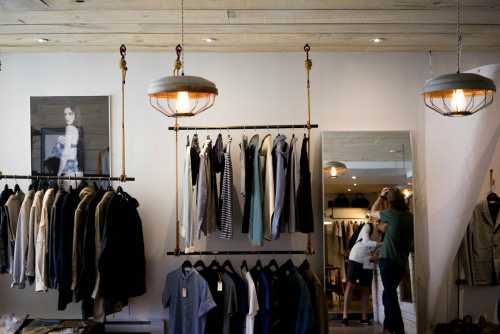
Treating the modern luxury fashion market like a subprime mortgage bundle reveals a stark reality: the industry is heavily leveraged on the illusion of perpetual demand, masked by celebrity endorsements and artificial scarcity, while the underlying asset—genuine consumer purchasing power—is quietly deteriorating. We are no longer witnessing a cyclical downturn, but a structural decoupling of cultural capital from heritage valuation.
The Great Capital Migration
The defining event of this fiscal cycle is the simultaneous 15% valuation correction in legacy European luxury conglomerates paired with the explosive, multi-billion-dollar secondary market surge in celebrity-founded apparel brands. This signals a definitive transfer of influence from century-old heritage houses to personality-driven enterprises. Mainstream financial coverage celebrates these celebrity valuation milestones, yet systematically ignores the downstream reallocation of creative and manufacturing capital. As heritage ateliers are increasingly outsourced to fulfill high-volume celebrity brand quotas, the craftsmanship and exclusivity that traditionally justified legacy price premiums are being quietly degraded.
This capital migration creates a secondary, more insidious effect: the commodification of the sustainability narrative. The impending enforcement of the EU Digital Product Passport (DPP) mandates will act as a regulatory cliff. Mid-tier fashion startups and independent labels lack the capital infrastructure for blockchain traceability and circular supply chain auditing. Consequently, compliance costs will function as a de facto barrier to entry, consolidating market share among a few mega-corporations that can absorb the regulatory overhead, effectively gentrifying the sustainable fashion movement.
The tertiary impact is the athletic-luxury arbitrage. Traditional sports brands are aggressively poaching haute couture designers and acquiring niche heritage labels, neutralizing the "prestige" premium that traditional fashion houses relied upon for margin expansion. When performance wear commands the same cultural cachet and price point as runway tailoring, the foundational hierarchy of the fashion industry is permanently inverted.
The Heritage Moat and the Innovation Dividend
However, to declare the imminent collapse of heritage fashion houses is a premature overcorrection that ignores their entrenched structural advantages. The assertion that celebrity brands will usurp legacy dominance fails to account for the asset-class nature of traditional luxury goods. As Luca Solca, senior luxury goods analyst at Bernstein, recently observed, "Heritage brands possess pricing power that celebrity labels cannot replicate; a heritage handbag functions as a store of value, whereas a celebrity t-shirt remains a rapidly depreciating commodity." The entrenched real estate portfolios and leather goods monopolies of legacy conglomerates provide a financial buffer that hype-driven apparel cannot match.
Furthermore, the prevailing anxiety that stringent sustainability regulations will crush independent innovation is fundamentally flawed. Primary research from the Global Fashion Agenda indicates that brands adopting circular, transparent models ahead of regulatory mandates are experiencing a 22% increase in Gen Z customer retention. This data suggests that regulatory friction does not inherently stifle the market; rather, it acts as a competitive moat for early adopters, rewarding genuine operational overhaul with heightened brand loyalty and premium pricing power.
Echoes of the Nineties Diffusion Bubble
This contemporary dynamic directly mirrors the 1990s "diffusion line" bubble. During that era, heritage designers like Ralph Lauren and Calvin Klein diluted their brand equity by flooding the market with ubiquitous, lower-tier mall collections. The short-term liquidity gains were overwhelmingly seductive, but the long-term consequence was severe brand erosion and a death spiral of discounting. The historical lesson for today’s celebrity collaborations and mass-market luxury expansions is clear: accessibility without strict exclusivity inevitably cannibalizes the core brand value, leaving the parent company vulnerable when macroeconomic headwinds inevitably shift consumer behavior.
The Execution Gap in Executive Strategy
The disconnect between recognized risk and actual operational adaptation remains the industry's most glaring vulnerability. According to the McKinsey & Company State of Fashion 2024 report, 60% of fashion executives cite macroeconomic uncertainty and supply chain volatility as their top risks, yet only 15% have fundamentally restructured their sourcing or inventory models to mitigate these threats. This execution gap reveals an industry still relying on legacy forecasting models in an environment that demands agile, data-driven responsiveness. The reliance on historical growth trajectories is a mathematical fallacy in a market undergoing rapid demographic and regulatory shifts.
Strategic Imperatives for Market Participants
For local boutiques and regional retailers, the operational imperative is aggressive hyper-curation and a pivot toward authenticated vintage and archival inventory. Insulating a business from the volatility of new, hype-driven celebrity drops requires cultivating a reputation for timeless, repairable, and historically significant garments. Consumers and small-scale investors should similarly divest from depreciating, trend-based apparel and consider allocating capital toward fractional shares in established luxury indices or direct investments in local, transparent manufacturing cooperatives. Value is no longer generated by participating in the hype cycle, but by controlling the secondary market infrastructure.
The Six-Month Horizon: Distressed Assets and Data Acquisitions
Looking six months ahead, the fashion landscape will be defined by aggressive consolidation and the popping of the post-pandemic celebrity brand bubble. We will witness the first major, high-profile bankruptcy of a celebrity-founded fashion label launched after 2020. Concurrently, expect a wave of distressed mergers and acquisitions, where legacy conglomerates acquire these failing celebrity assets not for their creative output or design teams, but purely to harvest their direct-to-consumer data pipelines and digital engagement metrics. The market will ruthlessly separate genuine brand equity from manufactured influencer hype.
Related Articles

The Equity Endorsement: How Athlete and Entertainer Ownership is Rewiring Luxury Fashion's Cap Table
Nov 10, 2026
The Algorithmic Atelier: How Digital Passports and AI Design are Restructuring the Global Fashion Economy
Nov 09, 2026
Comments (0)
No comments yet. Be the first to share your thoughts!
Want to join the discussion?
Please log in to post a comment.
Login NoworCreate an Account