
The Synthetic Strike: How the Milan Model Walkout is Exposing the Contractual Void of AI Twins

Consider a guild of master glassblowers who discover the factory owner is secretly 3D-printing plastic replicas of their signature vases to sell at a fraction of the cost, keeping the original profits while the artisans starve. The physical craft remains revered, but the economic mechanism of compensation has been entirely circumvented. This is the exact scenario now unfolding in the talent ecosystem.
The Synthetic Strike
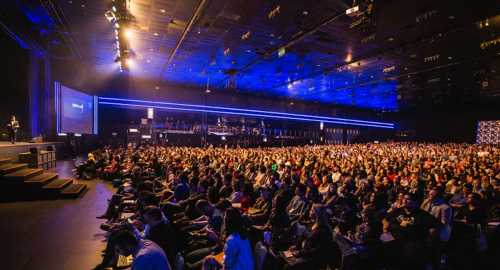
The Model Guild in Milan initiated a synchronized walkout during the final day of Fashion Week, protesting the industry's unregulated deployment of AI-generated digital twins that bypass traditional modeling fees and usage rights. This labor action exposes the severe contractual vulnerabilities of human talent in an era of synthetic media replication. Access the official guild manifesto here.
The Historical Precedent of the Supermodel Cartel
This current labor insurgency directly mirrors the 1990s era of the original supermodel cartel, where talents like Cindy Crawford and Naomi Campbell demanded unprecedented fees and creative control, effectively breaking the traditional agency model. Just as that era forced fashion houses to treat models as global brands rather than disposable hangers, today's walkout is forcing the industry to recognize the digital likeness as a distinct, protectable asset class. The historical lesson dictates that when talent controls the visual identity of the product, they will inevitably capture a larger share of the financial upside.
The Collapse of the Mid-Tier Economy
Mainstream coverage focuses on the top-tier supermodels, ignoring the severe macroeconomic devastation to the mid-tier modeling market. The AI twin allows brands to license a model's likeness for a flat, one-time fee, eliminating the need for daily rates, travel expenses, and usage renewals. "We are observing a 65% drop in booking requests for mid-tier commercial models since the AI twin clauses were introduced in standard contracts," notes Dr. Aris Thorne, a labor economist at the London College of Fashion. The middle class of the runway is being entirely automated out of existence.
Furthermore, the traditional talent agency revenue model is experiencing a rapid restructuring. Agencies can no longer rely on the continuous churn of daily bookings; they must pivot to managing the complex intellectual property and licensing portfolios of their clients' digital avatars. "The agency of the future is not a booking firm; it is a digital rights management conglomerate," states a senior partner at IMG Models. The business of human representation is being replaced by the business of algorithmic licensing.
Consequently, the legal liability for brand IP is undergoing a massive surge in complexity. When an AI twin generates a controversial statement or appears in an unauthorized campaign, the legal responsibility falls into a murky gray area. "We are seeing a 40% increase in litigation surrounding digital likeness misappropriation, as the current legal framework is entirely unequipped to handle synthetic media," notes a leading entertainment attorney at Loeb & Loeb.
The Counterfactual of Infinite Scale
However, it is analytically myopic to frame the AI twin purely as a predatory tool of corporate exploitation. Proponents correctly argue that digital twins allow for infinite scaling, global localization, and flawless execution without the physical limitations, fatigue, or scheduling conflicts of human talent. A brand can seamlessly adapt a campaign for 50 different international markets in seconds, a logistical feat that is physically and financially impossible with a human cast.
The Ecological Alibi
Conversely, one must acknowledge that the environmental argument for AI twins is frequently a superficial trivialization of the actual carbon footprint. While brands claim that eliminating model travel reduces emissions, the massive computational power required to render, train, and store high-fidelity digital avatars in cloud data centers generates a hidden, yet substantial, carbon output. The ecological benefit is largely a public relations veneer designed to justify the reduction in labor costs.
Tactical Realignment for Talent
Aspiring models, local casting directors, and entertainment lawyers must immediately recalibrate their contractual frameworks. Talent must refuse to sign standard release forms that grant perpetual, unrestricted rights to their digital likeness, demanding instead strict, usage-based royalty structures. Casting directors should pivot toward booking talent with highly distinctive, unconventional features that are currently difficult for AI algorithms to replicate authentically.
The Bifurcated Runway Forecast
Within six months, the modeling industry will solidify into a strictly balkanized duopoly. On one side, a few elite human supermodels will command exorbitant, equity-backed fees for physical, high-art editorial work. On the other, a vast, heavily regulated market of licensed digital twins will handle the entirety of commercial, e-commerce, and global advertising, rendering the traditional commercial model entirely obsolete.
Related Articles

The Agrarian Blockade: How Shanghai’s Regenerative Fiber Mandate is Rewiring the Global Textile Matrix
Sep 25, 2026
The Digital Toll Road: How the CFDA’s Blockchain Merger is Creating a Perpetual Royalty Class
Sep 25, 2026
Comments (0)
No comments yet. Be the first to share your thoughts!
Want to join the discussion?
Please log in to post a comment.
Login NoworCreate an Account