
The Utility Illusion: How the 2026 Streaming Consolidation is Rewiring Media Economics

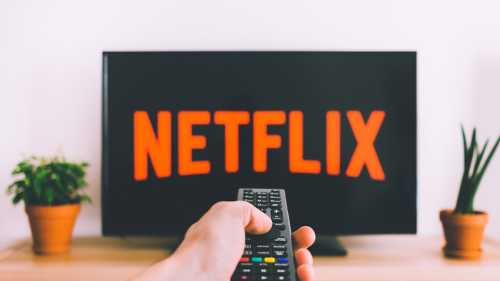
Like a municipal water utility that gradually raises rates while the underlying pipes corrode, the modern streaming ecosystem is extracting maximum subscription revenue while its value proposition fractures into unwatchable fragmentation.
The Utility Illusion: Anatomy of the 2026 Streaming Squeeze
Major streaming platforms have simultaneously enacted aggressive 2026 price hikes while consolidating live sports rights, driving the average monthly cost of top-tier services to $78, a 26% jump from 2019 levels [[11]]. Concurrently, streaming services are projected to spend $14.2 billion on sports rights this year alone, fundamentally altering media distribution and forcing a structural recalibration of the entire entertainment sector [[3]].
Echoes of the 1990s Cable Bundle
This current trajectory is not an anomaly; it is a historical recurrence mirroring the late 1990s cable television consolidation. During that era, regional sports networks (RSNs) and premium channels were bundled into monolithic packages under the guise of consumer choice, ultimately leading to the "cord-cutting" rebellion of the 2010s. The Telecommunications Act of 1996 accelerated this consolidation, allowing media conglomerates to vertically integrate content creation with distribution.
The lesson from that period is unequivocal: when distribution monopolies prioritize margin expansion over accessibility, regulatory intervention and consumer revolt inevitably follow. Streaming was originally marketed as the antidote to the bloated cable bundle, offering à la carte flexibility. Today, the aggressive siloing of live sports and premium originals has effectively recreated the very monolithic bundles the industry promised to destroy, complete with equivalent price creep.
The Hidden Architecture of Fragmentation
Mainstream discourse frequently frames streaming fatigue as a mere household budgeting issue, ignoring the structural degradation of content discovery and platform utility. A Civic Science study reveals that a staggering 87% of Gen Z consumers report experiencing streaming fatigue, yet platforms continue to wall off content behind exclusive, non-transferable paywalls [[22]]. This forces consumers to maintain multiple concurrent subscriptions to follow a single sports season or television franchise. The resulting friction does not just annoy consumers; it actively accelerates churn, undermining the long-term customer lifetime value (CLV) that these platforms rely upon to justify their massive content expenditures.
1 2 3Furthermore, the migration of live sports to exclusive streaming platforms is triggering unprecedented regulatory scrutiny that mainstream financial coverage largely overlooks. The FCC has explicitly warned that the NFL's ongoing pivot to streaming could "collapse" the Sports Broadcasting Act’s longstanding antitrust exemption [[31]]. Enacted in 1961, this exemption allows professional sports leagues to collectively sell media rights, a practice that would otherwise violate Sherman Act provisions. By moving marquee games exclusively to digital platforms that lack the universal reach of legacy broadcast television, leagues are inadvertently inviting federal regulators to reevaluate whether their collective bargaining practices still serve the public interest.
Finally, while premium Subscription Video on Demand (SVOD) platforms struggle with subscriber retention, Free Ad-Supported Streaming TV (FAST) is quietly capturing critical market share. Industry data confirms that FAST is the fastest-growing segment in television, representing 6.1% of all TV viewing as of March 2026 [[37]]. This signals a profound structural shift toward ad-supported models. Consumers are not abandoning digital video; they are actively rejecting the recurring subscription fee model in favor of frictionless, linear-style viewing experiences that do not require financial commitment.
The Hybrid Monetization Nuance
Critics who declare the streaming subscription model entirely broken overlook the rapid, successful adoption of hybrid monetization strategies. While 62% of consumers report feeling overwhelmed by subscription fatigue, platforms that have introduced robust, lower-priced ad-supported tiers are actually seeing stabilized retention rates [[19]]. This data suggests that price sensitivity, rather than an inherent aversion to streaming platforms, is the primary driver of churn. When given a viable, lower-cost alternative, a significant portion of the market will remain within the ecosystem.
1 2The Access Expansion Defense
Conversely, sports leagues and streaming executives argue that these digital partnerships democratize access, pointing to global distribution deals that theoretically bypass traditional regional blackouts. They contend that antitrust concerns are overstated, as streaming platforms offer more diverse viewing options and interactive features than legacy cable monopolies ever provided. From this perspective, the friction is merely a temporary growing pain associated with transitioning from a geographically restricted broadcast model to a borderless digital infrastructure.
Strategic Imperatives for Consumers and Local Enterprises
- For Citizens and Households: Audit subscription portfolios quarterly. Implement a "churn and return" strategy by rotating services monthly rather than maintaining concurrent subscriptions. Leverage FAST platforms like Pluto TV or Amazon Freevee for baseline entertainment to avoid the $78/month premium trap [[11]].
- For Local Businesses: Pivot regional advertising budgets from traditional linear TV to targeted FAST channel inventory. With US FAST ad revenue projected to exceed $10 billion by 2027, local enterprises can achieve hyper-targeted demographic reach at a fraction of legacy broadcast costs, utilizing programmatic buying to maximize local market penetration [[39]].
- For Content Creators: Diversify distribution. Relying solely on exclusive SVOD licensing deals is increasingly risky as platforms consolidate. Retaining partial ownership of intellectual property to license across multiple FAST and AVOD (Advertising-based Video on Demand) channels provides a more resilient revenue stream.
The Six-Month Horizon: Consolidation and Correction
Within the next six months, the streaming landscape will face a forced market correction. We will likely witness at least one major merger or joint venture between mid-tier streaming services specifically designed to pool live sports rights and reduce redundant content acquisition costs. The $14.2 billion sports rights spend is mathematically unsustainable for standalone platforms without massive subscriber bases [[3]].
Furthermore, the FCC will likely initiate formal rulemaking to address sports blackout restrictions on streaming platforms. This regulatory pressure will force leagues to decouple local broadcasting rights from national streaming exclusivity, mandating that games available on regional sports networks remain accessible via digital simulcasts. The era of infinite, cheap, and fragmented streaming is over; the era of regulated, consolidated media utilities has officially begun.
Related Articles
The Algorithmic Enclosure: How Bundling, Sports Rights, and FAST Proliferation Are Rewiring the Streaming Economy
Aug 19, 2026
The Algorithmic Tollbooth: How Consolidation and Fragmentation Are Rewiring Streaming Economics
Aug 19, 2026
Comments (0)
No comments yet. Be the first to share your thoughts!
Want to join the discussion?
Please log in to post a comment.
Login NoworCreate an Account