
UK's Historic Social Media Ban for Under-16s Sets Global Precedent as Childhood Protection Measure

In an unparalleled legislative move that reverberates across the digital landscape, the United Kingdom has promulgated a comprehensive prohibition on social media access for children under 16, positioning itself at the vanguard of a global movement to safeguard minors from online harms. Prime Minister Keir Starmer's June 15, 2026 announcement marks a watershed moment in digital regulation, with the ban expected to take effect in Spring 2027.
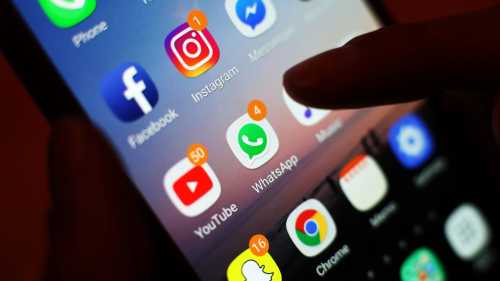
The sweeping legislation will preclude children from using major platforms including TikTok, Instagram, Snapchat, YouTube, Facebook, and X (formerly Twitter), while deliberately excluding messaging services like WhatsApp and Signal to preserve secure peer-to-peer communication www.pbs.org . The government's decision follows an extensive public consultation that garnered over 116,000 responses, with 9 in 10 parents endorsing the intervention www.gov.uk .
"Every parent can see it with their own eyes. Social media is making children unhappy. I've heard first hand from families crying out for change and we will do right by them."
Starmer's administration is surpassing even Australia's pioneering model by implementing ancillary restrictions on livestreaming, stranger communication on gaming platforms, and AI-powered romantic chatbots, which will be restricted to users 18 and older www.pbs.org . For 16- and 17-year-olds, the government has proposed default overnight curfews from midnight to 6am and automatic deactivation of captivating features like infinite scrolling and autoplay videos www.aljazeera.com .
Technology Secretary Liz Kendall underscored the government's resolve, stating: "Tech companies have had countless opportunities to keep children safe, yet they have failed to act. That is why we are taking power away from the tech giants and putting it back in parents' hands" www.gov.uk .
Official Announcement:
The UK government's official X post from Prime Minister Keir Starmer announcing the historic ban.
However, the initiative has elicited heterogeneous reactions. Meta and YouTube have cautioned that blanket bans may impel children toward unregulated, anonymous platforms lacking parental controls www.pbs.org . Child safety experts like Kate Edwards of the Molly Rose Foundation argue that age verification mechanisms have proven inefficacious in Australia, where many teenagers circumvent restrictions with ease www.pbs.org .
The legislation places the UK among a growing coalition of nations including Australia, Canada, Brazil, and Indonesia that have enacted or proposed age-based social media restrictions, reflecting mounting international solicitude about digital wellbeing www.pbs.org . Ofcom will be empowered with enhanced funding and authority to enforce compliance, with considerable fines levied against non-compliant platforms www.gov.uk .
As the digital epoch evolves, this audacious regulatory framework represents a fundamental reappraisal of children's relationship with technology, prioritizing developmental health over unfettered digital access in what Starmer termed "a line in the sand" for future generations www.gov.uk .
Related Articles

The Post-Viral Paradigm: How AI Saturation and Nostalgia Loops Are Forcing a Structural Reckoning in the Creator Economy
Sep 09, 2026
The Algorithmic Attention Economy: How AI Curation and Regulatory Fragmentation Are Rewiring Social Media
Sep 01, 2026
Comments (0)
No comments yet. Be the first to share your thoughts!
Want to join the discussion?
Please log in to post a comment.
Login NoworCreate an Account