
The Aquaculture of Sound: Antitrust Whiplash, Algorithmic Rationing, and the End of the Streaming Volume Era


The Aquaculture of Sound
Think of the transition from unregulated, industrial deep-sea trawling to strictly managed, high-yield aquaculture. For two decades, the digital music industry operated like the open ocean, harvesting endless streams of user data and micro-transactions with zero regard for ecological sustainability or labor valuation. The core event defining this current inflection point is the simultaneous escalation of the Department of Justice’s antitrust trial against Live Nation, the implementation of punitive DSP royalty thresholds, and the aggressive legal fortification against AI voice cloning. These concurrent shifts mark the definitive end of the volume-driven streaming era, replacing it with a highly regulated, margin-obsessed intellectual property regime.
Echoes of the 1940 ASCAP Boycott
This current era of structural friction and distribution rebellion closely mirrors the 1940 ASCAP radio boycott. When the American Society of Composers, Authors and Publishers attempted to double its licensing fees, radio broadcasters simply formed a competing rights organization, BMI, breaking the monopoly and permanently altering the music licensing landscape. The historical lesson is definitive: when a centralized rights body or distribution monopoly attempts to extract maximum rent from a fatigued market, the distributors will inevitably engineer a structural bypass. Today’s DSPs and AI platforms are repeating this exact dynamic, leveraging their control over the consumer interface to dictate new, highly restrictive terms to legacy rights holders.
The Monopsony Trap in Live Infrastructure
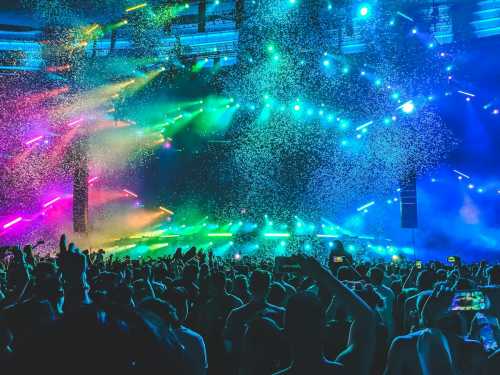
Mainstream financial coverage treats the DOJ’s antitrust case against Live Nation as a mere consumer protection issue regarding ticket fees, systematically ignoring the deep structural monopsony it exerts over venue infrastructure. The DOJ’s antitrust complaint notes that Live Nation controls over 70% of the primary ticketing market for major amphitheaters, but the unseen implication is the vertical strangulation of independent venue development. By tying ticketing rights to exclusive venue management contracts, the conglomerate effectively prevents local promoters from building sustainable, mid-capacity rooms. This creates a barren touring ecosystem where artists are forced to play massive, debt-heavy arenas or abandon the live market entirely, destroying the traditional mid-tier developmental pipeline.
Counter-Argument: The Democratization Illusion Defenders of the current streaming volume model and open-access DSPs argue that lowering barriers to entry democratizes music creation and distribution, allowing bedroom producers to achieve global reach without label gatekeepers. They contend that the sheer volume of uploads is a feature, not a bug, providing consumers with infinite choice and niche discovery. However, this perspective ignores the economic reality of the long tail; according to Luminate’s 2024 Midyear Report, over 50% of tracks uploaded to DSPs generate zero streams, meaning this "democratization" is largely subsidized by the devaluation of professional, working-class musicians who cannot absorb the cost of unpaid labor.
Algorithmic Rationing and the Death of Functional Audio
The implementation of new, punitive royalty thresholds by major DSPs—such as requiring a minimum of 1,000 streams for monetization—is being framed as a victory for working artists. In reality, it is a ruthless algorithmic rationing designed to purge the platforms of low-margin "functional" audio. "We are moving from a volume-based streaming economy to an artist-centric value model," stated Universal Music Group Chairman Lucian Grainge, signaling a deliberate shift away from ambient, white noise, and children's tracks that artificially inflate platform engagement without driving proportional ad revenue. The unseen implication is the eradication of the passive listening economy, forcing independent producers who relied on algorithmic playlisting for sleep or study music out of the market, and consolidating streaming revenue exclusively around highly engaged, fandom-driven pop and hip-hop acts.
Counter-Argument: The Synthesizer Defense of Generative AI Proponents of generative AI in music argue that text-to-audio models are merely new instruments, akin to the synthesizer or the drum machine, that will expand human creativity rather than replace it. They assert that AI tools will lower the technical barrier to entry, allowing individuals with profound musical ideas but limited technical proficiency to participate in the cultural economy. Yet, copyright litigators and labor economists counter that these models are currently trained on uncompensated copyrighted works, functioning as unlicensed, derivative plagiarism engines rather than neutral tools, thereby threatening the foundational property rights of the very creators they claim to assist.
The Private Equity Write-Down and the Scarcity Premium
The collapse of the music catalog acquisition market, highlighted by the severe restructuring of Hipgnosis Songs Fund, reveals the bursting of a massive private equity bubble. For years, institutional investors treated legacy song catalogs as perpetual, risk-free bonds, driving valuations to unsustainable multiples based on flawed streaming growth projections. As the reality of DSP margin compression sets in, the unseen implication is a violent correction in how intellectual property is valued on institutional balance sheets. This financial contraction is simultaneously driving a massive consumer pivot toward physical scarcity; according to the RIAA’s 2023 revenue report, vinyl records generated $1.4 billion, surpassing CDs for the first time since 1987, proving that in a post-abundance digital world, consumers will only pay a premium for tangible, verifiable artifacts.
Strategic Imperatives for the Independent Operator
Local venue owners, independent artists, and consumers must immediately adapt their operational models to survive this structural correction. Independent venue operators must form regional buying cooperatives to negotiate directly with promoters, bypassing the vertically integrated monopolies that dictate tour routing. Artists must ruthlessly audit their metadata and register directly with global collection societies, ensuring they capture mechanical royalties that are increasingly lost in the algorithmic noise of the new DSP threshold models. Citizens and consumers must shift their capital away from passive, ad-supported streaming tiers and redirect it toward direct-to-artist platforms and physical merchandise, recognizing that their purchasing power is the only mechanism capable of sustaining a diverse, non-algorithmic musical culture.
The Six-Month Horizon: Bifurcation and Consolidation
Within the next six months, the music industry will undergo a definitive structural correction driven by the exhaustion of the volume-based streaming model. Expect the formalization of a bifurcated market where super-fans pay massive premiums for physical, interactive, and live experiences, while the background streaming market collapses into an ad-supported, AI-generated utility tier. Concurrently, anticipate the first major forced mergers among mid-tier live promotion companies, as the DOJ's regulatory pressure and rising touring costs make independent operation mathematically impossible. The era of the open-ocean digital music economy is over; the next six months will separate the heavily capitalized, IP-fortified aquaculture survivors from the insolvent relics of the streaming gold rush.
Related Articles
The Containerization of Sound: How Engagement Metrics and Antitrust Fractures are Rewiring the Music Economy
Nov 04, 2026
The Algorithmic Unbundling: How AI Guardrails and Catalog Corrections are Restructuring the Global Music Economy
Nov 03, 2026
Comments (0)
No comments yet. Be the first to share your thoughts!
Want to join the discussion?
Please log in to post a comment.
Login NoworCreate an Account