
Ebola Outrun: WHO Chief Warns Congo Outbreak Is Now Spreading Faster Than the Fight Against It

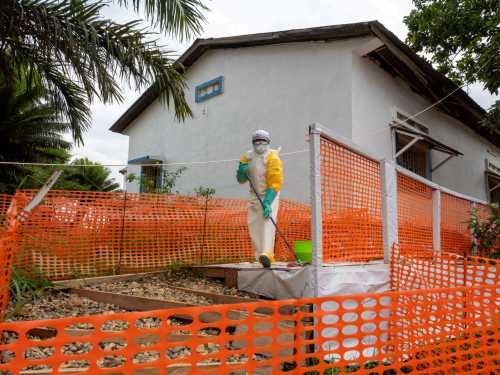
KINSHASA — Nearly three months after the Bundibugyo strain of Ebola took hold in the Democratic Republic of Congo, the epidemic is outrunning the response built to contain it, the head of the World Health Organization warned this week — a stark admission that the second-largest Ebola outbreak on record is now setting the pace of the fight, not the other way around.
In a post on X published from the Congolese capital, Tedros Adhanom Ghebreyesus conceded that new infections are doubling in some hotspots within a single week, as he sat down with health and humanitarian partners for the second time since the outbreak was declared on May 15. The verdict from the field is bleaker still: unpaid frontline staff have downed tools, contact tracing is fraying at the edges, and there is still no approved vaccine or therapy for the Bundibugyo virus.
A Surge Without Precedent
The arithmetic is grim. The Congolese health ministry says the outbreak has amassed 3,874 confirmed cases, including 1,751 deaths. Of the 77 most recent cases notified in a single 24-hour period, 44 proved fatal — a case-fatality rate of roughly 45 per cent — while 717 patients remain in isolation and 749 have recovered.
In sheer velocity of transmission, the epidemic has eclipsed every previous Ebola outbreak, ranking behind only the 2014–2016 West African catastrophe that infected more than 28,000 people and killed over 11,000. Officials believe the virus had been circulating silently in remote territory long before it was formally declared.
A Strike at the Front Line
In Ituri province, the epicentre of the disaster, families say many frontline health workers have walked off the job over unpaid wages, compounding a healthcare access crisis already warped by rebel conflict in one of the country's most remote regions. Some workers say they have only begun receiving payment in the past week for work done since the outbreak began, and they are now demanding improved wages.
For Anicet Baluku, a resident of Bunia, the provincial capital, the industrial action is not an abstraction: he blames it for the deaths of his two brothers. "We urge the authorities to quickly find a solution to prevent other families from experiencing the same tragedy," he said.
Tracing That Lost the Trail
The medical charity Doctors Without Borders says the outbreak is still "spreading at an alarming and unprecedented rate," adding that the response "is still not reaching communities quickly enough to break transmission chains." Africa CDC chief Jean Kaseya was blunter still, acknowledging that contact tracing is not working, with 60 to 70 per cent of new cases emerging outside the ranks of monitored contacts. Late detection, officials say, is a key driver of the toll.
Money, Medicine and a Race Against Time
Washington has moved to shore up the defences: the US Department of State says it will provide an additional $242 million for immediate Ebola response, regional preparedness and humanitarian assistance, taking direct assistance above $512 million. Yet money cannot conjure a remedy — the Bundibugyo virus has no approved treatment or vaccine, and early-phase trials have only just been authorised in a handful of countries.
Tedros, for his part, insists the way out runs through the affected communities themselves. "Above all, communities must be at the center of and have ownership of the response," he said. "We cannot stop Ebola without their trust, leadership and partnership."
The Official Word, Verbatim
Below, the WHO director-general's own account of his Kinshasa meetings, posted on X:
I am in Kinshasa, #DRC, and have met with our health and humanitarian partners supporting the #Ebola response to discuss the challenges we face, as the outbreak is spreading faster than our scale up of the response, with new cases doubling in some hotspots over the past week alone. We all agree that we must urgently and massively scale up all our efforts across all pillars of the response and by all partners. Above all, communities must be at the centre of and have ownership of the response. We cannot stop Ebola without their trust, leadership and partnership.
— Tedros Adhanom Ghebreyesus (@DrTedros) August 5, 2026
Further reading: the full report via ITV News and the live situation page maintained by the World Health Organization.
Related Articles

The Fractured Grid: How Policy Shifts and Workforce Attrition Are Rewiring Public Health
Sep 17, 2026
The 2026 Public Health Paradigm Shift: Metabolic Trade-offs, Zoonotic Latency, and the Mental Health Infrastructure Collapse
Sep 17, 2026
Comments (0)
No comments yet. Be the first to share your thoughts!
Want to join the discussion?
Please log in to post a comment.
Login NoworCreate an Account