
Runway Reckoning: Fashion Week's Five Crises Reshaping the Industry's Future

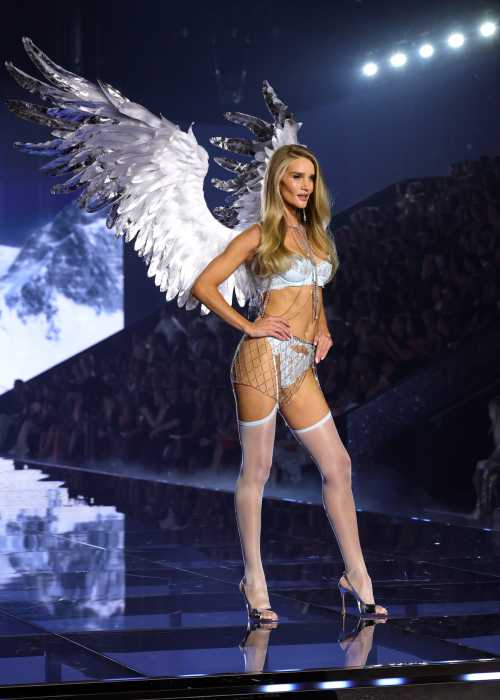
Like a luxury watch that keeps perfect time on the outside while the gears corrode within, the global fashion industry presents a polished facade while structural fractures threaten its foundation. The October 2026 fashion calendar—spanning Victoria's Secret's controversial Los Angeles resurrection, Paris Fashion Week's sustainability theater, and the ongoing diversity deficit—reveals an industry at an inflection point where spectacle collides with substance.
The Runway Paradox: Spectacle Meets Scrutiny
The 2026 Victoria's Secret Fashion Show returned October 18 in Los Angeles with performances by Megan Thee Stallion, Tate McRae, and KATSEYE, yet faced immediate criticism for what observers called "performative inclusion" rather than substantive change [[46]]. The brand's attempt to rehabilitate its image through body diversity messaging rings hollow when examined against casting decisions that allegedly excluded transgender models and maintained narrow beauty standards [[94]].
Victoria's Secret staged its production while Paris Fashion Week concluded its Spring/Summer 2027 presentations September 28 through October 6, creating a temporal bookend that exposes the industry's schizophrenic identity [[2]]. On one coast, lingerie and angel wings; in Paris, Chanel's Matthieu Blazy presenting collections against construction site sets that metaphorically suggest fashion's need for reconstruction [[107]].
The Economic Reality Behind the Glamour
While fashion weeks generate staggering economic output—Milan's February 2026 edition produced €217 million ($252 million) in tourism revenue alone—the underlying business model faces unprecedented pressure [[116]]. McKinsey's State of Fashion 2026 report projects low single-digit growth across luxury and fashion segments over the next five years, reflecting what executives privately acknowledge as a fundamental reset [[97]].
The disconnect between runway spectacle and retail reality has never been starker. Fashion prices rose 3.4% in September 2026, trailing overall inflation at 3.7%, yet luxury brands increasingly rely on price increases rather than volume growth to maintain top-line performance [[44]]. This pricing power erosion signals weakening brand equity among core consumers.
"The global sustainable fashion market is expected to grow from $12.46 billion in 2025 to $53.37 billion by 2032, representing a compound annual growth rate that dwarfs traditional fashion segments," according to industry analysis [[53]]. This projection suggests consumer values are shifting faster than corporate strategies can adapt.
The Compliance Theater Trap
Sustainability initiatives have devolved into sophisticated greenwashing operations. Fast fashion remains the second-biggest consumer of water globally and contributes 10% of CO2 emissions, yet brands deploy circularity rhetoric while maintaining linear production models [[52]]. The European Union's July 2026 regulation prohibiting destruction of unsold clothing—covering garments and shoes but notably excluding handbags—reveals the selective nature of regulatory intervention [[68]].
Paris Fashion Week's sustainability programming exemplifies this contradiction. Brands showcase "eco-conscious" collections while the fundamental business model of seasonal obsolescence remains unchallenged. The industry's environmental footprint extends beyond materials to encompass garment worker exploitation, with less than 2% earning living wages and many working 16-hour days, seven days weekly during peak production [[99]].
Counter-Argument: The Innovation Imperative
Critics arguing that sustainability mandates stifle creativity ignore the historical record. The most innovative fashion moments emerged from constraint—Chanel's jersey fabric revolution during WWI material shortages, or Yves Saint Laurent's Le Smoking born from 1960s social upheaval. AI design tools now enable independent designers to slash development timelines from weeks to days, democratizing access previously reserved for houses with substantial capital [[84]].
The Fabricant's Design Forward 2026 competition demonstrates how AI functions as a talent equalizer rather than creative threat [[81]]. Digital-first design reduces physical sampling waste by up to 95%, proving environmental and economic objectives can align. Brands resisting this transition confuse tradition with excellence.
The Diversity Deficit: Progress or Performance?
New York Fashion Week Fall/Winter 2026 exposed fashion's size diversity problem, with plus-size models appearing in token numbers rather than meaningful representation [[73]]. The industry's response—Inclusion Fashion Week scheduled November 5-7, 2026 in Paris—risks creating a separate-but-equal framework that ghettoizes diversity rather than integrating it [[72]].
Industry data reveals 2026 was projected to be "the year that size-diverse talent becomes fashion," yet the recession in size inclusion suggests structural barriers persist [[79]]. Fashion continues as one of the world's highest-risk industries for forced labor, making diversity claims ring hollow without supply chain transparency [[106]].
Historical Echoes: 2008's Warning
The 2026 fashion landscape mirrors 2008's pre-crash complacency. Then, luxury brands expanded aggressively on credit-fueled consumer spending; today, they depend on price increases masking volume declines. The 2008 crisis forced industry consolidation and the rise of fast fashion; the current convergence of economic uncertainty, regulatory pressure, and values-driven consumer behavior demands equally transformative adaptation.
Historical precedent suggests brands surviving such transitions share three characteristics: supply chain agility, authentic purpose beyond profit, and willingness to cannibalize legacy revenue streams. Those failing to evolve become case studies in business schools—cautionary tales of excellence rendered irrelevant.
Counter-Argument: The Sovereignty Imperative
The argument that fashion must prioritize sustainability and inclusion over creative freedom misunderstands the luxury value proposition. Consumers purchase aspirational identity, not ethical certificates. Victoria's Secret's controversy demonstrates that even well-intentioned progressivism faces backlash when perceived as inauthentic [[96]]. Brands dictating values rather than reflecting customer desires risk alienating their base.
Furthermore, imposing uniform sustainability standards ignores regional economic realities. Garment workers in developing economies may prioritize employment over environmental concerns, creating tension between Western consumer values and producer needs. The industry's challenge lies in balancing these competing imperatives without imposing neocolonial frameworks.
Strategic Imperatives for Stakeholders
For independent designers: Leverage AI design tools to compete with established houses. Platforms like The New Black AI and CLO 3D enable virtual sampling, reducing capital requirements and time-to-market [[86]]. Focus on niche markets underserved by mass luxury—adaptive fashion, cultural-specific designs, or circular business models.
For established brands: Audit supply chains for forced labor risks immediately. Fashion remains highest-risk for labor violations, and upcoming EU regulations will mandate disclosure [[106]]. Invest in traceability technology now rather than facing reactive compliance costs.
For consumers: Demand transparency beyond marketing claims. Request specific data on living wage compliance, carbon footprint per garment, and end-of-life recycling programs. Support brands with third-party certifications rather than self-reported sustainability metrics.
For investors: Reallocate capital from brands relying on price increases for growth toward those demonstrating volume expansion through genuine innovation. The US sustainable fashion market's projected growth to $2.5-3.2 billion by 2026 indicates where consumer spending is migrating [[59]].
The Six-Month Forecast: Consolidation and Clarity
By April 2027, expect three transformative developments. First, major luxury conglomerates will announce significant portfolio divestitures, shedding brands unable to demonstrate authentic sustainability credentials or cultural relevance. Second, regulatory frameworks will expand beyond the EU, with US states implementing supply chain transparency mandates modeled on California's existing legislation.
Third, the fashion week model will undergo radical restructuring. The $881.2 million earned media value generated by the four major fashion weeks for Spring/Summer 2026 masks declining ROI as digital-native brands bypass traditional calendars [[119]]. Expect hybrid formats combining physical presentations with always-on digital experiences, reducing costs while expanding reach.
The brands thriving in this environment will be those recognizing that fashion's future lies not in replicating past glory but in reimagining value creation for a world where transparency trumps mystique, and authenticity outweighs aspiration. The runway remains, but the rules have changed irreversibly.
Related Articles

The Algorithmic Catwalk: How Digital Showrooms, Biometric Seating, and Shell-Company Funding Are Dismantling the Fashion Week Monopoly
Oct 31, 2026
The Algorithmic Enclosure of the Runway: How the FHCM Mandate is Restructuring Fashion Week Economics
Oct 30, 2026
Comments (0)
No comments yet. Be the first to share your thoughts!
Want to join the discussion?
Please log in to post a comment.
Login NoworCreate an Account