
Sabrina Ionescu Stays: The Liberty Re-Signing Is the WNBA's Star-Economy Maturity Test

When a firm's top rainmaker receives a rival's offer and declines without taking a single meeting, the market reads it as a signal about the firm, not the employee. New York just received that signal from its most marketable athlete.
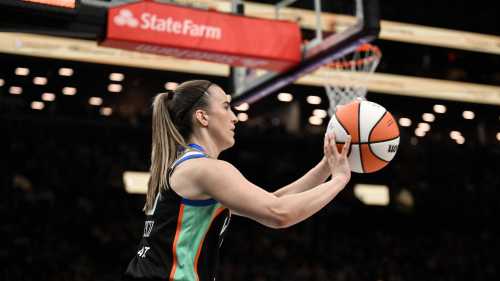
Sabrina Ionescu confirmed she will re-sign with the Liberty, telling reporters "I'm where I'm supposed to be," hours after Breanna Stewart declared on her podcast, "I will be staying in New York," keeping the 2024 championship core intact for a 2026 title push even as Ionescu works through a cold shooting stretch.
Two Corrections Before the Narrative Compounds
First, the shooting slump is a four-game sample: 4-of-26 from three per ESPN tracking, against a career norm nearly triple that rate. Regression to the mean is the base rate in shooting sports, and the attention market is mispricing noise as decline. Second, Ionescu's decision should not be romanticised as loyalty; it is rational allocation. Under the new CBA's supermax structure, paired with the deepest endorsement market in the country, New York is frequently the utility-maximising choice for a perimeter star, and her 18.2 points and 5.7 assists last season remain an All-Star baseline.
Three Implications the Headline Hides
First, star retention is now a franchise-valuation input. The Liberty's continuity, Stewart, Jones and Ionescu together, is a balance-sheet asset that strengthens the club's position in leaguewide media-rights and sponsorship conversations, because continuity capital is precisely what rights buyers price.
Second, the Unrivaled shadow market prices every Ionescu decision. Her winter-league participation choice functions as a signal for the competing 3-on-3 league's economics, and her absence this cycle, as Sports Illustrated's coverage of the player-first model underscores, demonstrates that the WNBA's star economy now operates with a genuine alternative buyer, which permanently raises the floor of player leverage.
Third, the endorsement layer is learning to trade the slump. Brands increasingly buy attention at a discount during cold stretches, deploying campaigns timed to the regression rather than the peak, a sophistication that only exists because Ionescu's audience metrics have proven durable across performance cycles.
The Precedent: Player Empowerment, Institutionalised
The 2010s NBA taught that star agency reallocates league economics, and the 2024 Liberty superteam title run proved the WNBA version: concentrated star power drove record ratings and franchise valuations. The difference now is institutionalisation; the new CBA converts what was once disruptive leverage into routine contract mechanics, which is what a maturing star economy looks like from the inside.
Actionable Moves for the Local Economy
- New York hospitality should build Liberty game-night bundles now, before a playoff run reprices the borough's attention.
- Brands should negotiate during the slump window, when attention is discounted and regression is the probable outcome.
- Youth programmes should book clinic appearances early; star availability tightens as the postseason approaches.
February 2027: The Regression and the Winter Decision
Six months out, expect Ionescu's three-point percentages to have regressed toward her career band, a Liberty title push priced around the intact core, and her Unrivaled participation decision to set the winter league's valuation benchmark. The staying headline was never about geography; it was about who sets the price in the WNBA's star market, and this week the answer was the players.
Primary sources:Just Women's Sports free agency report · ESPN player tracking · WNBA official video
Related Articles

The Kennedy Center Name Vote Is a Corporate Governance Story Wearing a Culture-War Costume
Aug 14, 2026
Carpenter, Domingo, Theron: The Academy Museum Gala Is Hollywood's New Prestige Central Bank
Aug 14, 2026
Comments (0)
No comments yet. Be the first to share your thoughts!
Want to join the discussion?
Please log in to post a comment.
Login NoworCreate an Account