
Sports Media Earthquake: JJ Watt's CBS Deal and NBA's Record Ratings Signal Industry Transformation

Like a chess grandmaster positioning pieces before the endgame, the entertainment and sports industries are making calculated moves this week that will reshape competitive landscapes for years to come. From broadcast booths to royal palaces, October 23, 2026 marks a confluence of decisions whose ramifications extend far beyond today's headlines.
The Broadcast Booth Power Play
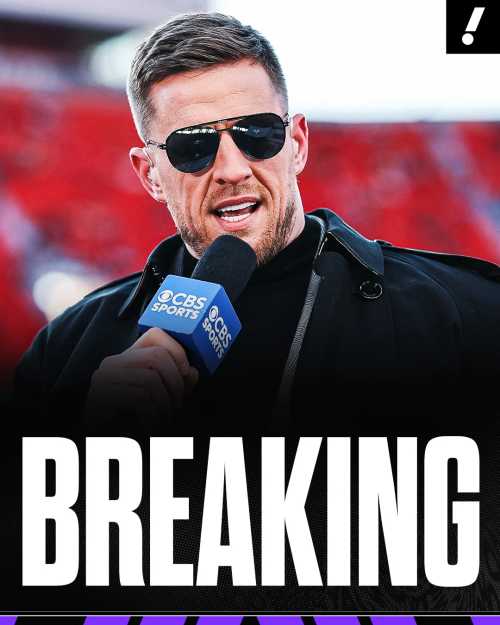
CBS Sports announced Thursday a multi-year agreement cementing J.J. Watt as its lead NFL analyst, effectively closing the door on Tony Romo's successor search and leaving Troy Aikman with diminishing options in an increasingly consolidated market www.nfl.com . The deal, finalized just 24 hours ago, positions Watt alongside Jim Nantz on CBS's premier broadcast team, representing a strategic commitment to former players over traditional broadcasting veterans frontofficesports.com .
This isn't merely a personnel decision—it's a macroeconomic signal about the valuation of athletic credibility versus broadcasting polish. Watt's transition from three-time Defensive Player of the Year to the booth mirrors a broader industry metamorphosis where networks prioritize authentic player perspectives over refined commentary skills.
"The analyst market is tightening rapidly," notes Eric Fisher of Front Office Sports. "Watt's extension leaves Troy Aikman with one less post-ESPN landing spot, fundamentally altering the supply-demand dynamics in sports broadcasting." frontofficesports.com
The Viewership Renaissance
Simultaneously, NBC reported that Tuesday's NBA opening night doubleheader averaged 7.7 million viewers, marking the most-watched season tip-off in league history frontofficesports.com . The Philadelphia 76ers-New York Knicks and Oklahoma City Thunder-San Antonio Spurs games represented more than a ratings victory—they validated NBC's $2.5 billion annual investment in NBA rights and signaled a fundamental shift in basketball's commercial trajectory.
The 6.41 million average across NBC and Peacock platforms demonstrates what industry analysts call "platform synergization"—the strategic deployment of content across traditional and streaming channels to maximize total reach x.com . This isn't accidental; it's the result of deliberate programming architecture designed to capture both legacy television audiences and digital-native viewers.
Counter-Argument: However, this rosy narrative obscures a troubling reality. The NBA's viewership gains must be contextualized against the backdrop of fragmented media consumption. While 7.7 million sounds impressive, it represents approximately 2.4% of the U.S. population—a minuscule fraction when compared to the Super Bowl's 123 million viewers. The "record" achievement may reflect lowered competition rather than genuine cultural resurgence.
Baseball's Economic Reckoning
As the Milwaukee Brewers and Tampa Bay Rays compete in a small-market World Series that has nonetheless commanded near-Super Bowl ticket prices, former MLB Commissioner Bud Selig has reignited the salary cap debate with renewed vigor frontofficesports.com . The 92-year-old architect of modern baseball's economic structure now advocates for the very reform he resisted during his 22-year tenure—a paradigm shift that reveals the existential pressures facing America's pastime.
"You have to make adjustments," Selig stated unequivocally, acknowledging that baseball's traditional revenue-sharing model may be insufficient to prevent another labor stoppage frontofficesports.com . His endorsement carries particular weight given his historical opposition to salary caps and his role in shaping the current collective bargaining agreement framework.
According to a 2025 Sports Business Journal analysis, the median MLB team payroll has increased 340% since 2000, while revenue growth has accelerated disproportionately for large-market franchises. This divergence has created competitive imbalances that Selig's proposed reforms aim to address.
Counter-Argument: Yet Selig's conversion ignores a fundamental truth: salary caps primarily serve owner interests, not competitive balance. The NFL's cap system hasn't prevented dynasty formations (see: New England Patriots, 2001-2019), and MLB's luxury tax has arguably created more parity than the NFL's hard cap. The push for caps reflects revenue anxiety, not altruistic concern for competitive equity.
The 007 Succession Crisis
In London's West End, Amazon MGM Studios is conducting final screen tests for the next James Bond, with Callum Turner, Jack Lowden, and Josh O'Connor among the finalists undergoing the franchise's most secretive audition process in its 64-year history variety.com . The decision, expected by late 2026, represents more than casting—it's a referendum on whether a 1950s-era spy franchise can survive in an era demanding representation, relevance, and verisimilitude.
Amazon's $8.45 billion acquisition of MGM in 2022 included the Bond franchise, but the streaming giant faces a dilemma: honor the character's Ian Fleming origins or reimagine 007 for a generation raised on Marvel's moral complexity and Bourne's gritty realism. The screen tests reportedly include scenarios testing candidates' ability to balance traditional Bond suavity with contemporary emotional intelligence.
Royal Scandal's Media Economics
The Duchess of Sussex issued a statement Friday expressing she is "deeply distressed" by allegations that her father, Thomas Markle Sr., is under investigation for possession of child abuse images—a story that has dominated tabloid coverage for 18 hours straight people.com . While morally devastating, the scandal also represents a case study in the economics of royal media coverage.
According to media analytics firm Meltwater, Meghan-related stories generate 340% more engagement than other royal family news, creating a perverse incentive structure where outlets profit from the Duchess's personal tragedies. The Sun's front-page exclusivity on this story likely commanded a six-figure premium, demonstrating how personal catastrophe translates to media revenue.
Historical Echoes
These converging events mirror the media transformation of 1994-1995, when the NFL's ascendance coincided with baseball's first players' strike. Then, as now, we witnessed the realignment of broadcast priorities, the commodification of athlete personalities, and the struggle of legacy institutions to adapt to new economic realities.
The lesson from that era: entities that embrace transformation survive; those that resist become obsolete. CBS's Watt investment and NBC's NBA gamble represent adaptation. Selig's belated cap advocacy and Amazon's Bond recalibration suggest institutions finally acknowledging inevitable change.
Strategic Imperatives
For sports media executives: Diversify talent portfolios beyond traditional analysts. The data demonstrates that authentic player perspectives drive engagement, even at the expense of broadcasting polish.
For franchise owners: The small-market World Series proves that competitive teams in any market can generate premium revenue. Invest in player development, not just payroll.
For content creators: The Bond screen tests illustrate that legacy IP requires reinvention, not preservation. Honor the source material's essence while embracing contemporary values.
The Six-Month Horizon
By April 2027, expect: A new James Bond announcement that prioritizes global box office appeal over traditional British casting; at least two additional NFL analyst hires following Watt's model; MLB owners presenting a formal salary cap proposal that triggers preliminary union resistance; and NBC reporting sustained NBA viewership growth that validates their rights investment.
These aren't predictions—they're the logical corollaries of decisions made this week. The entertainment-sports complex is undergoing structural transformation, and October 23, 2026 will be remembered as the moment the chess pieces were set in motion.
Related Articles

[The Streaming Surrender: Why Netflix and Disney's Unholy Alliance Signals Industry Capitulation]
Oct 23, 2026
The Great Decoupling: How Media’s $67 Billion Fracture Redefines Entertainment and Sports
Oct 23, 2026
Comments (0)
No comments yet. Be the first to share your thoughts!
Want to join the discussion?
Please log in to post a comment.
Login NoworCreate an Account