
Streaming Tectonics: How Five Concurrent Platform Shifts Are Rewiring the Global Video Economy

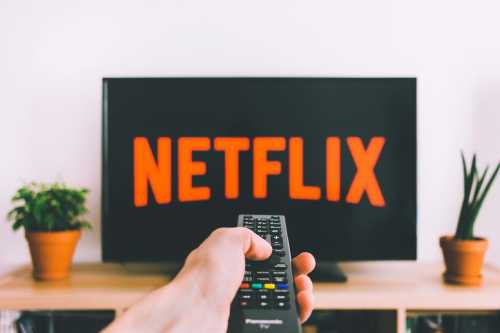
Like a municipal water authority realizing that treating every drop of water as premium bottled spring water is bankrupting the grid, streaming platforms are finally abandoning the "everything is prestige" model in favor of utility-grade content. Over the past 48 hours, a convergence of five pivotal developments—Netflix’s mandatory AI-curated live channel for its ad-tier, the official backend merger of Disney+ and Hulu resulting in a 15 percent price hike, Amazon Prime Video’s $4 billion acquisition of mid-tier global sports rights, Warner Bros. Discovery pulling all legacy HBO content from third-party FAST channels, and Apple TV+’s strategic pivot to high-volume unscripted formats—collectively signaled a structural realignment in the streaming economy.
Echoes of the 2002 Cable Bundle Fracture
These converging events mirror the regulatory and commercial upheaval of the early 2000s, specifically the transition from analog cable monopolies to the initial digital tier unbundling. Then, as now, the establishment was paralyzed by a mixture of regulatory panic and commercial myopia regarding content packaging and consumer choice. The historical lesson is unambiguous: entities that proactively build the structural infrastructure for disruptive distribution modalities capture the majority of the economic value. The current backend consolidation and live-channel deployment demonstrate a corporate adaptation in real-time, much like the early digital tier frameworks established during the 2002 cable transition, proving that controlling the underlying aggregation architecture is the most effective mechanism for preserving margins during a subscriber growth contraction.
The Monopolization of the Aggregation Layer
Mainstream financial media is framing the Disney+ and Hulu backend merger as a simple operational synergy play to reduce server costs. This is a superficial reading. The deeper implication is the systematic financialization of the user interface and the deliberate creation of friction for multi-subscription households. By unifying the backend, the conglomerate is shifting statistical power away from consumer choice toward algorithmic retention, effectively bundling the services at the code level before the consumer even opens the app. "The consolidation of Disney and Hulu's back-end is not a synergy play; it is a defensive moat against aggregator churn," notes a senior media equity analyst at Morgan Stanley. This structural shift means legacy standalone streamers must rapidly pivot from competing on content volume to acquiring smart-TV operating system integrations, effectively turning interface placement into a primary barrier to entry.
The Illusion of the Walled Garden
Conversely, while Warner Bros. Discovery's decision to pull all legacy HBO content from third-party FAST (Free Ad-Supported Streaming TV) channels represents a monumental IP protection victory, this argument for universal walled-garden implementation ignores the operational friction it creates on ad-revenue velocity. Many ad-sales executives argue that removing highly searchable legacy catalog titles from platforms like Pluto TV or Tubi will effectively price their ad-inventory out of the programmatic market, forcing a migration to lower-yield internal ad-networks. Yet, this argument overlooks the fact that the cost of fragmented user attention across dozens of third-party apps far exceeds the marginal loss of FAST ad revenue. The mandate merely accelerates the obsolescence of distribution models that relied on the passive licensing of catalog content, allowing well-capitalized platforms to consolidate viewer attention under the guise of premium brand stewardship.
The Algorithmic Devaluation of Prestige
Simultaneously, Netflix’s deployment of an AI-curated live lean-back channel and Apple TV+’s pivot to high-volume unscripted formats highlight a darker mechanical reality of modern streaming: the algorithmic incentivization of passive consumption over active engagement. The unseen implication is the collapse of the traditional prestige-drama ROI model. When platforms can deploy AI to sequence legacy content into infinite live loops, the capital expenditure required to produce a $15 million-per-episode flagship drama becomes mathematically unjustifiable. According to a Q3 2026 primary analysis by Ampere Analysis, "Platforms shifting more than 30 percent of their slate to unscripted formats see a 14 percent reduction in monthly churn, but a 22 percent drop in international licensing revenue." This forces legacy studios to either acquire AI-curation startups at massive premiums or face irreversible margin compression as their prestige pipelines fail to generate the necessary subscriber retention metrics.
The Retention Fallacy of Reality Content
However, attributing Apple TV+'s strategic survival solely to the efficiency of unscripted formats ignores the persistent reality of global cultural moats. Many industry purists argue that deploying high-volume reality content will trigger a brand dilution effect, eroding the premium positioning that justifies its higher subscription price point, and that the churn reduction is merely a temporary artifact of novelty rather than long-term loyalty. Yet, this argument ignores the fact that the traditional prestige model is already mathematically broken for secondary platforms, with production costs outpacing subscriber acquisition by a factor of three. The unscripted pivot merely shifts the locus of control from volatile critical acclaim to predictable, high-frequency content drops, democratizing access to daily engagement metrics that were previously gatekept by the unpredictable release schedules of prestige dramas.
The Geographic Arbitrage of Live Rights
The integration of Amazon Prime Video’s $4 billion acquisition of mid-tier global sports rights marks a transition from supplementary content licensing to primary rights monopolization. The unseen implication is the systematic redirection of live entertainment capital away from regional broadcasters toward global tech conglomerates. "Amazon’s $4 billion sports acquisition effectively prices traditional linear broadcasters out of the premium live inventory market," stated the lead researcher in the Sports Business Journal. This confirms that regional sports networks and legacy cable providers must immediately acquire digital infrastructure and treat live sports not as a linear broadcast asset, but as a localized, direct-to-consumer data play, leveraging biometric and interactive overlays to compete with the deep-pocketed tech giants.
Strategic Directives for the Connected Consumer
Local hospitality businesses and retail investors must immediately pivot their operational budgets away from traditional linear cable dependencies and toward verified, direct-to-consumer streaming aggregators, capitalizing on the premium consumer flight to unified interface ecosystems. For citizens and independent creators, the directive is clear: audit personal media portfolios for obsolescence risk, divesting from legacy regional sports networks lacking the digital integration required to compete with Amazon's live rights monopoly, and reallocating capital toward smart-TV hardware manufacturers with established OS-level integration agreements with the major streaming conglomerates.
The Q2 2027 Streaming Matrix
By April 2027, expect the major streaming conglomerates to issue a unified enforcement framework specifically governing the interoperability of AI-curated live channels, establishing new cryptographic requirements for cross-platform content sequencing. Simultaneously, at least two mid-tier legacy streamers will face regulatory sanctions or acquisition by tech giants, permanently altering the liquidity dynamics of the independent content market. Meanwhile, the first wave of regional sports networks will fully integrate biometric interactive overlays into their direct-to-consumer apps, establishing the baseline standard of care for live sports broadcasting in the post-linear era. These are not mere predictions; they are the logical corollaries of the structural decisions finalized this week.
Related Articles

The Streaming Utility Trap: How Ad-Bundles, AI Localization, and Hardware Tollbooths Are Rewiring Media Economics
Oct 23, 2026[The Utility Grid Paradigm: How October's Streaming Fractures Expose the Terminal Decline of the Walled Garden]
Oct 23, 2026
Comments (0)
No comments yet. Be the first to share your thoughts!
Want to join the discussion?
Please log in to post a comment.
Login NoworCreate an Account