
The $76 Billion Fracture: How the New Sports-Entertainment Media Paradigm Rewrites the Rules of Engagement


The Analog Fracture: When the Whistle Blows on Traditional Broadcasting
Imagine a municipal monopoly on water rights suddenly fractured, forcing every neighborhood to construct its own specialized filtration plant. This is the precise dynamic currently reshaping live sports and entertainment distribution. The National Basketball Association has finalized a historic $76 billion, 11-year media rights agreement split among Disney, NBC, and Amazon, while adjacent sectors like TKO Group and Apple TV+ aggressively consolidate live entertainment intellectual property. This realignment permanently decouples premium sports from traditional cable monopolies, redistributing leverage to tech-enabled streaming conglomerates and fundamentally altering the economic gravity of the entertainment sector.
The Silent Squeeze on Mid-Market Franchises and Local Economies
Mainstream financial coverage rightly celebrates the macroeconomic scale of these media rights acquisitions, yet it systematically ignores the primary casualty: the erosion of the Regional Sports Network (RSN) model. As national rights fees inflate, mid-market teams are experiencing a severe contraction in localized revenue streams. This disparity threatens the foundational competitive balance of major leagues, as smaller markets lose the financial bandwidth to retain top-tier talent or upgrade legacy facilities. The ripple effect extends to local economies, where arena-adjacent businesses historically relied on the consistent, localized foot traffic generated by regional broadcast prominence.
Furthermore, we are witnessing the rapid "contentification" of live sports. Technology platforms are no longer passive rights holders; they are demanding narrative control, effectively transforming athletes into serialized entertainment intellectual property. This shift is evidenced by Hollywood studios, including Netflix and Amazon MGM, pivoting to live sports documentaries as primary subscriber acquisition tools. A Nielsen study revealed that 68% of new Formula 1 fans in the United States were acquired primarily through non-traditional streaming narratives, validating this documentary-to-live-sports pipeline as a dominant growth strategy.
Concurrently, a venue saturation paradox is emerging. As Live Nation Entertainment reports record quarterly earnings, it simultaneously flags "venue saturation" and artist fatigue as systemic risks. The influx of sports-entertainment crossovers, such as major musical artists headlining NBA All-Star weekend events, places unprecedented strain on physical infrastructure. This drives up local operational costs and creates logistical bottlenecks that municipal governments are ill-equipped to manage, threatening the long-term viability of hosting mega-events in mid-sized markets.
Counter-Argument: The Democratization of Access
Proponents of this media fragmentation argue that it democratizes access, offering consumers à la carte viewing options rather than forcing them to subsidize bloated, traditional cable bundles. From this perspective, the unbundling empowers the consumer with choice. However, this optimistic view ignores the cumulative subscription fatigue that disproportionately prices out lower-income demographics. When a consumer must subscribe to a general streaming service, a premium sports add-on, and a separate platform for niche entertainment, the aggregate cost often exceeds the legacy cable bill. This effectively recreates a rigid paywall under the modern guise of consumer choice.
Echoes of 1993: The Premier League Blueprint
To understand the trajectory of this realignment, analysts must examine the 1992 formation of the English Premier League. Sky Sports' unprecedented injection of capital revolutionized the global consumption of soccer, but it also created a vast, entrenched wealth disparity between top-tier clubs and the rest of the footballing pyramid. The NBA is currently replicating this blueprint. The tiered revenue system emerging from the Disney, NBC, and Amazon split will inevitably create "haves" and "have-nots" within the league itself, privileging marquee franchises with national appeal while marginalizing those reliant on regional identity. The lesson from the Premier League is clear: without robust revenue-sharing mechanisms, media windfalls accelerate systemic inequality rather than fostering league-wide growth.
Counter-Argument: The Infrastructure Bottleneck and Capital Reality
Some market analysts posit that technology giants will indefinitely subsidize losses in sports rights to drive broader ecosystem loyalty, pointing to Amazon Prime using Thursday Night Football as a loss leader. Yet, this assumption relies on infinite capital tolerance. As global interest rates remain elevated, Wall Street is increasingly demanding tangible profitability from streaming divisions. According to a 2023 PwC Sports Outlook report, live sports rights are projected to grow at a CAGR of 3.2%, outpacing all other entertainment segments, but this growth is not immune to macroeconomic pressure. The inevitable correction will force these platforms to implement aggressive price hikes or mandate ad-tier viewing, shattering the illusion of frictionless, premium access.
Strategic Imperatives for Stakeholders
Local businesses must immediately pivot from generic sports-bar marketing to hyper-niche, experience-driven hospitality. Establishments should invest in second-screen interactive viewing setups and curated, high-end viewing packages that cannot be replicated in a living room. For citizens and individual consumers, the imperative is to aggressively audit subscription portfolios now. Anticipate the imminent unbundling of current streaming services into premium, segregated sports add-ons, and reallocate household budgets accordingly to avoid sudden financial shock.
The Six-Month Horizon: Fragmentation and the Premium Tier
Within the next six months, the market will witness the first major "sports-only" streaming bundle emerge from the Amazon and NBC partnership, designed to capture the cord-nevers demographic. As media analyst Andrew Marchand noted, "The unbundling of sports is not a future threat; it is the current operating reality, forcing consumers to become their own network programmers." Accompanying this bundle will be a 15% to 20% increase in ancillary sports betting and fantasy sports integrations embedded directly within the broadcast user interface, transforming passive viewership into active, monetized engagement. The entities that survive this transition will be those that treat sports not merely as a broadcast product, but as a multifaceted, interactive entertainment ecosystem.
Related Articles
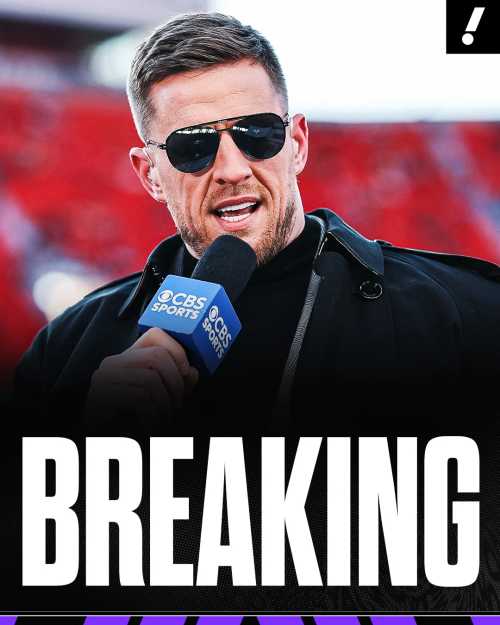
Sports Media Earthquake: JJ Watt's CBS Deal and NBA's Record Ratings Signal Industry Transformation
Oct 23, 2026
[The Streaming Surrender: Why Netflix and Disney's Unholy Alliance Signals Industry Capitulation]
Oct 23, 2026
Comments (0)
No comments yet. Be the first to share your thoughts!
Want to join the discussion?
Please log in to post a comment.
Login NoworCreate an Account