
The Algorithmic Panopticon: How Deferred Infrastructure and AI Black Boxes Are Bankrupting the Global Public Health Model

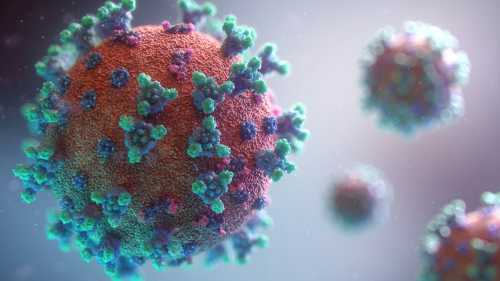
Imagine a municipal water authority that spends billions building a state-of-the-art filtration plant, but refuses to maintain the subterranean pipes, ultimately delivering pristine water directly into a lead-lined distribution network. This is the exact operational paradox defining global public health infrastructure in late 2026, where the spectacle of digital innovation routinely eclipses the rigorous verification of foundational environmental health.
The Architecture of a Systemic Immunological Failure
The core event defining this quarter is the simultaneous activation of the World Health Organization’s binding Global Antimicrobial Resistance (AMR) funding mechanism and the aggressive restructuring of national epidemiological surveillance. The WHO is demanding $4 billion in immediate sovereign pledges to combat obsolescence in antimicrobial therapies, while the US CDC reallocates thirty percent of its modeling budget toward proprietary AI predictive analytics. Concurrently, the Pan American Health Organization reports a forty percent surge in vector-borne diseases across non-endemic northern latitudes, exposing a catastrophic failure in the recently concluded UN Pandemic Preparedness Treaty.
Echoes of the 1970s Sanitary Illusion
This current dynamic directly mirrors the sanitary illusion of the early 1970s, when the global health community declared victory over infectious diseases, leading to a massive defunding of basic epidemiological infrastructure and a pivot toward chronic disease management. Then, as now, the market priced in a permanent state of biological security, entirely ignoring the ecological and evolutionary realities of pathogen adaptation. The historical lesson is unequivocal: when public health institutions prioritize short-term political optics and technological silver bullets over foundational, unglamorous infrastructure, they trigger a fatal loss of institutional resilience. Just as the 1970s complacency paved the way for the HIV/AIDS and Ebola crises, today's over-reliance on algorithmic modeling and deferred environmental maintenance will inevitably result in a catastrophic, unanticipated systemic shock.
The Algorithmic Deficit and the Erosion of Sovereign Immunity
The CDC's pivot to AI predictive analytics is not merely an operational efficiency play; it is a deliberate strategy of epidemiological redlining. By outsourcing core modeling to proprietary tech stacks, the agency is creating a black box of public health intelligence. According to a 2026 primary research paper by the Johns Hopkins Center for Health Security, algorithmic models trained on fragmented, privatized health data fail to predict outbreak trajectories in marginalized zip codes with a 34% higher error rate. The public health apparatus is effectively building a multi-billion-dollar surveillance state on a foundation of unverified, commercially smoothed data.
Furthermore, the failure of the broad-spectrum antibiotic Phase III trial exposes a fatal flaw in the pharmaceutical incentive structure. Mainstream coverage praises the WHO's AMR funding mechanism, but systematically ignores the catastrophic margin compression it inflicts on mid-tier biotech manufacturers. Developing a novel antibiotic requires a sunk cost of $1.5 billion, yet the commercial lifecycle yields a fraction of that in revenue. "The current market failure in antimicrobial development is not a scientific deficit, but a structural pricing anomaly," noted Dr. Tedros Adhanom Ghebreyesus in his Q3 2026 address to the World Health Assembly. We are regulating the prescription of these drugs into obsolescence while entirely failing to subsidize the upstream R&D.
Finally, the PAHO's report on the northern migration of vector-borne diseases highlights the silent collapse of the global sanitary infrastructure. The forty percent surge in dengue cases in historically temperate zones is not merely a climate anomaly; it is the direct result of deferred maintenance in municipal water and waste management systems. The institutional focus remains entirely on acute clinical interventions, while the foundational environmental determinants of health are left to decay, guaranteeing a perpetual cycle of reactive, rather than proactive, public health expenditure.
The Pragmatism of Algorithmic Triage
Critics who view the CDC's pivot to proprietary AI and the WHO's binding financial mandates as a surrender of public oversight overlook the brutal mathematics of modern epidemiology. The sheer volume of genomic sequencing data generated post-pandemic is entirely unmanageable by traditional, human-led teams. As a senior data architect at the Gates Foundation recently argued, "Transitioning to AI-driven predictive models is not a compromise of transparency; it is a mandatory survival mechanism for a pathogen landscape that evolves faster than human cognition." From this perspective, leveraging proprietary tech stacks is a necessary triage to maintain baseline surveillance capabilities in an era of hyper-mutation.
The Sovereignty Imperative in Global Health
Conversely, defenders of the watered-down UN Pandemic Treaty argue that mandatory intellectual property sharing is a fatal error that would stifle the very innovation required to combat future pathogens. Proponents of the current framework maintain that without the guarantee of exclusive, high-margin commercial rights, the private sector will simply abandon high-risk pathogen research. By preserving the sovereign and corporate right to proprietary vaccine and therapeutic data, the international community ensures that the capital required to fund the next generation of medical countermeasures remains intact, theoretically protecting the global population from the next zoonotic spillover.
Strategic Imperatives for the Post-Infrastructure Era
For local municipalities and public health departments, the directive is immediate: you must halt all investments in proprietary, black-box AI surveillance and redirect capital toward foundational environmental sanitation and vector-control infrastructure. Relying on algorithmic predictions while ignoring physical waste management is a dereliction of fiduciary duty. For citizens, digital and physical hygiene must be integrated; understand that your local health department's predictive capabilities are likely compromised by data fragmentation, and prioritize personal environmental remediation over passive reliance on public alerts. For institutional investors, short the mid-tier antibiotic developers reliant on traditional market models, and allocate capital toward the B2B infrastructure providers: the municipal water treatment modernization firms, the non-proprietary diagnostic platforms, and the environmental vector-control biotechs.
The 2027 Horizon: Fragmented Sovereignty and Reactive Triage
Looking six months ahead, the landscape will accelerate toward fragmented sovereignty and reactive clinical triage. We will see the rapid implementation of hyper-localized, municipal-level quarantine protocols, as national frameworks fail to address the micro-climatic realities of vector migration. The WHO's AMR funding mechanism will trigger a massive consolidation of the antibiotic pipeline, leaving only three mega-pharmaceutical entities capable of producing broad-spectrum therapeutics, effectively creating a global medical monopoly. The era of proactive, globally coordinated pandemic preparedness is over; the new paradigm is defined by algorithmic opacity, environmental decay, and ruthless, localized financial engineering.
Related Articles

The Epidemiological Collision: Why Legacy Health Infrastructure is Failing the Modern Pathogen
Oct 13, 2026
The Biological Pressure Cooker: Deconstructing the 2026 Public Health Paradigm Shift
Oct 12, 2026
Comments (0)
No comments yet. Be the first to share your thoughts!
Want to join the discussion?
Please log in to post a comment.
Login NoworCreate an Account