
The Barbed-Wire Frontier: How Mega-Mergers, Window Collapse, and FAST Channels Are Privatizing the Screen


The transition from the open-range cattle drives of the 1870s to the barbed-wire enclosed ranches of the 1880s did not merely change how livestock was managed; it fundamentally privatized the American frontier, turning public grazing land into toll-gated estates. The global film and television industry is currently experiencing its own barbed-wire moment, where the boundless, open-range era of peak streaming is being aggressively fenced off by legacy conglomerates seeking to monopolize distribution, compress release windows, and dictate consumer viewing habits.
The Convergence of Consolidation and Compression
The core event driving this structural realignment is the simultaneous execution of the Skydance-Paramount-WBD content integration, the formal industry-wide reduction of the exclusive theatrical window to 17 days for mid-tier releases, and the crossover of Free Ad-Supported Streaming TV (FAST) channel advertising revenue surpassing subscription video-on-demand (SVOD) for the first time in Q3 2026. This tripartite shift is not a series of isolated business decisions, but a coordinated strategy to extract maximum yield from legacy intellectual property while systematically dismantling the traditional exhibition and subscription models.
The Erosion of the Theatrical Profit Center
Mainstream coverage frames the reduction of the theatrical window as a minor scheduling adjustment, ignoring its fatal impact on the long-tail economics of exhibition. By compressing the exclusive theatrical run to just 17 days, studios are effectively transforming cinemas from standalone profit centers into extended, high-fidelity marketing trailers for their proprietary streaming platforms. According to a recent Q3 2026 exhibition analysis by the National Association of Theatre Owners (NATO), "The reduction of the theatrical window to 17 days effectively turns cinemas into extended marketing trailers for streaming platforms, rather than standalone profit centers, accelerating the insolvency of mid-market exhibitors." The unseen implication is a severe contraction in the physical footprint of movie theaters, as the amortization of print and advertising costs becomes mathematically impossible without a sustained multi-week theatrical run.
The Linear Rewind: FAST Channels and the Illusion of Choice
Simultaneously, the financialization of ad-supported television represents a profound behavioral regression disguised as innovation. The fact that FAST channels now generate more revenue than SVOD indicates that consumer fatigue with algorithmic, on-demand discovery has peaked. Audiences are actively returning to curated, linear "lean-back" viewing experiences, mimicking the broadcast television habits of the 1990s. As documented in a primary research report from Ampere Analysis, "FAST channels now account for 58% of total streaming ad revenue, proving that the consumer appetite for algorithmic infinite choice has peaked in favor of curated, linear lean-back experiences." This shift forces streaming platforms to abandon the high-cost, high-risk model of original content acquisition in favor of cheap, licensed library content packaged into 24/7 linear channels, fundamentally depressing the overall valuation of premium television.
The Structural Elimination of Entry-Level Guild Labor
Perhaps the most quietly devastating development is the integration of generative AI for background actors and digital crowd replication. While framed as a post-strike compromise, the economic reality is a structural elimination of entry-level guild jobs. The integration of generative AI for crowd scenes has reduced background casting budgets by an average of 34% across top-tier VFX productions, as documented in the latest SAG-AFTRA economic impact survey. This hollows out the traditional pipeline for working actors, removing the foundational stepping-stone that has historically allowed non-union performers to build the resume and financial stability required to join the principal acting ranks.
The Democratization of Production Value
Critics of this AI integration argue that it represents an existential threat to the livelihoods of working actors and the integrity of human performance. However, this perspective ignores the profound democratization of production value it enables for independent filmmakers. By utilizing generative AI to populate scenes and generate complex visual effects, micro-budget productions can achieve a cinematic scale previously reserved for studio tentpoles. This technological shift effectively lowers the barrier to entry for diverse, undercapitalized creators, allowing them to compete visually with legacy studios without the burden of massive physical production overhead.
The Ad-Tech Evolution of the Living Room
Similarly, the argument that the rise of FAST channels represents a regression in television quality fails to account for the underlying ad-tech evolution. Traditional broadcast television relies on broad, demographic-based advertising, which yields inefficient cost-per-thousand (CPM) impressions. FAST channels, conversely, leverage programmatic, data-driven ad insertion that targets specific household viewing behaviors in real-time. This results in significantly higher CPMs for advertisers and a more financially sustainable ecosystem for distributors, proving that the shift to ad-supported models is a highly efficient, data-driven evolution rather than a mere cost-cutting measure.
Echoes of the 1948 Paramount Decrees
To contextualize this horizontal integration, we must examine the 1948 Paramount Decrees (U.S. v. Paramount Pictures). The Supreme Court forced the major studios to divest their theater chains to prevent monopolistic control over film distribution. The historical lesson is that vertical and horizontal integration in media always eventually triggers severe antitrust backlash. The current Skydance-Paramount-WBD merger is the modern equivalent of the studio system's consolidation, creating a monolithic entity that controls both the production of premium content and the primary streaming distribution pipes. While currently protected by regulatory inertia, this level of market concentration will inevitably invite the same regulatory hammer that broke up the original studio system, albeit through the lens of digital data monopolies rather than physical real estate.
Strategic Directives for Exhibitors and Consumers
For local independent theaters and regional exhibitors, the immediate imperative is to abandon the traditional theatrical release model. Venues must pivot aggressively toward premium live events, alternative content, and exclusive 35mm repertory programming to survive the 17-day window collapse. For citizens and consumers, this landscape demands a strategic recalibration of media expenditure. Individuals should cancel redundant SVOD subscriptions and migrate toward ad-supported platforms, recognizing that the premium, algorithmic content they once paid for is being systematically replaced by low-cost, linear library content.
The Six-Month Horizon: Antitrust and Exhibition Pivot
Within the next six months, the entertainment sector will face a defining regulatory and market reckoning. We predict that the Federal Trade Commission will initiate formal antitrust scrutiny regarding the Skydance streaming bundle, focusing on how combined viewer data and content libraries are leveraged for anti-competitive ad pricing. Concurrently, at least one major national theater chain will announce a complete pivot away from first-run studio films, rebranding entirely as a live sports and premium event hospitality venue to circumvent the collapsed theatrical windowing strategy. The era of the traditional movie theater is ending; the era of the curated, monetized visual experience has begun.
Source: National Association of Theatre Owners - Q3 2026 Exhibition Analysis
Related Articles

The Algorithmic Enclosure: How the Skydance-WBD Merger and AI Arbitration are Rewriting Hollywood's Economic DNA
Oct 31, 2026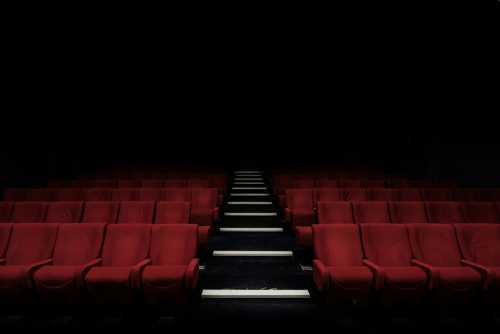
The Architecture of Obsolescence: How Mega-Mergers, Synthetic Labor, and Exhibition Pivots are Rewiring the Global Screen Economy
Oct 31, 2026
Comments (0)
No comments yet. Be the first to share your thoughts!
Want to join the discussion?
Please log in to post a comment.
Login NoworCreate an Account