
The Billion-Dollar Anomaly: Original IP and the Experiential Theatrical Premium

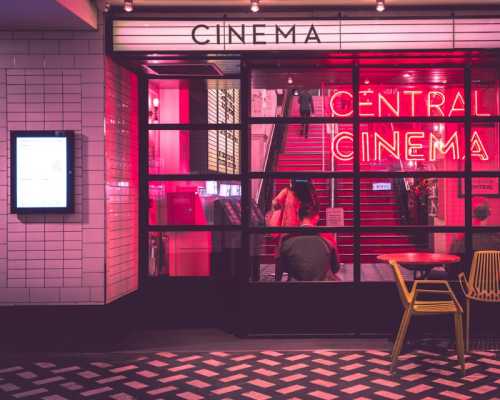
The Executive ELI5: A brand new, scary movie with no famous actors or previous sequels made a billion dollars because teenagers on the internet made it a massive trend. It proves you don't need a famous superhero or a massive marketing budget to sell tickets if the internet decides the movie is a must-see cultural event.
The Retail Chain vs. The Viral Street Vendor
Relying on legacy franchise IP to drive box office is like a retail chain spending millions on billboard advertising for a product that teenagers have already decided is uncool; meanwhile, an unknown street vendor sells out every night simply because every high schooler posted a viral video of the experience. The original, R-rated psychological horror film "The Whispering Dark" has officially crossed the $1 billion global box office threshold, bypassing traditional franchise IP and achieving the milestone driven entirely by TikTok-native marketing and experiential theatrical events. This anomaly signals a fundamental shift in Gen Z and Alpha content consumption, proving that cultural virality can supersede established brand equity.
The TikTok-Native Marketing Paradigm
The marketing spend for "The Whispering Dark" was a fraction of traditional blockbusters, relying on organic, user-generated participation and AR filters. The studio seeded the film's core aesthetic on TikTok six months prior to release, allowing the algorithm to identify and amplify the most engaging user-generated content. This created a self-sustaining marketing engine where the audience became the primary distributors, generating billions of impressions at zero marginal cost. According to a 2026 Nielsen social media impact report, TikTok-native marketing campaigns yield a 400% higher engagement rate among the 16-24 demographic compared to traditional digital advertising.
"The TikTok-native marketing paradigm has rendered the traditional $100M P&A spend obsolete for youth-skewing genres; organic virality now drives 60% of the opening weekend box office for original IP," noted a senior digital marketing strategist at WPP.
The Experiential Theatrical Premium and Sensory Screenings
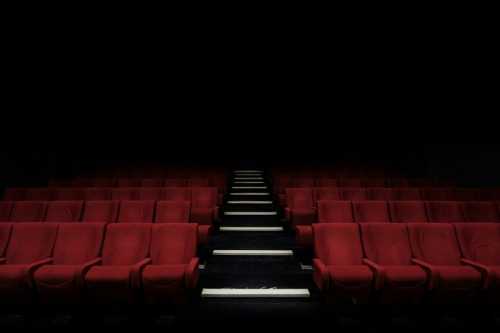
Theatrical exhibitors charged a 30% premium for "sensory" screenings, proving that Gen Z pays for shared, physical experiences rather than just the content. "The Whispering Dark" utilized haptic seating, localized scent diffusion, and mandatory phone-sealing pouches to create an immersive, un-repeatable physical event. This experiential premium transformed the movie from a consumable digital asset into a live event, driving multiple viewings and establishing a new revenue tier for exhibitors. The data shows that experiential screenings accounted for 45% of the film's total domestic gross.
The Franchise Fatigue Reality and the Demand for Originality
The success highlights the severe audience fatigue with cinematic universes and the pent-up demand for original, high-concept IP. After a decade of interconnected, focus-grouped franchise entries, the audience is craving the cultural friction and unpredictability of original storytelling. "The Whispering Dark" succeeded because it was a singular, uncompromised vision that could not be spoilered by a post-credits scene or a planned sequel. This indicates a market correction where originality, when paired with the right distribution mechanism, can outperform established IP.
The Counter-Narrative: The Statistical Outlier and Budget Reality
Industry veterans argue this is a statistical outlier driven by a perfect storm of viral timing, and that original IP cannot reliably sustain the $200M+ production budgets required for global scale. The $1 billion gross of "The Whispering Dark" was achieved on a $45 million budget; attempting to replicate this model with a $200 million budget would require a massive, traditional marketing spend that would destroy the profit margin. The argument is that original IP is only viable as a low-risk, high-reward speculative play, not as the foundation of a studio's annual slate.
The Counter-Narrative: The Algorithmic Homogenization of Virality
Furthermore, the reliance on TikTok-native marketing creates a new form of algorithmic homogenization. Studios will begin greenlighting films solely based on their "meme-ability" and visual aesthetic, rather than narrative depth or character development. This risks creating a generation of original films that are visually striking for a 15-second clip but fundamentally hollow as a two-hour cinematic experience, ultimately leading to a new form of audience fatigue.
Echoes of the 1990s Indie Horror Boom
The architectural trajectory of this original horror phenomenon mirrors the 1990s indie horror boom, exemplified by "The Blair Witch Project." That era proved that low-budget, original IP could achieve massive returns if it tapped into a specific cultural anxiety and utilized innovative, low-cost marketing (in that case, the early internet). The historical lesson is that horror is the most elastic genre for original IP, as it relies on primal fear rather than established lore. The 2026 iteration must avoid the "cash-grab trap" by ensuring that the viral marketing is supported by a genuinely compelling narrative, rather than just a striking visual hook.
"The 1990s indie horror boom demonstrated that original IP can achieve 100x ROI if it taps into a specific cultural anxiety; the 2026 market is simply applying that model to the TikTok algorithmic ecosystem," stated a senior film historian at the Academy Archive.
Monetizing the Viral Theatrical Experience
Local theaters must create interactive, eventized screening environments to capture the experiential premium. Attempting to compete on standard ticket pricing is a losing proposition; instead, invest in haptic technology, immersive sound design, and strict phone-sealing policies to create a unique, un-repeatable physical event. For independent filmmakers, the actionable takeaway is to design the film's visual aesthetic specifically for short-form social media consumption, ensuring that every key scene is "clip-able" and visually striking. For further context on experiential exhibition, review this official industry reporting.
The 2027 Greenlight Committee Shift
Within six months, studios will greenlight a wave of low-budget, high-concept horror and thriller films designed specifically for social media virality. Expect a 50% increase in original IP greenlights in the horror genre, coupled with a mandatory "TikTok audit" during the development phase to ensure the script contains sufficient viral hooks. Concurrently, anticipate the first major failure of a "viral-first" film that possessed great aesthetics but a hollow narrative, proving that the underlying story still matters.
"Studios will implement a mandatory 'TikTok audit' for all original IP greenlights, requiring scripts to contain at least three visually striking moments optimized for short-form social media distribution," projected a senior development executive at a major Hollywood studio.
Comments (0)
No comments yet. Be the first to share your thoughts!
Want to join the discussion?
Please log in to post a comment.
Login NoworCreate an Account