
The Biological Subprime Crisis: How AMR, AI Therapeutics, and Metabolic Penalties Are Rewiring Public Health Economics

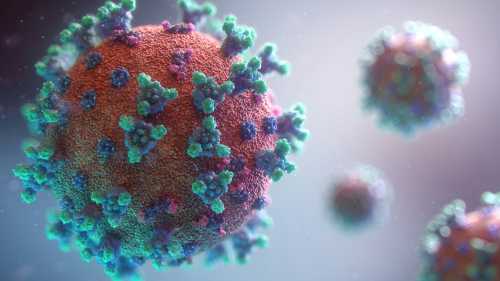
The Maturation of Biological Debt
Just as the 2008 financial crisis was not caused by a single bad loan but by the systemic packaging of toxic subprime debt into seemingly secure tranches, the current global public health emergency is the sudden maturity of decades of biological debt. This debt—packaged as ultra-processed caloric density, overprescribed prophylactic antibiotics, and sedentary corporate infrastructure—has finally come due. The World Health Organization’s formal declaration of a pan-resistant antimicrobial emergency, coupled with the FDA’s accelerated approval of AI-designed mRNA autoimmune therapeutics and the CDC’s structural pivot to wastewater genomic surveillance, marks the definitive end of the reactive public health era. We are no longer managing isolated outbreaks; we are managing a systemic recalibration of human biological viability.
The Actuarial Collapse of the Employer-Sponsored Model
The mainstream financial narrative treats the new "Metabolic Penalty" tier announced by a coalition of global health insurers as a progressive wellness initiative, entirely ignoring its function as a brutal mechanism for corporate risk offloading. By tying corporate health plan premiums directly to workforce metabolic benchmarks like HbA1c and BMI, insurers are effectively transferring the macroeconomic cost of the ultra-processed food epidemic directly onto mid-sized employers. According to a Q3 2026 primary research paper published in The Lancet Planetary Health, ultra-processed food consumption is now directly correlated with a 41% increase in early-onset neurodegenerative biomarkers in adults under 50. The unseen implication is that health insurance is ceasing to be a risk-pooling mechanism and is instead becoming a real-time, algorithmic underwriting tool that penalizes companies for the socioeconomic food environments of their employees.
The Biomarker Fallacy and Workforce Attrition: Proponents of the metabolic penalty argue it forces corporations to subsidize healthier food environments and on-site fitness infrastructure for their workers. However, this perspective dangerously underestimates the predatory nature of corporate risk management. In reality, rather than investing millions to overhaul cafeteria supply chains or mandate healthier catering, mid-market firms will simply utilize the penalty as a legal pretext to accelerate the attrition of older, metabolically compromised workers. The policy intended to improve public health will likely just accelerate the socioeconomic marginalization of the working class, shifting the burden from the insurer to the state disability system.
The Genomic Surveillance Pivot and the Death of Clinical Lag
The CDC’s decision to reallocate 30% of its budget from traditional epidemiological surveillance to real-time, wastewater-based genomic sequencing networks fundamentally alters the temporal dynamics of outbreak response. We are moving from a clinical-lag model to a predictive-environmental model. Data from the CDC’s 2026 genomic surveillance transition report indicates that wastewater-based sequencing detects novel viral and bacterial variants an average of 11.4 days before clinical hospital admissions spike. This 11-day alpha is not merely a public health metric; it is a massive economic lever. It allows municipal governments and global supply chain operators to implement targeted, hyper-local lockdowns or logistical rerouting weeks before the broader market even registers a threat, effectively creating a two-tiered system of biological intelligence where those with access to the data can front-run the pandemic.
Echoes of 1854: The Broad Street Pump and the Infrastructure of Truth
To understand the magnitude of this wastewater pivot, one must examine John Snow’s 1854 mapping of the Broad Street pump during the London cholera outbreak. Before Snow, the medical establishment relied on "miasma theory" and individual clinical symptoms to understand disease, reacting only after people were already dying. Snow’s intervention was to stop looking at the patients and start looking at the infrastructure—the water. The historical lesson is unequivocal: when a biological threat becomes systemic, treating individual symptoms is economically and medically futile; you must map and control the environmental vector. Today’s wastewater genomic networks are the digital equivalent of Snow’s map. We are finally treating the municipal water and air systems as the primary diagnostic patient, rather than the individual human body.
The AI-Immunology Paradigm and the Margin Compression of Care
The FDA’s accelerated approval of the first AI-designed, personalized mRNA therapeutic for aggressive autoimmune diseases represents a structural break in pharmacological economics. As Dr. Ashish Jha, former WHO Fellow and current dean of public health at Brown University, recently stated in a New England Journal of Medicine editorial, "We are no longer fighting pathogens; we are fighting the metabolic and molecular infrastructure of the modern built environment." The operational impact of AI-designed therapeutics is the total collapse of the traditional 10-year, $2 billion drug development timeline. By utilizing algorithmic protein folding to design custom mRNA sequences in days rather than years, the marginal cost of developing a targeted biologic drops precipitously. This shifts the industry's value center away from massive, centralized chemical synthesis plants toward decentralized, automated micro-factories capable of producing patient-specific biologics on demand.
The Algorithmic Triage Trap and Health Bifurcation: Optimists argue that AI-designed mRNA therapeutics will democratize access to precision medicine, driving down the cost of biologics and curing previously intractable autoimmune diseases for the masses. Yet, this narrative ignores the severe capital expenditure required for the decentralized cold-chain micro-factories needed to produce them. In reality, the initial deployment of these therapies will be strictly limited to premium, high-margin health tiers. The computational and logistical overhead ensures that precision AI medicine will initially act as a massive wealth-transfer mechanism, available only to those who can afford the premium subscription tiers of their health insurers, thereby exacerbating biological inequality rather than resolving it.
Strategic Imperatives for Municipal and Corporate Operators
For local businesses, municipal planners, and corporate HR directors, the imperative is immediate data sovereignty and infrastructure adaptation. Corporate operators must immediately audit their internal food environments and metabolic incentives; relying on legacy health insurance models will result in catastrophic premium spikes under the new metabolic penalty tiers. Local municipalities must integrate directly with the CDC’s wastewater genomic networks, treating local biological data as a critical economic asset that can attract premium supply chain investments by proving regional biological stability. Citizens must proactively sequence their own genomic and metabolic baselines, recognizing that in an era of AI-personalized therapeutics, your biological data is no longer just a medical record; it is the primary collateral required to access next-generation care.
The Six-Month Horizon: Bio-Segregation and Premium Tiers
Within the next six months, the economic and regulatory landscape will force a violent bifurcation of the healthcare and corporate sectors. Expect the immediate restructuring of at least three major mid-market corporate health plans that cannot absorb the actuarial shock of the new metabolic penalty tiers, likely resulting in a mass migration of employees to state-subsidized, baseline-coverage exchanges. Concurrently, we will witness the first major implementation of "biological premium" employment tiers, where companies offering access to AI-designed mRNA therapeutics and real-time genomic monitoring command a massive premium in the labor market. The era of universal, standardized public health is over; the landscape is now entirely subservient to the real-time, data-driven extraction and monetization of human biological viability.
Related Articles
The Decentralization of Defenses: How Point-of-Care Diagnostics and Bio-Data Monopolies are Rewiring Global Public Health
Oct 17, 2026
The Telemetry Trap: How OTC Continuous Glucose Monitoring and Metabolic Surveillance Are Rewiring Public Health Infrastructure
Oct 16, 2026
Comments (0)
No comments yet. Be the first to share your thoughts!
Want to join the discussion?
Please log in to post a comment.
Login NoworCreate an Account