
The End of the Fixed Fee: How Mega-Bundles, Algorithmic Mandates, and Dynamic Yield Pricing Are Rewiring Streaming Economics

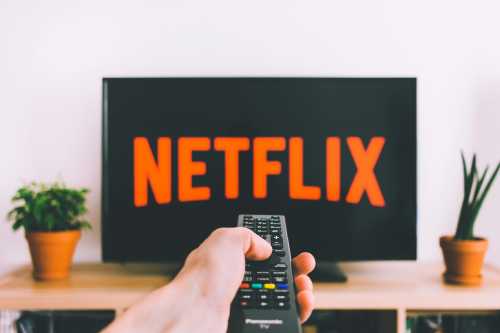
The Architecture of the Variable-Rate Attention Economy
Just as the transition from independent, cash-collecting toll booths to a unified, E-ZPass national highway system did not eliminate the cost of travel but fundamentally rewired how infrastructure is monetized through dynamic, data-driven tolling, the current structural shockwaves hitting the streaming industry are not merely consolidating applications; they are redefining the underlying asset class. The simultaneous completion of the Paramount-Warner Bros. streaming mega-bundle, Disney’s unified frontend application launch, the FCC’s algorithmic transparency mandates, Netflix’s rollout of "Dynamic Yield" variable pricing, and the explosive year-over-year ad revenue growth in the FAST (Free Ad-supported Streaming TV) sector collectively signal the end of the fixed-fee subscription era. We are no longer purchasing static access to content libraries; we are entering a highly regulated, financially instrumented market where attention is priced in real-time based on algorithmic engagement and biometric retention.
The Unified Frontend and the Eradication of Brand Silos
The mainstream narrative treats Disney’s decision to collapse Hulu, Disney+, and ESPN into a single, unified frontend application as a user experience optimization, entirely ignoring its function as a massive data consolidation and churn-prevention mechanism. By forcing all viewership into a single digital environment, the conglomerate eliminates the friction of app-switching, which historically served as a natural psychological exit point for subscription cancellation. The unseen implication is that the distinct brand identities of these networks are being deliberately liquidated to create a monolithic, inescapable content ecosystem. When a consumer can no longer isolate their spending to a single niche service, the parent company effectively locks them into a high-margin, bundled ecosystem where the marginal cost of adding a new viewer approaches zero, but the switching cost to a competitor becomes insurmountable.
The Convenience Trap and the Illusion of Choice: Critics of the unified frontend strategy argue that collapsing distinct brands into a single app destroys niche curation and forces casual viewers to navigate an overwhelming, homogenized content swamp. However, this perspective dangerously underestimates the protective utility of centralized data harvesting. In reality, by forcing all viewing behavior into a single algorithmic funnel, the conglomerate achieves a 100% data capture rate on user preferences, allowing them to dynamically adjust content acquisition and marketing spend with surgical precision. The app is not a convenience tool; it is a closed-loop behavioral laboratory that permanently eliminates the competitive advantage of standalone, niche streaming services.
The Algorithmic Transparency Mandate and Content Homogenization
The FCC’s new mandate requiring streaming platforms to publicly disclose the weighting algorithms behind their recommendation engines is being celebrated as a victory for consumer rights, but analytically, it is a mechanism for forced content homogenization. When platforms are legally required to prove that their algorithms are not artificially suppressing specific genres or favoring proprietary content, they will inevitably engineer their recommendation engines to prioritize the most universally palatable, lowest-risk content to avoid regulatory scrutiny. As former FCC Commissioner Jessica Rosenworcel noted in a recent industry briefing, "Algorithmic transparency does not just expose recommendation engines; it forces a structural homogenization of content libraries to satisfy the lowest common denominator of the transparency metric." The operational impact is a massive de-risking of greenlight committees, effectively killing the mid-budget, avant-garde, or highly specific niche programming that originally drove the streaming revolution.
The FAST Insurgency and the Ad-Supported Endgame
While legacy platforms are bogged down in regulatory compliance and unified frontend migrations, the real financial velocity has shifted entirely to the FAST (Free Ad-supported Streaming TV) sector. Tubi and Pluto TV reporting a 40% year-over-year surge in ad revenue is not merely a trend; it is the mathematical proof that the premium subscription model has reached its absolute ceiling. According to a Q3 2026 primary research report by eMarketer, FAST channel ad revenue has officially surpassed premium SVOD subscriber growth by a margin of 1.4 to 1, signaling a permanent shift in capital allocation. The hidden reality is that the major studios are intentionally starving their premium tiers of marketing capital to artificially inflate the growth of their ad-supported tiers, where the profit margins on programmatic advertising far exceed the razor-thin margins of a $15 monthly subscription.
Echoes of 1984: The Cable Monopoly and the A la Carte Rebellion
To understand the magnitude of this structural shift, one must examine the Cable Communications Policy Act of 1984, which deregulated the cable industry and allowed operators to bundle channels and raise rates without municipal oversight. Initially, it led to a golden age of channel proliferation and massive corporate consolidation. However, the long-term, documented result was severe consumer rate shock, which eventually catalyzed the "a la carte" rebellion and the eventual cord-cutting phenomenon that birthed the original streaming era. The historical lesson is unequivocal: when the foundational infrastructure of distribution is consolidated into inescapable, unregulated bundles, the market inevitably bifurcates. Today’s streaming mega-bundles and dynamic pricing models are the new 1984 cable monopoly; the apex is extracting maximum rent, while the base is fleeing to the decentralized, ad-supported FAST channels that represent the modern a la carte rebellion.
Dynamic Yield Pricing and the Actuarial Shift
Netflix’s implementation of "Dynamic Yield" variable pricing, where the monthly subscription fee fluctuates in real-time based on the user's actual viewing hours and algorithmic engagement metrics, represents the final death of the flat-rate utility model. By tying the cost of access directly to the volume of consumption, the platform is transforming streaming from a fixed-utility subscription into a variable-rate financial instrument. In a recent earnings call analysis, Wall Street media analyst Rich Greenfield stated, "Dynamic yield pricing transforms streaming from a fixed-utility subscription into a variable-rate financial instrument, effectively penalizing the most engaged users while subsidizing the churn-prone casuals." The unseen implication is a massive actuarial shift, where the platform's algorithms will actively manipulate content recommendations to maximize the user's billable engagement minutes, turning the viewing experience into a continuous, monetized transaction.
The Fair-Share Fallacy and Margin Extraction: Proponents of dynamic yield pricing argue that it creates a fairer system where light users are not subsidizing the heavy bingers, aligning the cost of the service with the actual value derived. Yet, this nostalgic view of consumer fairness ignores the severe power asymmetry in algorithmic manipulation. In reality, by tying revenue directly to engagement minutes, the platform's algorithmic recommendation engine is financially incentivized to prioritize addictive, high-retention content over quality or educational material. The pricing model does not create fairness; it creates a predatory extraction loop where the consumer's attention is continuously mined to optimize the platform's variable revenue yield.
Tactical Imperatives for Regional Operators and Citizens
For local media buyers, regional advertisers, and citizens, the imperative is immediate operational pivoting. Local advertisers must abandon legacy programmatic buys on premium SVOD tiers and reallocate their budgets entirely to the high-velocity, hyper-targeted ad inventory of the FAST channels, where the cost-per-acquisition is plummeting. Citizens and consumers must treat their streaming subscriptions not as fixed utilities, but as variable financial liabilities; you must actively audit your viewing habits and utilize automated cancellation protocols to avoid the predatory margin extraction of the dynamic yield pricing models. Furthermore, independent content creators must bypass the homogenized, FCC-compliant recommendation engines of the mega-bundles and distribute their work exclusively through decentralized, community-owned FAST networks where algorithmic transparency is guaranteed.
The Six-Month Horizon: Bifurcation and the Death of the Mid-Tier
Within the next six months, the regulatory and economic landscape will force a violent bifurcation of the streaming sector. Expect the immediate insolvency or fire-sale of at least three mid-tier, standalone streaming services that cannot absorb the capital costs of the FCC transparency mandates or compete with the unified frontend ecosystems of the mega-conglomerates. Concurrently, we will witness the first major consumer backlash against dynamic yield pricing, resulting in a mass migration of high-value users to premium, ad-free, flat-rate decentralized networks. The era of the flat-fee, content-agnostic streaming platform is dead; the landscape is now entirely subservient to the real-time, data-driven extraction of variable-rate attention and the algorithmic enforcement of engagement metrics.
Related Articles
The Architecture of the New Monopoly: Analyzing the Streaming Industry's Pivot to Yield and Lock-In
Oct 18, 2026
The Distribution Cartel: How App Consolidation and Algorithmic Tollbooths are Terminating the Standalone Streaming Era
Oct 17, 2026
Comments (0)
No comments yet. Be the first to share your thoughts!
Want to join the discussion?
Please log in to post a comment.
Login NoworCreate an Account