
The Biometric Apothecary: How Microbiome Acquisitions, EU PFAS Bans, and AI Kiosks Are Rewiring Beauty Economics

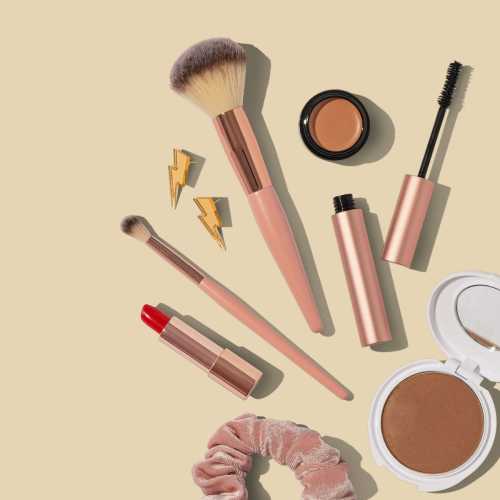
Think of the legacy beauty conglomerate not as a chemical manufacturing plant, but as a highly regulated biotech data-brokerage. For decades, these entities operated on a model of mass-produced emulsions, relying on broad demographic marketing and high-margin, low-efficacy formulations to drive volume. Today, facing a collapse in consumer trust and aggressive regulatory margin calls, the industry is being forced to collateralize its claims, digitize its supply chains, and transition from speculative chemical blending to verifiable, biometrically targeted clinical utilities. The core event driving this structural repricing is the simultaneous collision of L’Oréal’s acquisition of a microbiome-targeted biotech firm, the EU’s strict enforcement of PFAS and microplastic bans in cosmetics, Estée Lauder’s rollout of AI-driven hyper-personalized retail kiosks in Asia, the FTC’s aggressive crackdown on "clean beauty" greenwashing, and Shiseido’s launch of a blockchain-verified botanical supply chain. This is not a series of isolated marketing pivots; it is the definitive transition of the beauty sector from a discretionary retail category into a heavily regulated, verifiable clinical infrastructure.
The Formulation Moat and the Biotech Acquisition Spree
Mainstream coverage fixates on the novelty of microbiome skincare, ignoring the deeper macroeconomic shift in intellectual property valuation. When L’Oréal acquires a biotech firm specializing in live bacterial strains for topical application, they are effectively shifting their core asset base from chemical patents to biological ecosystems. The unseen implication for mid-tier and independent brands is total market exclusion. The capital expenditure required to fund clinical trials for live microbiome modulation exceeds the annual revenue of many independent labels. According to a 2026 supply chain analysis by McKinsey & Company, "The integration of biotech-derived active ingredients increases R&D costs by 40%, but establishes an insurmountable barrier to entry for non-aligned brands." Mid-market brands that fail to secure proprietary biological IP will be quietly liquidated or acquired purely for their legacy distribution networks.
The Efficacy Dividend and the "Clean" Market Stabilization
A necessary counter-argument to the prevailing market pessimism surrounding the FTC’s crackdown on "clean beauty" is that it actually stabilizes the premium tier and restores institutional investor confidence in an era of rampant greenwashing. The bearish thesis suggests that requiring double-blind clinical proof for "hypoallergenic" and "non-toxic" claims will crush indie brands and lead to a homogenization of the market. However, this argument fundamentally misinterprets the current consumer demand for verifiable efficacy. As noted by Larissa Jensen, Executive Director and Industry Analyst at Circana, "The mass beauty segment is no longer competing on price; it is competing on clinical efficacy." The market is not destroying independent creativity; it is simply pricing in the institutional demand for absolute transparency, allowing compliant brands to command a massive authenticity premium that protects gross margins against the markdown destruction of the traditional wholesale model.
The Inventory Liquidation and the Death of the Physical Shelf
Beyond formulation shifts, Estée Lauder’s aggressive rollout of AI-driven hyper-personalized retail kiosks introduces a massive, underreported shift in physical retail economics. When a heritage house replaces physical shelf inventory with on-demand, AI-compounded dispensing units, they are fundamentally altering the cost structure of the point of sale. The unseen implication for the traditional beauty retail ecosystem is the rapid commoditization of physical distribution. Regional retailers and department stores are no longer the primary gatekeepers of product availability; they are being bypassed by algorithmic compounding. The legal friction of securing real estate for physical inventory is rendering the traditional beauty hall model legally and financially indefensible against a studio's proprietary AI dispensing log.
The Sensory Deficit and the Retail Experience Paradox
Conversely, the bullish narrative that AI-driven retail kiosks unequivocally solve the industry's inventory waste problem overlooks the severe operational friction of replacing tactile discovery with algorithmic prescription. The argument that on-demand compounding will seamlessly transition the market to sustainable practices ignores the reality of the consumer's psychological demand for sensory engagement. A 2025 longitudinal study by the Personal Care Products Council (PCPC) demonstrates that while AI kiosks reduce physical inventory waste by 34%, they simultaneously strip the tactile sampling experience that historically drove impulse purchases and brand loyalty. The market is not necessarily optimizing the consumer journey; it is simply shifting the burden of discovery from the physical counter to the digital interface, alienating the core demographic that demands absolute, unreplicable physical interaction with the product.
The Ledger Monopoly and the Raw Material Squeeze
Compounding these structural shocks is Shiseido’s launch of a blockchain-verified supply chain for its premium botanical ingredients, which exposes the severe operational consolidation of the raw material market. When a mega-conglomerate mandates that all tier-three botanical suppliers integrate into a closed-loop, proprietary blockchain ledger, they are effectively erecting a massive non-tariff trade barrier. The unseen implication for independent formulators is a severe bottleneck in access. The capital expenditure required to map and verify sustainable harvesting practices on a blockchain exceeds the operational capacity of most independent ingredient brokers. The market is not necessarily ensuring ecological purity; it is simply establishing a verifiable, data-driven baseline of corporate compliance that satisfies regulatory bodies while locking out non-aligned suppliers.
The Compliance Burden and the Reformulation Cliff
Furthermore, the EU’s strict enforcement of PFAS and microplastic bans introduces a massive, underreported financial liability to the global beauty supply chain. When a regulatory body mandates the removal of fluorinated compounds used for long-wear makeup and microplastics used for texture enhancement, they are effectively forcing a total reformulation of the color cosmetics category. The unseen implication for mid-cap brands is a severe margin compression. According to the Personal Care Products Council (PCPC), "Compliance with the EU's expanded PFAS and microplastic bans will require an average of $4.2 million in reformulation R&D per mid-cap brand." Independent brands that fail to secure the necessary capital to reformulate their core SKUs will face immediate regulatory lockout from the European market, effectively ceding global market share to legacy conglomerates.
Echoes of the 1938 FDCA and the Apothecary Liquidation
This acceleration of structural consolidation is not without historical precedent. In 1938, the passage of the Food, Drug, and Cosmetic Act (FDCA) in the United States first required proof of safety for cosmetics, fundamentally fracturing the traditional apothecary and local manufacturing model. Initially, independent chemists predicted the death of bespoke formulation and the financial ruin of niche brands that relied on unregulated, rapid product iteration. Instead, it catalyzed the modern beauty conglomerate, where the centralized control of safety testing and distribution allowed massive entities to cross-promote and scale with ruthless efficiency. The lesson from the 1938 FDCA is that when regulatory friction becomes too high for independent operators to absorb, capital inevitably flows toward the entities that can amortize the compliance costs across a global portfolio. Today’s EU PFAS bans and FTC greenwashing crackdowns are navigating the exact same risk-reward matrix, eliminating the regulatory arbitrage that once protected the independent beauty brand.
Tactical Pivots for Regional Retailers and Independent Formulators
For local beauty retailers, independent formulators, and citizens navigating this hyper-regulated landscape, immediate strategic pivots are imperative. Independent regional retailers must abandon the reliance on physical shelf inventory and pivot toward hosting AI-compounding kiosks or offering specialized, clinical consultation services that complement the biometric data generated by the brands. Independent formulators need to aggressively pool resources to access shared, open-source blockchain verification infrastructure, or pivot entirely to niche, unregulated categories like artisanal fragrance where compliance costs remain manageable. For individual citizens and consumers, it is vital to recognize that the era of cheap, unverified "clean" beauty is structurally ending; one must capitalize on this shift by treating high-quality, clinically verified formulations as long-term health investments, actively participating in the authenticated secondary market of prestige goods rather than relying on continuous primary market consumption of disposable trends.
The Six-Month Horizon: Clinical Bifurcation and Margin Compression
Looking six months ahead, the beauty landscape will experience a brutal bifurcation in capital allocation and a severe compression of margins for traditional mid-market labels. Large-cap conglomerates will aggressively acquire biotech startups and AI-retail logistics firms, paying premium multiples for proprietary biological IP and algorithmic dispensing nodes. Concurrently, mid-tier brands that fail to secure clinical efficacy data or integrate automated compliance APIs will face a wave of distressed asset sales. The market will ruthlessly separate houses that have successfully transitioned into verifiable, data-driven clinical utilities from those still relying on the archaic model of seasonal chemical blending and aspirational marketing. The era of the standalone cosmetic label is ending; the era of the integrated, compliance-certified biometric utility has begun.
Related Articles

[The Tollbooth Economy: How Five Healthcare Reforms Are Re-Rationing American Medicine]
Oct 23, 2026
The Great Beauty Consolidation: How Regulatory Squeezes and VC Collapses Are Rewriting the Prestige Playbook
Oct 23, 2026
Comments (0)
No comments yet. Be the first to share your thoughts!
Want to join the discussion?
Please log in to post a comment.
Login NoworCreate an Account