
The Bundle That Rewired Hollywood: What Paramount–Warner's Streaming Merger Actually Means for Your Wallet and the Content You'll Never See

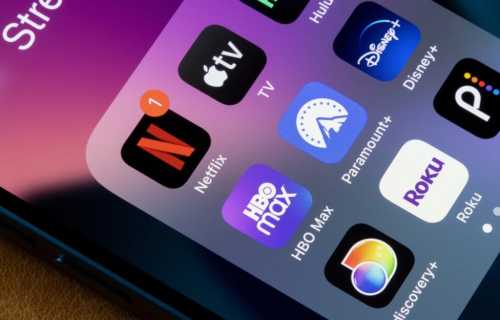
November 15, 2026 — Streaming Desk
Think about the last time you walked into a grocery store and noticed that the same two or three brands lined every aisle. You still had choices, technically. But the shelf space told a different story—one of quiet consolidation that happened so gradually you barely registered it until your favorite local product simply vanished. That is precisely the dynamic now unfolding across the streaming industry, except the stakes involve not just cereal boxes but the cultural infrastructure of an entire generation's entertainment habits.
On Monday, November 9, Skydance CEO David Ellison and Co-CEO Ynon Kreiz signed a shareholder letter that confirmed what industry insiders had been whispering since the $110.9 billion acquisition of Warner Bros. Discovery closed on October 6: bundled access to both Paramount+ and HBO Max will arrive in early 2027. The letter, filed with the SEC, also laid out a $6 billion cost-reduction target over three years and touted what Ellison called an "industry-leading base of more than $30 billion in annual content spend and a deep library built over a combined 200-plus years." That phrase—industry-leading—deserves scrutiny, because it simultaneously signals ambition and reveals the arithmetic problem at the heart of this deal.
The Churn Economics Nobody Is Talking About
Mainstream coverage has fixated on the spectacle of two legacy studios merging. What the trade press missed is the structural shift in subscriber churn that makes this bundle economically necessary rather than merely opportunistic. According to Antenna's Q1 2026 State of Subscriptions report, the weighted average churn rate for premium SVOD services hit a steady 4.6%—a stabilization that sounds reassuring until you contextualize it against Netflix's 2% monthly churn, the lowest in the category. The gap tells you everything: mid-tier platforms like Paramount+ and HBO Max hemorrhage subscribers at more than twice Netflix's rate, and the only viable defense is making cancellation feel like losing two products simultaneously.
Antenna's own data confirms this strategy is already working: "Bundles now account for 1 in 3 new streaming subscriptions—up from just 10% two years ago." That tripling is not incidental. It reflects a deliberate pivot from the land-grab subscriber growth model of 2020–2023 toward what PwC's midyear media outlook calls "profitability over subscriber growth alone." The bundle is not a consumer convenience. It is a retention architecture disguised as a value proposition.
The Regulatory Theater Nobody Wants to Name
Here is where the reporting demands nuance. The Department of Justice formally approved the Paramount–WBD merger in June 2026, with the Antitrust Division stating the transaction "is not likely to harm competition." European regulators signed off as well. But Variety reported that career DOJ lawyers were "leaning" toward opposition before political leadership cleared the deal—a sequence that Public Knowledge characterized as a merger that "will likely result in higher prices for consumers." The UCSD Macrolab study found that "adjusted for inflation, streaming platform subscription prices have risen 19.0% since 2020" and that "increased consolidation drives price hikes" directly.
The counter-argument, however, is not trivial. A bundle could theoretically lower the effective per-service price. Xfinity's StreamSaver data shows bundled services delivering 33–37% savings versus à la carte pricing. If Ellison and Kreiz price the Paramount+/HBO Max package below the sum of its parts—and they have every incentive to, given that 47% of consumers already say they pay too much for streaming—the bundle might genuinely ease the streamflation that has pushed the combined cost of six major ad-free services from $61.94 in 2022 to $108.94 in 2026. The regulatory approval was not rubber-stamping. It was a bet that bundling creates competitive pressure rather than eliminating it. Whether that bet pays off depends entirely on pricing decisions not yet made.
The Cable Bundle Graveyard and Why This Isn't Exactly Déjà Vu
Every analyst reaching for a historical parallel lands on the same comparison: the cable bundle of the 1990s and 2000s, where Comcast, Time Warner, and Charter packaged hundreds of channels into tiers that consumers resented paying for but could not opt out of. That model collapsed under its own weight. Streaming was supposed to be the antithesis—à la carte, transparent, user-controlled.
But the parallel is imperfect, and that distinction matters. Cable bundles were imposed by infrastructure monopolies with no viable alternative. Today's streaming consolidation operates in a market where YouTube commands 13.8% of TV watch-time according to Nielsen's July 2026 Gauge, where Netflix's 2% churn rate demonstrates that a single platform can still dominate without bundling, and where Disney's decision to fold Hulu into Disney+ by late 2026 shows the integration is happening at the app layer, not the infrastructure layer. The risk is not that consumers will be trapped. The risk is that the illusion of choice will persist while the actual content pipeline narrows. When Ellison writes about "$30 billion in annual content spend," the question is whether that money produces more diverse storytelling or simply more efficient replication of proven formulas across two brands that now share one balance sheet.
What Subscribers and Local Businesses Should Do Before January
For consumers: audit your current streaming stack this month. The combined monthly cost of ad-free services has climbed 54% since 2021, per Variety's analysis. If you hold both Paramount+ and HBO Max independently, cancel one before the bundle arrives—Skydance's shareholder letter confirms "no immediate changes to the Paramount+ service," meaning the transition window is your negotiating leverage. For the ad-supported tier, expect pricing to remain aggressive; Forbes analyst Gary Drenik noted that Netflix's latest hike "reveals its endgame: steering subscribers toward ads," a playbook Skydance will almost certainly replicate.
For local businesses relying on streaming advertising: the consolidation of Paramount+ and HBO Max into one ad inventory means fewer buying options but potentially more predictable audience data. Antenna's Q1 2026 data shows September sign-ups across Paramount+, Peacock, ESPN, and FOX One rose 11.2% from the offseason average—sports remain the one content category immune to bundle fatigue. Businesses targeting live-sports ad placements should lock in contracts before the bundle's pricing architecture becomes opaque.
The Content Sovereignty Paradox
The second counter-argument deserves its own paragraph because it cuts against the prevailing "consolidation equals fewer shows" narrative. Warner Bros. Discovery's HBO Max already reported 9% streaming revenue growth to $2.89 billion in Q1 2026, beating analyst projections. Paramount+ grew 21% in Q3. Both are accelerating. The argument that consolidation reduces content volume ignores the possibility that a combined entity with $30 billion in annual spend and a 200-plus-year library could actually increase production capacity by eliminating duplicative overhead—two separate marketing departments, two separate tech stacks, two separate content acquisition teams bidding against each other for the same talent.
But this argument has a flaw the industry press keeps glossing over: editorial homogenization is not a budget problem. It is an incentive problem. When two content brands share one P&L, the internal competition that once drove HBO to greenlight risky prestige projects while Paramount chased broader audience reach collapses into a single committee optimizing for aggregate subscriber retention. The UCSD Macrolab study warned that a merger "would likely reduce the amount of media projects that both conglomerates would have produced as separate entities." Efficiency and diversity are not natural allies. They are frequently adversaries.
The Six-Month Horizon: A Market at Its Inflection Point
By May 2027, the streaming landscape will look materially different. Nielsen data already shows streaming representing 49.6% of TV watch-time in August 2026, up from 49.0% in July—the category is no longer growing; it has become the default. Wells Fargo's Steve Cahall predicted media consolidation would "continue at this breakneck pace," and Alix Partners forecasts more than $80 billion in media M&A deal value across 2026. The Paramount–WBD bundle is not the endgame. It is the template.
Expect three specific developments in the next six months. First, Disney will accelerate its Hulu–Disney+ integration to match Skydance's bundle timeline, creating a three-way bundle war that will compress pricing for ad-supported tiers while widening the gap for premium ad-free plans. Second, the DOJ's approval precedent will embolden a second wave of consolidation—likely targeting Peacock and a mid-tier player—because the regulatory path is now clear. Third, and most consequentially, the bundle model will shift the industry's primary competitive metric from subscriber count to lifetime value per subscriber, fundamentally altering which content gets greenlit. Shows that drive long-term retention will be favored over shows that generate buzz. The era of the appointment television event may quietly end, replaced by the era of the always-on library.
The Ellison letter's most revealing sentence is not about $30 billion in content spend. It is the quiet admission that the combined entity will "keep investing in the content" while simultaneously targeting $6 billion in cost cuts. Those two statements can coexist only if the definition of "content" narrows. The bundle is coming. The question is what gets bundled into it—and what gets left out.
Official Source: Deadline's coverage of the shareholder letter announcement:
HBO Max-Paramount+ Bundle Set To Launch In Early 2027, David Ellison Confirms https://t.co/kzYmAX3ZNY
— Deadline (@DEADLINE) November 9, 2026
Related Articles
The Streaming Pivot: How Ad-Supported Tiers, Live Sports, and Content Licensing Are Rewiring Digital Entertainment Economics
Nov 11, 2026
The Architecture of Content Liquidity: How Regulatory Shocks and Ad-Tier Consolidation Are Rewiring the Streaming Value Chain
Nov 11, 2026
Comments (0)
No comments yet. Be the first to share your thoughts!
Want to join the discussion?
Please log in to post a comment.
Login NoworCreate an Account