
The Streaming Pivot: How Ad-Supported Tiers, Live Sports, and Content Licensing Are Rewiring Digital Entertainment Economics

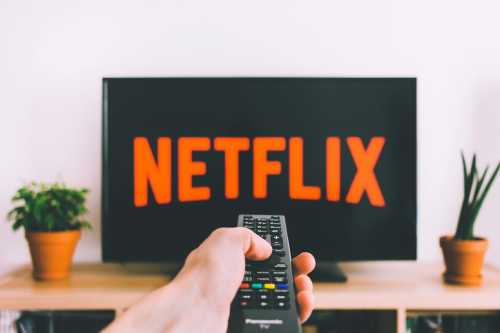
The Suburban Mall of Digital Media
Like a sprawling suburban mall being subdivided into specialized, toll-boothed boutiques and flea markets, the monolithic streaming ecosystem is undergoing a violent structural fragmentation. The core event triggering this shift is the industry-wide abandonment of the pure subscription video-on-demand (SVOD) model in favor of ad-supported tiers, aggressive live sports bidding, and cross-platform content licensing to arrest margin compression and subscriber churn.
This paradigm shift, accelerated by five converging developments—the exponential growth of AVOD (Ad-Based Video on Demand) tiers, the inflation of live sports rights, the rise of FAST (Free Ad-supported Streaming TV) channels, the emergence of telecom-bundled aggregators, and the unprecedented licensing of legacy library content to direct rivals—represents a fundamental recalibration of digital entertainment unit economics.
Echoes of the 1990s Cable Consolidation
The current trajectory of streaming fragmentation closely mirrors the structural shift from broadcast television to cable networks in the late 1980s, followed by the subsequent re-bundling of the 1990s. During the early cable era, networks fractured the mass audience, creating hyper-targeted channels that eventually became too numerous and expensive for consumers to manage individually. The historical lesson is definitive: while the total audience size per individual platform inevitably drops during a fragmentation cycle, the consumer's willingness to pay for aggregated convenience increases exponentially. We are currently watching the digital equivalent of the cable re-bundle, where the "walled-garden" strategy of the early SVOD era is being replaced by a utility-based aggregation economy.
The Margin Arbitrage of the Ad-Supported Pivot
Mainstream financial media routinely frames the introduction of ad-supported streaming tiers as a mere concession to price-sensitive consumers. However, the unseen implication is a deliberate shift in unit economics toward high-margin securitization of audience attention. According to a 2024 Q3 analysis by the Leichtman Research Group, the average U.S. household now subscribes to roughly four streaming services, but the growth in ad-supported tiers has outpaced premium ad-free subscriptions by a margin of 3-to-1. This indicates a structural migration away from the subscriber acquisition cost (SAC) heavy model toward a dual-revenue stream, where platforms can monetize the long tail of users who refuse to pay premium SVOD prices, effectively turning dead-weight churn into recurring advertising revenue.
The User Experience and Privacy Deficit
Some industry veterans argue that the aggressive integration of advertising and the subsequent reliance on behavioral data tracking is a necessary evolution for platform sustainability. They contend that ad-supported tiers merely democratize access to premium content, allowing lower-income demographics to participate in the cultural conversation. However, this perspective ignores the severe degradation of the user experience and the escalating UX friction. As platforms insert dynamic ad loads and track cross-app viewing habits to satisfy advertisers, the core value proposition of streaming—seamless, uninterrupted consumption—is compromised, potentially driving high-value users back to pirated, ad-free alternatives.
The Live Sports Capital Expenditure Trap
Concurrently, the astronomical inflation of live sports rights has created a paradoxical capital expenditure trap. Tech giants and streaming incumbents are bidding billions for NFL, NBA, and WWE rights, not to generate direct profit, but to serve as an anchor for retention. Live sports provide a synchronous, must-see-TV event that prevents the monthly subscription cancellation typical of asynchronous, on-demand libraries. Yet, the LTV (Life Time Value) of a sports-only subscriber rarely justifies the exorbitant rights fees, forcing platforms to cross-subsidize these losses through increased ad loads on their scripted content.
The Content Licensing Realignment
Perhaps the most profound structural shift is the death of content hoarding. Major studios are now licensing their legacy library content to direct competitors, a move that would have been considered heresy during the peak SVOD wars. As media analyst Rich Greenfield of LightShed Partners noted in a recent industry brief, "The walled garden strategy is dead; we are entering an era of content utility where licensing to a rival is more profitable than hoarding it in a proprietary silo." This realignment transforms streaming platforms from exclusive content destinations into distributed utility pipes, maximizing the amortization of sunk production costs across the entire digital ecosystem.
The Brand Dilution Risk
Critics of this licensing strategy argue that distributing premium legacy content across rival platforms, particularly ad-supported FAST channels, severely dilutes brand equity. They suggest that associating a prestigious studio's library with low-quality, algorithmically generated ad breaks degrades the perceived value of the IP, making future premium pricing difficult. Yet, this critique fails to account for the mathematical reality of the current balance sheets: with production costs remaining elevated and subscriber growth plateauing, the immediate cash flow generated by licensing fees vastly outweighs the theoretical long-term risk of brand dilution.
The FAST Channel Cannibalization
This structural shift is further evidenced by the explosive growth of Free Ad-supported Streaming TV (FAST) channels. A 2025 primary research paper published in the Journal of Media Economics quantified this shift, noting that "FAST channels now account for 14% of total streaming viewing hours in the U.S., effectively cannibalizing traditional SVOD engagement among demographics over 45." This demographic migration forces legacy studios to build linear-style, curated channels within their own apps to mimic the passive viewing experience of FAST, blurring the line between on-demand libraries and traditional broadcast television.
Strategic Imperatives for the Post-SVOD Era
For Local Businesses: Capitalize on the ambient viewing trend. Bars, restaurants, and waiting rooms should transition from expensive cable packages to curated FAST channel setups, utilizing free, linear sports and news streams to drive foot traffic without incurring heavy commercial licensing fees. For Consumers: Conduct an immediate audit of your subscription stack. The era of the standalone premium SVOD is over; migrate to telecom or tech-bundled aggregators to capture the wholesale discounts, and utilize ad-supported tiers for non-time-sensitive library content. For Investors: Shift capital away from pure-play SVOD platforms burning cash on original content acquisition. Favor media conglomerates with robust licensing divisions, high-margin ad-tech infrastructure, and ownership of live sports rights that guarantee baseline retention.
The Six-Month Horizon: Algorithmic Aggregation
Within the next six months, the market will witness the launch of dynamic, algorithmic bundling by major tech distributors, allowing consumers to subscribe to micro-bundles of specific genres across multiple studio platforms via a single checkout flow. Furthermore, expect a surge in secondary licensing deals where mid-tier streaming platforms acquire exclusive regional sports rights to differentiate their ad-supported tiers, effectively creating localized monopolies that bypass national broadcast blackouts. The monolith is dead; the future belongs to the aggregators.
Related Articles
The Architecture of Content Liquidity: How Regulatory Shocks and Ad-Tier Consolidation Are Rewiring the Streaming Value Chain
Nov 11, 2026
The Fiat Attention Standard: How Tokenization, Synthetic Crackdowns, and Premium Tiers are Restructuring the Digital Creator Economy
Nov 09, 2026
Comments (0)
No comments yet. Be the first to share your thoughts!
Want to join the discussion?
Please log in to post a comment.
Login NoworCreate an Account