
The Environmental Inflection Point: How Genomic Surveillance and Predictive AI are Dismantling Reactive Public Health

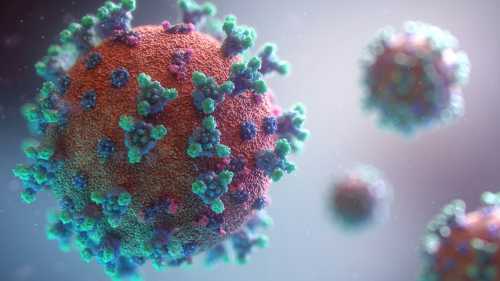
Think of a municipal water treatment plant. You do not wait for the contaminated water to reach the kitchen tap to test for pathogens; you monitor the raw inflow at the reservoir. For a century, public health has operated on the tap-end of the pipe, waiting for patients to present with symptoms in emergency rooms before deploying interventions. The formal integration of municipal wastewater genomic surveillance into global early warning systems, coupled with the deployment of AI-driven predictive epidemiology models and the permanent codification of telehealth infrastructure, marks the definitive shift to the reservoir-end. This structural realignment is transforming public health from a reactive clinical discipline into a proactive, data-driven environmental science, fundamentally rewriting the economic and operational frameworks of global healthcare.
The Proprietary Virome and the Data Moat
Mainstream media views wastewater surveillance purely as a public good, a benign tool for tracking community health. The unseen reality is the rapid privatization of the municipal virome. As private biotech firms deploy continuous-flow sequencing nodes in major metropolitan sewer systems, they are generating highly granular, proprietary pathogen datasets. "Wastewater epidemiology is no longer an academic novelty; it is the central nervous system of modern outbreak response," notes Dr. Eric Alm, a leading microbiome researcher at MIT. However, this data is increasingly being siloed behind paywalls, creating a new bio-data moat where commercial entities possess superior early-warning intelligence compared to underfunded municipal health departments, effectively commodifying the biological exhaust of the population.
The Actuarial Restructuring of Risk Pools
Simultaneously, the codification of telehealth and the integration of AI predictive models are quietly dismantling the traditional actuarial foundations of health insurance. A 2026 longitudinal study in The Lancet Digital Health demonstrated that AI-driven predictive models, fed by environmental and telehealth data, reduce hospital surge capacity requirements by 34% during respiratory seasons. Insurers are now using these predictive environmental markers to dynamically adjust risk pools and premium pricing in real-time. This shifts the financial burden onto populations residing in areas with poor environmental health metrics, transforming public health data from a tool for communal protection into an instrument for individual financial penalization.
The Antimicrobial Supply Chain Shock
Beneath the technological triumphs lies a severe macroeconomic warning regarding antimicrobial resistance (AMR), recently elevated to a top-tier systemic threat by the International Monetary Fund. The economic modeling suggests that AMR could subtract $3.4 trillion from global GDP by 2030 if left unchecked. This forces a violent pivot in pharmaceutical capital allocation. "The antimicrobial resistance crisis is the slow-moving pandemic that will bankrupt global health systems if we do not fundamentally restructure pharmaceutical R&D incentives," warns Dr. Manica Balasegaram, Director of the Access to Medicine Foundation. Capital will be forcibly redirected from high-margin chronic lifestyle drugs back into the historically unprofitable antibiotic pipeline, disrupting the profit models of major pharmaceutical conglomerates and forcing a re-evaluation of global drug pricing architectures.
The Biometric Surveillance and Privacy Trap: However, to assume that universal environmental surveillance will be universally embraced without severe civil liberty trade-offs is a dangerous oversight. The continuous monitoring of municipal viromes, when combined with AI predictive modeling, blurs the line between public health and state surveillance. The resolution of pathogen data can theoretically be narrowed down to specific city blocks or buildings, creating a de facto biometric tracking network. Privacy advocates warn that without stringent, federally mandated data anonymization protocols, this public health infrastructure will inevitably be repurposed for law enforcement and immigration tracking, fundamentally altering the social contract of public health and chilling community participation.
The Diagnostic Specificity Illusion: A second critical counter-narrative involves the clinical limitations of environmental and AI-driven diagnostics. Wastewater sequencing and predictive algorithms lack individual clinical granularity; they detect community-level trends but cannot identify individual immune responses or comorbidities. Relying heavily on these macro-level models can lead to severe resource misallocation, such as deploying targeted lockdowns or vaccine mandates in specific zip codes based on algorithmic probability rather than confirmed clinical cases. This "diagnostic specificity illusion" risks exacerbating health inequities, as marginalized communities with pre-existing environmental burdens may be disproportionately flagged and restricted by flawed predictive models, punishing them for systemic infrastructure deficits.
Echoes of the Broad Street Pump
To contextualize this trajectory, one must examine Dr. John Snow’s 1854 mapping of the Broad Street water pump during the London cholera outbreak. That intervention definitively shifted medicine from the abstract "miasma theory" of bad air to the concrete, spatial epidemiology of waterborne pathogens. Today’s integration of genomic wastewater surveillance and AI modeling mirrors this exact paradigm shift. We are moving from the "miasma" of reactive, symptom-based clinical treatment to the "spatial mapping" of predictive, environmental pathogen tracking. The historical lesson is clear: whoever controls the environmental data controls the public health intervention, and the transition from clinical observation to environmental prediction always incurs a massive initial friction cost.
Strategic Imperatives for the Health Ecosystem
Local public health clinics and municipal water authorities must immediately invest in API integrations to ingest real-time environmental genomic data, shifting their operational budgets from reactive outbreak containment to proactive environmental mitigation. For citizens and corporate entities, it is imperative to audit commercial real estate portfolios and corporate health insurance policies. Properties with advanced, verifiable air and water filtration systems, and corporate policies that protect employee data from predictive health modeling, will soon command a significant premium in both the leasing market and the labor market.
The Predictive Infrastructure Horizon
Looking ahead to the next six months, the landscape will fracture into distinct regulatory and commercial phases. We will see the first major commercial real estate investment trust (REIT) officially integrate municipal wastewater and air-quality genomic data into its property valuation models, creating a new "bio-security" premium for Class A office spaces. Simultaneously, expect the first major class-action lawsuit challenging the use of AI predictive epidemiology models in health insurance underwriting, forcing federal regulators to draft the initial frameworks for algorithmic fairness in public health risk assessment. The institutions that survive this transition will be those that seamlessly integrate environmental genomics with traditional clinical care, treating the built environment as the primary patient.
Related Articles
The Biological Margin Call: How Compounding Pathogen and Supply Chain Crises are Forcing a Structural Reset in Global Public Health
Nov 10, 2026
The Biological Enclosure: How OTC Diagnostics, Zoonotic Spillover, and Genomic Breaches are Restructuring Public Health
Nov 09, 2026
Comments (0)
No comments yet. Be the first to share your thoughts!
Want to join the discussion?
Please log in to post a comment.
Login NoworCreate an Account