
The Great Convergence: How NIL Legislation, Broadcast Monopolies, and Entertainment Crossovers Are Rewriting the Sports Playbook

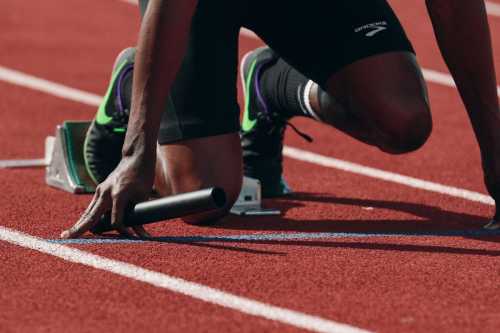
Think of the modern sports ecosystem not as a stadium, but as a sprawling, unregulated stock exchange where the commodities are human attention and cultural cachet. Just as the late-1990s dot-com bubble saw traditional valuations upended by speculative digital fervor, today’s collision of Name, Image, and Likeness (NIL) deregulation, Olympic broadcasting monopolies, and showbiz crossovers is fundamentally rewriting the asset class of athletic talent.
The Catalyst: A Quintuple Regulatory Shock
The U.S. Senate recently advanced the Protect College Sports Act of 2026, capping institutional NIL retention funds at $22.5 million annually, while simultaneously, the International Olympic Committee (IOC) dissolved 12 legacy committees in favor of streamlined advisory groups ahead of the Milano Cortina Games www.whitehouse.gov , sports.yahoo.com . Concurrently, the College Sports Commission is facing fresh class-action litigation over its mandate to police athlete brand deals, even as music and sports entities aggressively merge, exemplified by Coca-Cola and Real Thing Records’ FIFA 2026 cultural anthem initiatives www.collegeathletecompensation.com , www.coca-colacompany.com .
Structural Reality: The Compliance Bottleneck
Mainstream narratives celebrate the projected multi-billion dollar NIL economy as a triumph of athlete agency. However, this ignores the structural reality of the compliance bottleneck. Universities and third-party collectives now function as de facto talent agencies without the requisite fiduciary infrastructure. According to recent data from the College Sports Commission, the clearinghouse has denied over 650 NIL deals worth a combined $33.68 million, highlighting severe administrative friction in this new era sports.yahoo.com . This bottleneck disproportionately disadvantages non-revenue sport athletes lacking sophisticated legal representation, turning a promised democratization of wealth into a bureaucratic hurdle.
Nuance: The Case for Federal Guardrails
Critics of this cynical view argue that federal intervention via the Protect College Sports Act actually provides necessary guardrails. Proponents contend that a $22.5 million retention cap prevents wealthy booster collectives from creating an unchecked arms race, thereby preserving competitive balance across conferences www.whitehouse.gov . Furthermore, they argue that formalizing revenue-sharing models finally grants student-athletes the workplace protections and injury compensation historically denied to them under the guise of amateurism.
Media Consolidation: The Geo-Fragmentation Risk
The IOC’s strategic bundling of 2026–2032 media rights to legacy entities like Warner Bros. Discovery and the European Broadcasting Union signals a retreat from decentralized streaming experiments www.ebu.ch . By exclusively licensing polished feeds to legacy conglomerates, the IOC inadvertently stifles digital-native innovation. Platforms capable of offering interactive, creator-commentated viewing experiences are locked out, ensuring the Olympic broadcast product remains static and increasingly disconnected from modern media consumption habits.
Historical Echoes: The 1992 Commercialization Inflection Point
This inflection point mirrors the 1992 Barcelona Olympics, when the introduction of the U.S. "Dream Team" transformed basketball from an amateur pursuit into a globalized, commercialized entertainment product. Then, as now, the governing body reluctantly surrendered ideological purity to capitalize on unprecedented commercial demand. The lesson from 1992 is that once the genie of commercialization is out of the bottle, the governing bodies lose control of the narrative. The modern athlete is a standalone media entity, and the institutional frameworks of the NCAA and IOC are structurally ill-equipped to manage talent that operates with the autonomy of a Fortune 500 brand.
Nuance: The Institutional Subsidy Defense
Conversely, institutionalists argue that without centralized broadcast deals and regulatory oversight, the Olympic movement and collegiate sports would fracture into irrelevance. They point out that individual athlete branding cannot fund the infrastructure required for niche Olympic sports or non-revenue collegiate programs. From this perspective, the IOC’s centralized rights management and the NCAA’s settlement frameworks are not oppressive monopolies, but essential subsidies that ensure the survival of the broader sporting ecosystem.
Audience Acquisition: The Eventization Gamble
The integration of mainstream entertainment into sporting events represents a fundamental shift in audience acquisition. Sports no longer compete solely against other sports; they compete against live concerts and gaming. This crossover strategy manufactures "eventization," transforming routine competitions into cultural moments. Validating this strategic logic, Vevo's 2025 Fandom Report, which surveyed over 6,000 fans, found that 66% of fans would consider buying from brands advertising around music videos www.musicbusinessworldwide.com . However, longitudinal data suggests that fan retention rates for entertainment-driven sports events are significantly lower than for traditional, rivalry-driven matchups, risking the creation of a hollow spectacle with zero long-term brand loyalty.
Strategic Imperatives: Navigating the New Paradigm
Local businesses and citizen-investors must recalibrate their strategies immediately. Brands should bypass traditional university athletic departments and engage directly with specialized NIL compliance platforms to secure athlete partnerships, avoiding the bottleneck of institutional review. For local municipalities hosting collegiate or Olympic-adjacent events, the focus must shift from traditional ticket sales to developing ancillary entertainment and hospitality packages that capture the eventization premium. Citizens and alumni should demand transparent auditing of their university’s revenue-sharing models to ensure funds are not disproportionately funneled to a narrow subset of high-profile athletes.
The Six-Month Horizon: Regulatory and Digital Shifts
Within six months, the class-action litigation against the College Sports Commission will likely force a temporary injunction on NIL deal rejections, creating a brief period of regulatory wild west conditions www.collegeathletecompensation.com . Simultaneously, we will see the first major wave of athlete-led media companies launching independent, direct-to-consumer content streams, bypassing traditional broadcast partners entirely. The IOC will respond to early Milano Cortina 2026 viewership data by announcing emergency digital-rights unbundling for the LA28 Games, attempting to recapture the decentralized audience they are currently losing. As noted by legal analysts at Wright, Lindsey & Jennings, this regulatory shift marks the official end of amateurism in college sports, transitioning it into a complex, regulated commercial enterprise www.instagram.com .
The College Sports Commission has rejected 524 NIL deals worth nearly $15M. That's more than 10% of the total value of every deal submitted. https://x.com/theCSCommission
— College Sports Commission (@theCSCommission) January 12, 2026
Related Articles
The Fault Line Fracture: How the Warner Bros. Discovery Collapse and Sovereign Hostile Bids Are Rewriting the Rules of Global Media
Oct 20, 2026
The Gridlock Paradigm: How the 14-Hour Cloud Blackout and Title II Reclassification Are Terminating the Centralized Streaming Monopoly
Oct 20, 2026
Comments (0)
No comments yet. Be the first to share your thoughts!
Want to join the discussion?
Please log in to post a comment.
Login NoworCreate an Account