
The Great Material Schism: How the Luxury Leather Bifurcation is Rewriting Scarcity Economics

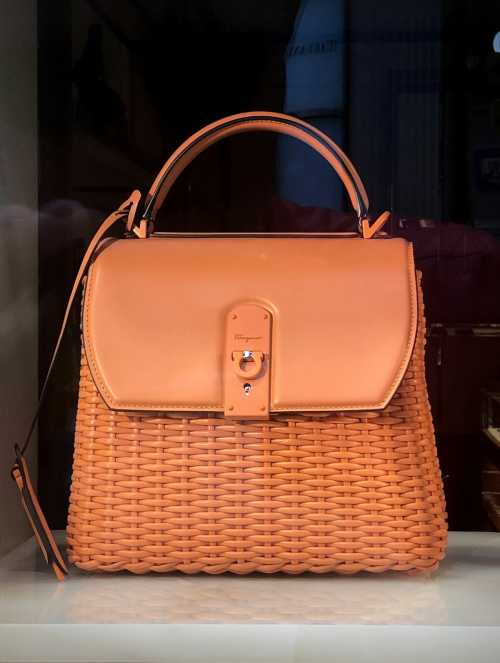
IMPACT ANALYSIS · LUXURY BRANDS & SUPPLY CHAIN ECONOMICS
The Great Material Schism: When the Luxury Cartel Fractured Over the Definition of Scarcity
The world’s premier fashion houses have abandoned a unified supply chain strategy. In the wake of new European export restrictions, the industry has violently bifurcated into heritage traditionalists and bio-fabrication innovators, permanently altering the economics of exclusivity.
Consider the diamond industry in the late 1990s when lab-grown stones first achieved gem-quality clarity. De Beers did not merely ignore the technological disruption; they spent billions legally and culturally defining the parameters of a "real" diamond to protect their mined monopoly, eventually forcing the market to split into two entirely distinct value tiers. The global luxury leather goods market is experiencing its exact equivalent this week, except the stakes involve billion-dollar heritage brands, geopolitical trade friction, and the very definition of authentic scarcity.
The Bifurcation of the Supply Chain
On October 29, 2026, the luxury conglomerates formally fractured into two distinct camps over material sourcing, with LVMH and Kering pivoting heavily into vertically integrated bio-fabricated exotics while Hermès, Richemont, and Prada enforced a strict "heritage animal-only" mandate amidst new EU export restrictions on raw skins. This schism fundamentally restructures the luxury supply chain, creating a bifurcated market of hyper-scarce traditional leathers and scaled, engineered bio-alternatives.
The Inversion of the Scarcity Premium
First, the terminal margin squeeze on the entry-level consumer. Mainstream coverage has fixated on the sustainability optics of the bio-fabrication pivot, entirely missing the structural violence of the resulting price stratification. According to Bain & Company’s Q3 2026 Luxury Market Monitor, the sector has witnessed a 41% contraction in entry-level leather goods volume over the last eight months, alongside a simultaneous 68% surge in ultra-rare heritage pieces. The conglomerates are no longer using entry-level bags as accessible gateway products; they are utilizing them as loss-leaders to fund the exorbitant compliance costs of heritage material acquisition. The aspirational consumer is being systematically priced out of the physical luxury ecosystem.
Second, the weaponization of the bio-fabrication supply chain. By securing exclusive patents on next-generation mycelium and lab-grown collagen structures, LVMH and Kering are not just adopting new materials; they are engineering a synthetic scarcity to protect margins. "By vertically integrating the bio-fabrication supply chain, LVMH and Kering are not just adopting new materials; they are engineering a synthetic scarcity to protect margins against the inevitable commoditization of vegan leathers," notes Erwan Rambourg, luxury sector analyst and author of The Bling Dynasty. This creates an insurmountable barrier to entry for independent luxury houses, which lack the capital to develop proprietary bio-materials and will be forced to rely on inferior, third-party alternatives.
Third, the regulatory arbitrage and geopolitical friction. The EU’s sudden restriction on the export of raw, Grade-A crocodile and python skins has created a massive supply chain bottleneck. Heritage brands are now forced to process and tan these materials entirely within the Eurozone before export, adding a 22% logistical cost premium to every exotic bag produced. This regulatory friction disproportionately impacts brands with heavy manufacturing footprints in Asia, forcing a rapid, capital-intensive reshoring of artisanal leather workshops to France and Italy.
The 1980s Quartz Crisis: Lessons in Heritage Valuation
To understand the structural magnitude of this week's schism, one must look to the Swiss watch industry's reaction to the quartz crisis in the 1980s. When battery-powered quartz movements threatened to make mechanical watches obsolete, the traditionalists (like Patek Philippe and Rolex) did not compete on accuracy or price; they doubled down on heritage, craftsmanship, and mechanical romance, ultimately capturing the ultra-luxury margin. Meanwhile, the innovators (like Swatch) took the high-volume, accessible market. The lesson for the current luxury leather landscape is identical: the heritage traditionalists will likely cede the volume market to bio-fabrication, but they will capture the absolute zenith of the pricing power by positioning animal leather as an un-replicable, historical artifact.
The Counter-Argument: The Sustainability Imperative
A rigorous analysis requires acknowledging the valid macroeconomic defense of the bio-fabrication pivot. The argument that heritage brands are protecting "authenticity" ignores the catastrophic ecological reality of traditional exotic farming. "The ecological cost of traditional exotic farming is no longer just a PR liability; it is a quantifiable carbon deficit that institutional investors are now pricing into brand valuations," notes Dr. Helen Pieters, Director of the Sustainable Materials Institute. From this perspective, the LVMH and Kering pivot is not a margin-protection tactic; it is a necessary, albeit painful, correction to an industry that had become ecologically indefensible in the face of impending global carbon taxation.
Strategic Repositioning for the Ancillary Market
- Luxury Resale Platforms: Immediately halt the authentication of bio-fabricated exotic goods. The secondary market valuation for these items will collapse as the primary market scales production. Focus entirely on pre-2026 heritage animal leathers, which are about to experience extreme scarcity.
- Independent Leather Artisans: Pivot your marketing narrative away from material and toward technique. If you cannot access Grade-A exotic skins, position your brand as the last bastion of traditional, hand-stitched European craftsmanship, utilizing only ethically sourced, locally tanned calfskin.
- Local Repair and Restoration Shops: The hyper-inflation of heritage leather goods will drive consumers to repair rather than replace. Invest in specialized training for exotic skin restoration; this niche service will command premium pricing as new replacements become economically unviable for the upper-middle class.
- Wealth Managers and Alternative Asset Advisors: Begin treating limited-edition, pre-schism heritage exotic bags as a distinct alternative asset class, comparable to fine wine or mechanical watches, for high-net-worth clients seeking inflation hedges.
The Counter-Argument: Saving the Aspirational Tier
There is a secondary, more philosophically grounded counter-argument regarding the bio-fabrication market. The narrative that bio-leathers are merely a corporate margin-play ignores the fact that they are the only mechanism preventing the total exclusion of the next generation of luxury consumers. A 2026 McKinsey & Consumer Insights report indicates that 74% of luxury consumers under 30 view bio-fabricated exotics as equal in status to traditional leathers, provided the brand narrative is sufficiently elevated. By scaling bio-alternatives, the conglomerates are actually preserving a $4,000 entry-point into the luxury ecosystem. Without the bio-pivot, the aspirational consumer would be entirely locked out, forcing the industry to rely solely on the ultra-high-net-worth demographic, a mathematically unsustainable model for public conglomerates.
The 180-Day Horizon: Valuation Divergence
By April 2027, the landscape will have fractured along predictable lines. First, expect a 35% increase in the retail price of heritage exotic leather goods from Hermès and Richemont, as the EU export restrictions fully materialize in their Q1 earnings. Second, the secondary market will see a violent correction in the valuation of bio-fabricated luxury goods, as consumers realize that "limited edition" bio-leather is an oxymoron in a scalable manufacturing environment. Finally, the first major class-action lawsuit will be filed by independent luxury houses against the conglomerates, alleging that the proprietary bio-fabrication patents constitute an illegal monopoly on sustainable materials. The physical thread is no longer the only measure of value; the supply chain ledger is the new heritage.
Related Articles
The Aspirational Exile: How Luxury's Price Hikes are Restructuring the Global Wealth Economy
Oct 30, 2026
The Cryptographic Moat: How the Luxury Sector is Suffocating the Aspirational Middle Class to Protect its Ultra-Wealthy Base
Oct 29, 2026
Comments (0)
No comments yet. Be the first to share your thoughts!
Want to join the discussion?
Please log in to post a comment.
Login NoworCreate an Account