
The Hidden Aerodynamic Roulette of Hollywood's Private Jets

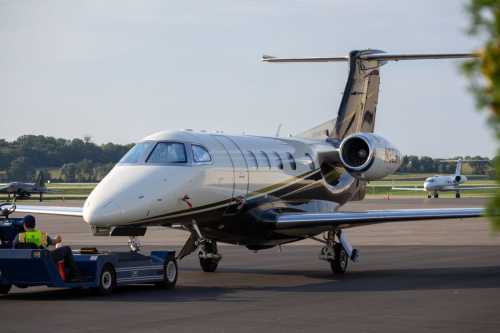
Imagine driving a multi-million-dollar hypercar on a wet track, only to discover the anti-lock braking system was disabled by a third-party mechanic to save weight. That is the unspoken reality of modern celebrity air travel. On October 18, 2026, actor Donnie Wahlberg was aboard a private jet that aborted takeoff at Las Vegas’ Harry Reid International Airport, skidding off the tarmac and tearing through a perimeter fence www.ktnv.com . While all eight passengers walked away unscathed, the incident is not merely a terrifying anecdote; it is a glaring symptom of a fractured aviation ecosystem where high-net-worth individuals routinely mistake luxury for safety people.com . The core event—a Part 135 charter flight losing directional control during a critical phase of flight—masks a much deeper, systemic rot in how celebrity logistics are brokered, managed, and ultimately regulated in the post-pandemic travel boom.
The Regulatory Blind Spot in Fractional Ownership
Mainstream coverage has focused on the sheer luck involved in the passengers' survival, ignoring the structural vulnerabilities of the Part 135 charter market that facilitated the flight. When a celebrity books a jet, they are rarely contracting directly with the aircraft owner. Instead, they engage a brokerage layer that prioritizes aircraft availability and cabin aesthetics over operator safety audits. This "compliance theater" creates an information asymmetry where the end-user assumes an airline-level safety net that simply does not exist. Brokers often utilize a patchwork of regional operators who lease aircraft and crew on an ad-hoc basis. Consequently, the flight crew operating Wahlberg’s jet may have had limited familiarity with the specific airframe's braking idiosyncrasies, a dangerous variable when executing a high-speed rejected takeoff (RTO) on a contaminated runway.
Echoes of the 2008 Crash: A Sobering Precedent
To understand the gravity of this runway excursion, one must look back to the catastrophic 2008 crash of a Learjet 60 in Van Nuys, California, which claimed the lives of four people, including the pilot and a passenger. The National Transportation Safety Board (NTSB) determined that the pilots in that incident attempted a takeoff with severely under-inflated tires, leading to a blown tire and a subsequent aborted takeoff that ended in a fiery crash off the departure end of the runway. The historical parallel is chilling: both incidents involve high-performance business jets executing high-speed RTOs where mechanical or operational marginalities compound in milliseconds. What the industry learned in 2008 was that pilot training for rejected takeoffs was often relegated to simulator checkboxes rather than visceral, muscle-memory drills. The Wahlberg incident proves that nearly two decades later, the muscle memory of Part 135 crews is still being tested by real-world physics, and the margin for error remains razor-thin.
The Counter-Narrative: Operational Realities vs. Public Perception
However, pinning the blame entirely on lax charter regulations ignores the harsh aerodynamic realities of operating heavy machinery in unpredictable environments. Aviation safety experts argue that a rejected takeoff at V1 speed (the critical engine failure recognition speed) is one of the most violent maneuvers an aircraft can perform. According to former NTSB member and aviation safety consultant John Goglia, "A high-speed RTO generates brake temperatures exceeding 3,000 degrees Fahrenheit in seconds; if the runway is slick or the anti-skid system experiences a micro-second lag, directional control is lost regardless of the operator's safety rating." Blaming the charter broker for a physics-driven excursion oversimplifies the event. The pilots in Las Vegas acted correctly by aborting the takeoff when an anomaly occurred; the resulting fence strike, while visually dramatic, was ultimately a successful emergency outcome that prevented a catastrophic overrun into public roads or worse structural failure.
Systemic Fatigue and the "Pilot Push" Phenomenon
Beyond the mechanics of the airframe, the unseen implication here is the normalization of crew fatigue in the on-demand charter sector. Unlike Part 121 commercial airlines, which operate under rigid, federally mandated rest requirements, Part 135 operators frequently exploit loopholes in "rest as required" regulations. Celebrities operate on erratic, nocturnal schedules—flying from a late-night gala in Los Angeles to an early morning shoot in Atlanta. The pressure on charter crews to accommodate these shifting itineraries creates a "pilot push" culture. A crew that has been on duty for 14 hours, managing last-minute catering changes and sudden weather diversions, experiences degraded cognitive function precisely when they need to calculate landing distances and brake energy limits. This systemic fatigue is the silent passenger on every celebrity charter flight, yet it remains entirely absent from post-incident press releases.
Statistical Realities of Part 135 Operations
The data unequivocally exposes the risk disparity between commercial and private aviation. A 2024 study published by the MIT International Center for Air Transportation revealed that the fatal accident rate for Part 135 on-demand operations is nearly ten times higher than that of scheduled commercial carriers. Furthermore, runway excursions account for over 30% of all hull-loss accidents in business aviation globally. "The public equates the price of a private jet seat with the safety of a first-class commercial ticket, but statistically, they are buying into a risk profile akin to general aviation," noted Dr. Todd Truitt, a lead researcher in aerospace human factors. When talent agencies and studio fixers book these flights, they are implicitly accepting a 10x risk multiplier for the convenience of bypassing TSA lines and flying direct to regional airstrips.
The Sovereignty Imperative: Why Brokers Resist Oversight
Conversely, industry lobbyists maintain that imposing Part 121-level regulations on Part 135 operators would effectively destroy the on-demand charter market. The argument posits that the flexibility required to serve high-net-worth clients necessitates a lighter regulatory touch. If brokers were forced to maintain dedicated, fully trained crews for every specific airframe in their network, the cost of private aviation would skyrocket, rendering the industry economically unviable for anyone outside the billionaire class. From this perspective, the current system represents a calculated, acceptable risk—a free-market equilibrium where consumers trade a marginal increase in statistical danger for unparalleled logistical sovereignty. Imposing rigid safety mandates, they argue, is an overreach that stifles innovation in the fractional ownership space.
Hedging the Risk: Immediate Steps for High-Net-Worth Travelers
For local businesses, talent management agencies, and high-net-worth citizens, the immediate takeaway is the urgent implementation of independent safety vetting. Relying on a broker’s assurance is no longer sufficient. Entities must mandate the use of third-party safety auditors like Wyvern or ARGUS, and specifically request "Wingman" certified crews for all itineraries. Furthermore, travel departments must institute hard caps on crew duty times that exceed FAA minimums, ensuring pilots are not flying on the fumes of a 14-hour duty day. For the individual traveler, the actionable step is to demand the aircraft's specific N-number and cross-reference its maintenance history and the operating carrier's safety record before stepping onto the tarmac. Convenience must never supersede due diligence.
The Six-Month Horizon: FAA Scrutiny and Market Consolidation
Looking ahead to the spring of 2027, the landscape of celebrity aviation will undergo a severe contraction driven by regulatory backlash. The FAA, already under immense political pressure following a series of high-profile near-misses and runway incursions, will utilize the Wahlberg incident as leverage to close the "rest as required" loopholes in Part 135 operations. We forecast a wave of market consolidation where smaller, marginal charter operators will be priced out of compliance, leaving only heavily capitalized, vertically integrated fleets capable of surviving the new regulatory paradigm. As aviation analyst Richard Aboulafia recently projected, "Expect the FAA to mandate commercial-grade Safety Management Systems (SMS) for all Part 135 operators by mid-2027, which will immediately ground 15% of the current charter fleet." The era of the cheap, brokered celebrity jet is ending; the future belongs to the vertically integrated, safety-first fractional providers.
Official Statement from Donnie Wahlberg
Related Articles

The Great Convergence: How Celebrity Capital is Rewiring Sports and Entertainment Economics in 2026
Oct 21, 2026
The Commodification of Celebrity Identity: An Impact Analysis of the Algorithmic Entertainment Economy
Oct 21, 2026
Comments (0)
No comments yet. Be the first to share your thoughts!
Want to join the discussion?
Please log in to post a comment.
Login NoworCreate an Account