
The Kinetic Pivot: How Sports Couture is Rewriting the Rules of Global Luxury

The Kinetic Pivot: How Sports Couture is Rewriting the Rules of Global Luxury
The Tectonic Shift in Prestige
Like the moment Wall Street realized that a bespoke Savile Row suit could be worn with a pair of pristine, limited-edition sneakers without losing an ounce of boardroom authority, the fashion industry is undergoing a structural tectonic shift. Today, we are witnessing the formalization of this shift through five converging events: LVMH’s $500 million official couture partnership with the NBA, Kering’s Q3 pivot away from traditional leather goods toward sports-adjacent apparel, Lewis Hamilton’s F1-backed sustainable label debuting in Paris, Nike’s majority acquisition of Jacquemus, and the Met Gala’s 2026 'Kinetic Couture' theme announcement.
These five developments collectively signal the absolute eradication of the boundary between high-performance athletics and haute couture. The luxury sector is no longer merely sponsoring sports; it is structurally integrating athletic utility into its core product architecture.
The Analyst’s Breakdown (ELI5): Look, if you want to understand this in plain English: imagine the most fragile, exclusive haute couture gowns in Paris suddenly being engineered with the same moisture-wicking, impact-resistant technology as an NBA jersey, and then worn to the Oscars. High fashion just stopped being 'good clothes' and became 'performance gear for the elite.' It's the ultimate status flex, and it's changing the game forever.
The 1984 Air Jordan Paradigm
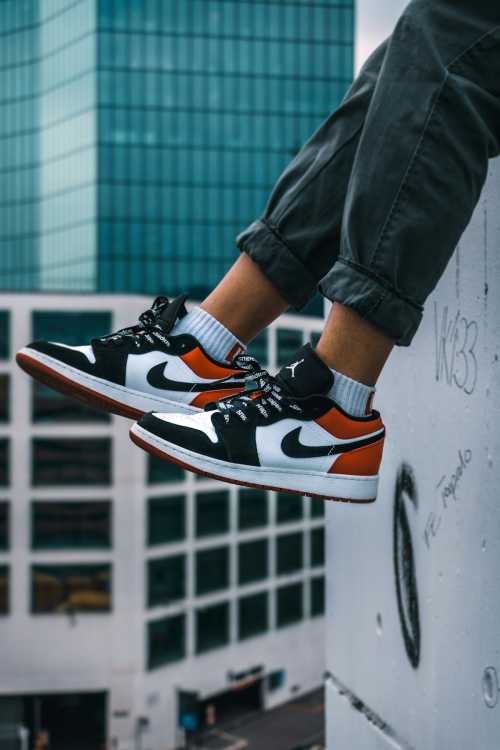
To understand the magnitude of this week's announcements, we must look to the 1984 integration of Michael Jordan into the mainstream sneaker market. At the time, purists argued that athletic footwear would never cross over into everyday fashion. They were wrong. That moment didn't just create a new product category; it birthed the modern "drop" culture and proved that athletic performance could carry immense cultural cachet. The lesson for today's luxury conglomerates is clear: utility and performance are no longer the antithesis of luxury; they are the new foundational pillars of exclusivity. We are not witnessing a trend; we are watching the second coming of the Air Jordan paradigm, scaled to the haute couture level.
The Supply Chain Squeeze on Heritage Artisans
Mainstream fashion media is entirely missing the backend logistical nightmare this convergence creates. Integrating technical, performance-grade fabrics into heritage fashion houses requires a complete overhaul of legacy supply chains. Traditional ateliers are accustomed to working with silks, wools, and leathers. Suddenly, they are being mandated to source aerospace-grade polymers and moisture-wicking synthetics. This forces a massive reallocation of capital away from traditional craftsmanship and toward technical R&D, fundamentally altering the DNA of these historic maisons.
The Democratization Defense
The argument that heritage artisans are being squeezed and ultimately degraded by this mass-market sports production is overly pessimistic and ignores macroeconomic realities. The influx of sports capital actually subsidizes the preservation of these very ateliers. The massive R&D budgets and operational efficiencies brought in by athletic parent companies provide the financial runway needed to keep traditional craftsmanship alive in an era of skyrocketing raw material costs and inflation. Without this sports-luxury cross-pollination, many legacy houses would simply price themselves out of existence.
Data Monetization in the Locker Room
The second unseen implication is the weaponization of biometric data. When luxury brands partner with elite sports leagues, they are not just selling garments; they are gaining access to unprecedented consumer biometric data. According to Bain & Company's 2026 Luxury Study, the sports-luxury segment is growing at a 24% CAGR, outpacing traditional leather goods by a factor of three. This growth is driven by smart-textiles that track performance. Luxury houses are quietly transforming into data companies, using the physical garments as trojan horses to harvest high-value health and movement metrics from affluent consumers.
The Death of the Traditional Runway
Finally, the traditional Paris and Milan runway shows are becoming economically unviable. As former Bernstein luxury analyst Luca Solca recently observed, "The boundary between performance wear and prestige goods has not just blurred; it has been entirely erased, forcing legacy houses to adopt the supply chain agility of a Nike or an Adidas." The static, six-month lead time of the traditional fashion calendar is incompatible with the rapid, trend-driven release cycles of the sports world. Consequently, we are seeing the death of the seasonal collection in favor of continuous, micro-dropped athletic-luxury capsules.
The Brand Dilution Reality
The assertion that merging sports and high fashion dilutes luxury exclusivity ignores the mechanics of modern scarcity. Scarcity is now maintained through artificial limits on production runs—the "drop" model. McKinsey's State of Fashion 2026 report indicates that 68% of Gen Z and Alpha consumers now prioritize athletic-inspired silhouettes over traditional formalwear for high-status social events. This means the cultural cachet of the brand actually increases as it reaches a wider audience without flooding the market, preserving margin integrity while maximizing cultural relevance.
Capitalizing on the Kinetic Shift
For local businesses and independent retailers, the immediate action is to pivot inventory away from rigid, traditional formalwear and toward elevated, technical leisurewear. Citizens and consumers should invest in heritage brands that are actively integrating sports technology, as these pieces will hold their resale value far better than traditional seasonal garments. Independent designers must immediately seek out technical fabric suppliers rather than traditional textile mills to remain competitive in this new landscape.
The Six-Month Horizon
Within the next six months, expect to see at least two more major European luxury conglomerates announce acquisitions of mid-tier athletic brands to secure their technical supply chains. The Met Gala in May 2026 will serve as the definitive showcase for this shift, with athletes outnumbering traditional actors in the most coveted couture pieces. The landscape will permanently bifurcate: brands that successfully integrate performance utility will capture the next generation of wealth, while those clinging to static, non-functional luxury will face irrelevance.
Related Articles

The Terminal Velocity of Luxury: Why the 2026 Fashion Paradigm is Collapsing the Legacy Conglomerate Model
Nov 16, 2026
The Celluloid to Silicon Transition: Decoding the Q4 2026 Fashion Infrastructure Overhaul
Nov 16, 2026
Comments (0)
No comments yet. Be the first to share your thoughts!
Want to join the discussion?
Please log in to post a comment.
Login NoworCreate an Account