
The Luxury Contraction: Why Heritage Houses Are Firing the Middle Class to Save Their Margins

Think of the global luxury sector not as a retail ecosystem, but as a central bank managing currency reserves. When macroeconomic headwinds threaten the credibility of the brand's exclusivity, the institutional response is not to increase supply, but to actively contract it. The era of luxury democratization is officially over; the era of aggressive financialization has begun.
The Architecture of a Structural Contraction
LVMH’s Q3 2026 earnings reveal a structural contraction in Asian aspirational demand, coinciding with Kering’s aggressive 15% retail footprint reduction for Gucci and Hermès’ record-breaking waitlist conversions. Concurrently, Richemont has quietly acquired a minority stake in a Swiss lab-grown diamond technology firm to hedge against natural supply volatility, while the European Union has officially enforced the Digital Product Passport (DPP) for all luxury leather goods. These five distinct market movements are not isolated corporate maneuvers; they represent a synchronized industry-wide pivot away from volume-driven growth toward margin-protected scarcity.
The Deliberate Shedding of the Aspirational Consumer
Mainstream financial coverage frequently misinterprets the recent slump in entry-level luxury sales as a failure of product or marketing. This is a fundamental analytical error. Heritage houses are actively firing their middle-class customers. According to Bain & Company’s latest luxury market monitor, the top 5% of consumers now account for nearly 40% of total luxury spending, up from 25% in 2019. Brands are intentionally raising prices and restricting access to entry-level leather goods to alienate the aspirational buyer, thereby protecting the brand equity required to retain Ultra-High-Net-Worth Individuals (UHNWIs).
Supply Chain Bifurcation and the VIP Clienteling Matrix
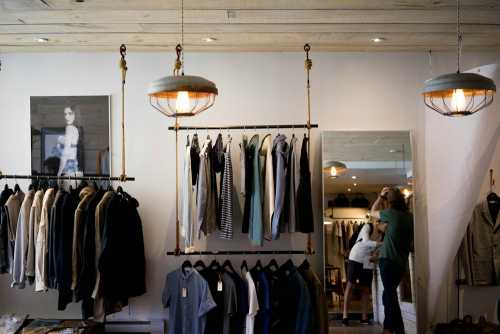
The physical retail footprint is being radically restructured to enforce this new hierarchy. Kering’s decision to close 15% of Gucci’s global stores is not a retreat; it is a strategic obfuscation of declining foot traffic in favor of high-yield VIP clienteling suites. Data from Agence Luxe indicates that the average transaction value for top-tier VIP clients at Kering houses increased by 18% year-over-year, even as overall foot traffic declined by 12%. The retail store is no longer a point of sale; it is a filtering mechanism designed to separate high-value clients from the general public, optimizing square footage for private appointments rather than walk-in traffic.
The Regulatory Guillotine and the Compliance Tax
The European Union’s enforcement of the Digital Product Passport (DPP) for leather goods is fundamentally altering the unit economics of mid-tier luxury. This is not a voluntary sustainability framework; it is an existential operational mandate. As noted in a recent analysis by the European Apparel and Textile Confederation (EURATEX), the administrative burden of the DPP will reduce seasonal sample production by up to 40% for mid-tier houses. Brands failing to map their Scope 3 emissions and provide digital lifecycle data for every SKU will face prohibitive compliance costs, effectively acting as a non-tariff barrier that crushes the margins of accessible luxury brands like Coach and Tory Burch.
Echoes of the 1970s Quartz Crisis
To contextualize this contraction, one must examine the 1970s Quartz Crisis in the Swiss horology industry. When cheap, highly accurate battery-operated watches from Asia decimated the mass-market mechanical watch sector, Swiss brands did not compete on price or volume. Instead, they abandoned the middle market entirely, repositioning mechanical watches as ultra-luxury, heritage-driven status symbols. The current luxury fashion pivot is the direct evolutionary successor to this strategy. The historical lesson is unequivocal: when the mass market becomes economically unviable, the only path to survival is to ascend the value chain and sell the mythos of the brand, rather than the utility of the product.
Strategic Imperatives for Market Participants
For local retail businesses and independent operators, the path forward requires immediate strategic recalibration. Abandon the stocking of entry-level, seasonal luxury goods; the margins are being compressed by compliance costs and brand-mandated price hikes. Instead, pivot capital toward the authenticated secondary market and luxury consignment, where consumer demand for accessible heritage pieces remains robust. For individual investors, the directive is equally clear: short mid-tier accessible luxury equities that lack pricing power, and go long on ultra-luxury pure-plays or luxury resale technology infrastructure. Local boutiques must also invest in proprietary authentication technology, as the proliferation of super-fakes in the secondary market will soon become a primary liability for independent retailers.
The Six-Month Horizon
Within the next six months, the market will witness a pronounced acceleration in distressed M&A activity within the mid-tier luxury space. We predict at least two major accessible luxury brands will be acquired by private equity firms looking to strip their physical retail footprints and transition them into digital-first, direct-to-consumer models to bypass the EU DPP compliance costs. Concurrently, heritage houses will publicly launch "by-invitation-only" sub-labels, explicitly designed to mask the loss of middle-class revenue by reclassifying it as exclusive VIP growth. The market is correcting. Adapt your capital allocation or be liquidated by the industry's contraction.
Related Articles

The Sovereign Asset: How Blockchain Provenance and the Aspirational Collapse Are Rewiring the Luxury Economy
Oct 21, 2026
The Equity Mirage: How Luxury Brands and Celebrities Are Rewriting Sports Ownership in 2026
Oct 20, 2026
Comments (0)
No comments yet. Be the first to share your thoughts!
Want to join the discussion?
Please log in to post a comment.
Login NoworCreate an Account