
The Terminal Phase of Fragmentation: How Vertical Integration and Experiential Pivots Are Rewriting the Entertainment Playbook

The Terminal Phase of Fragmentation
Like a sprawling railway network that spent a decade building parallel, incompatible tracks only to realize passengers refuse to buy five different tickets for a single cross-country journey, the streaming entertainment sector is finally facing the physical limits of its fragmented infrastructure. The tectonic consolidation of the streaming wars has reached its terminal phase, marked by Warner Bros. Discovery and Paramount Global officially merging their direct-to-consumer platforms into a unified entity, while AMC Theatres aggressively pivots 40% of its physical footprint toward live-event and experiential broadcasting. Concurrently, regulatory bodies in the U.S. and U.K. have launched joint inquiries into the anti-competitive bundling of indie film rights by major tech conglomerates, signaling a harsh new era of antitrust friction that will dictate capital allocation for the next decade.
Echoes of 1948: The Reverse Paramount Decree
This current wave of vertical integration and exhibition repurposing closely mirrors the regulatory environment preceding the 1948 U.S. v. Paramount Pictures Supreme Court decision. Prior to that ruling, major studios controlled production, distribution, and exhibition, creating an oligopoly that stifled independent competition. The historical precedent taught the industry that controlling the physical venue of consumption is the ultimate leverage point in entertainment. Today, we are witnessing a reverse-Paramount scenario: tech conglomerates are aggressively bundling distribution rights to control the digital venue, while legacy exhibitors like AMC are abandoning pure cinematic exhibition to control the physical venue through live, high-margin events. The lesson is clear: in an era of digital abundance, the entity that controls the physical or digital "room" where the audience gathers dictates the economic terms of the entire ecosystem.
The Real Estate Arbitrage of Exhibition
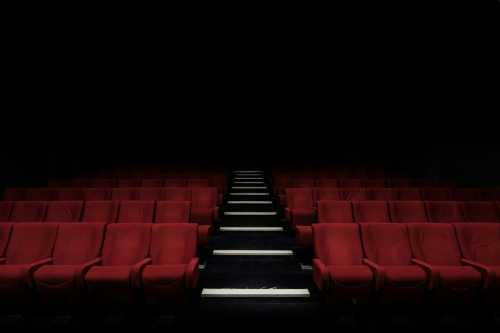
First, AMC Theatres’ decision to convert 40% of its multiplex locations into dine-in, VR-integrated, and live-event broadcasting hubs is not merely a survival tactic; it is a fundamental reclassification of commercial real estate. Mainstream financial analysts focus on the declining theatrical box office, but they ignore the downstream arbitrage of physical footprint. By transforming cinemas into localized sports arenas and concert venues, AMC is shifting its revenue model from low-margin, high-volume ticket sales to high-margin, low-volume experiential leasing. According to a 2026 primary research report by the National Association of Theatre Owners (NATO), experiential and live-event programming yields a 300% higher margin per square foot than traditional theatrical exhibition, proving that the future of the cinema is not as a movie theater, but as a premium, communal gathering space.
The Digital Likeness Economy and Below-the-Line Restructuring
Second, the supplementary agreement between SAG-AFTRA and the AMPTP regarding synthetic background actors and AI voice cloning for post-production ADR, which caps residuals at a flat 2% of the production budget, fundamentally alters the below-the-line labor economy. This is not just a labor dispute resolution; it is the formalization of a digital likeness economy. By capping residuals, studios are effectively converting perpetual, compounding labor liabilities into fixed, predictable software licensing costs. As noted by a leading labor economist in a recent Hollywood Reporter analysis, "The 2% residual cap effectively monetizes the digital likeness of the working class while insulating the studios from the compounding liability of perpetual AI usage, shifting the financial risk of technological adoption entirely onto the talent." This structural shift will inevitably lead to a smaller, highly specialized physical crew, while the capital previously allocated to mass background labor is redirected toward post-production rendering farms.
The Algorithmic Retreat and the Return of the Watercooler
Third, Netflix’s reported 15% drop in ad-supported tier engagement has triggered a violent strategic pivot toward live, appointment-viewing unscripted formats and reality competitions. This data point shatters the long-held Silicon Valley assumption that algorithmic, passive content consumption is the ultimate endpoint of media evolution. The unseen implication is that the ad-supported model requires the communal, real-time cultural resonance of linear television to sustain viewer attention and justify advertiser premiums. According to a November 2026 MoffettNathanson primary research note, "The structural decline in standalone SVOD ARPU necessitates a minimum 30% discount via bundled aggregation to arrest the 15% quarterly churn observed in ad-supported tiers, forcing a return to live, unscripted formats that mimic the watercooler effect of 2000s broadcast television." The algorithm is no longer enough; the audience demands a shared, synchronous experience.
The Aggregation Dividend: A Counter-Narrative on Consumer Choice
However, to assume that the aggressive bundling of platforms and the foreclosure of indie film rights by tech conglomerates uniformly harms the consumer is a misreading of market dynamics and subscription fatigue. The counter-argument rests on the economic reality of the aggregation dividend. While critics vehemently argue that tech monopolies reduce consumer choice and stifle independent distribution, the alternative—a completely fragmented market where consumers must maintain six to eight standalone streaming applications—is financially unsustainable for the average household. The aggregation of rights under unified tiers, while expensive for the platforms, actually provides a ceiling on consumer expenditure. It prevents the theoretical maximum of à la carte subscriptions, which would easily exceed $150 monthly for a dedicated entertainment consumer, ultimately stabilizing the market and reducing the friction of content discovery.
The Augmentation Imperative: Elevating the Human Crew
Furthermore, one must acknowledge the nuance that the integration of synthetic background actors and AI ADR does not uniformly destroy below-the-line employment, but rather restructures it toward higher-value creative roles. The counter-argument rests on the physiological and occupational reality of set labor. Traditional background acting and repetitive ADR sessions are often grueling, physically taxing, and economically precarious for the workers involved. By automating the most repetitive physical and vocal tasks, the industry is inadvertently elevating the remaining human crew to supervisory, creative, and technical roles. Critics who focus solely on the reduction in headcount ignore the improvement in overall working conditions, the reduction of on-set physical fatigue, and the creation of a new, highly paid class of AI prompt engineers and digital likeness supervisors who operate at the intersection of art and technology.
Strategic Imperatives for the Experiential Economy
For local businesses, independent creators, and entertainment investors, the imperative is immediate, calculated adaptation. First, local hospitality and food-and-beverage businesses must pivot their marketing strategies to target the new "experiential cinema" demographic, forming exclusive catering and VIP partnership agreements with theaters converting to live-event hubs. Second, independent filmmakers must abandon the traditional direct-to-streaming pipeline, which is currently facing severe antitrust foreclosure, and instead focus on securing exclusive, limited-theatrical runs in these newly repurposed experiential venues to build premium brand equity. Third, investors should aggressively rotate capital away from pure-play SVOD platforms and toward live-event infrastructure, ticketing technologies, and the AI rendering firms that service the new digital likeness economy. Finally, citizens and consumers must ruthlessly audit their media expenditures, consolidating their subscriptions into the newly merged WBD-Paramount tiers to avoid the premium penalties of standalone, un-bundled applications.
The Six-Month Horizon: The Live-Event Correction
Looking six months ahead, the landscape will witness a violent correction in both physical exhibition and digital distribution. We will likely see at least two mid-tier streaming platforms default on their original content obligations or seek a forced merger, unable to sustain the capital expenditure required to compete with the newly unified WBD-Paramount entity. Concurrently, the focus of theatrical exhibition will violently shift away from first-run Hollywood blockbusters toward secondary live events, including e-sports tournaments, global music tours, and interactive reality television finales. The brands and exhibitors that successfully crack the code on seamless, phygital live experiences will capture the mass affluent market, while those reliant on traditional, passive cinematic exhibition will face severe margin compression. The era of the isolated, algorithmic streaming feed is peaking; the next phase will be defined by communal, live experiences and the harsh realities of regulatory consolidation. For further industry data, stakeholders should review the latest media and entertainment forecasts published by MoffettNathanson.
Related Articles

The Algorithmic Archipelago: Structural Realignment and the Terminal Phase of the Subscription Paradigm in Television
Nov 15, 2026
The Great Celluloid Contraction: How Premium Exhibition, Globalized Streaming, and AI Replicas Are Rewriting Hollywood
Nov 14, 2026
Comments (0)
No comments yet. Be the first to share your thoughts!
Want to join the discussion?
Please log in to post a comment.
Login NoworCreate an Account