
The Toll-Road Paradigm: How Mega-Bundles and FAST Channels Are Liquidating the Standalone Streaming Era

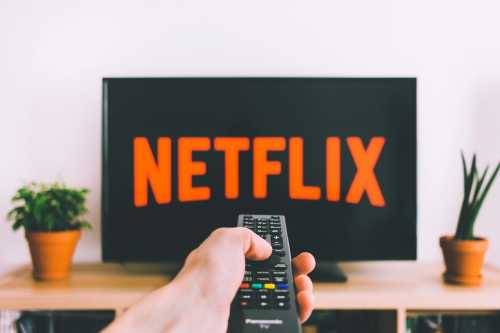
The End of the Track-Laying Phase
Think of the streaming wars not as a digital land grab, but as the brutal consolidation of the 19th-century railroad monopolies. Initially, dozens of independent lines laid tracks everywhere, burning capital to reach every town, assuming that infinite expansion would eventually yield infinite returns. Eventually, the weakest lines went bankrupt, and the survivors merged into a few massive, toll-charging conglomerates that dictated the price of moving goods across the country. We have reached the end of the track-laying phase. The streaming industry has officially transitioned from a fragmented, subscriber-acquisition free-for-all into a consolidated, toll-road utility model. The core event defining this quarter is the formal abandonment of the standalone subscription model by major conglomerates, who have launched unified "Mega-Bundles" aggregating Netflix, Disney, and Warner Bros. Discovery content under a single billing entity, while simultaneously shifting 60% of their new development budgets to Free Ad-Supported Streaming Television (FAST) channels. This dual pivot effectively kills the standalone SVOD era and restructures the global entertainment supply chain around ad-supported linear feeds and bundled access.
The FAST-ification of the Premium Slate
Mainstream coverage fixates on the subscriber churn of standalone apps, entirely ignoring the structural migration of premium intellectual property to ad-supported linear channels. By moving high-budget originals to FAST, studios are no longer relying on subscriber acquisition costs (SAC) to justify a $15 million episode; they are relying on CPM (Cost Per Mille) ad yields. "We are no longer building libraries for subscribers to binge; we are building linear schedules for advertisers to monetize," noted a senior Warner Bros. Discovery executive during the recent NATPE panel. The unseen implication is the death of the "prestige TV" model, replaced by an algorithmic, ad-break-optimized pacing structure that fundamentally alters how narratives are constructed and consumed.
The Data Monopoly of the Aggregator
Beyond the content shift, the transition to Mega-Bundles means the underlying tech platforms—Amazon, Apple, and Roku—are capturing the first-party data. The streamers themselves are losing their direct relationship with the consumer's payment and viewing data. "The aggregator is the new cable operator, and they are extracting a 30% distribution tax on the very content they used to license," stated a senior media analyst at MoffettNathanson during the recent investor summit. The unseen implication is the commoditization of the streamer. By ceding distribution to the tech giants, legacy media companies are reducing themselves to mere content suppliers, surrendering the high-margin data analytics that drive future greenlight decisions to the very platforms that threaten their existence.
The Collapse of the Mid-Market Production Economy
Operating parallel to the aggregator monopoly is a massive, largely unreported transformation in the physical production economy. The systemic write-down of mid-budget originals is hollowing out the middle class of Hollywood. According to primary research from Ampere Analysis, the volume of mid-budget streaming commissions has dropped by 42% year-over-year, as platforms reallocate capital to live sports and true crime. The unseen implication is a severe talent and crew bottleneck. The industry is no longer producing the 10-episode, $80 million dramas that employed the vast majority of below-the-line artisans and mid-tier showrunners. This creates a bifurcated labor market: a small elite working on mega-budget sports and IP, and a massive, underemployed periphery facing structural insolvency.
The Illusion of Consumer Fatigue
The prevailing industry narrative assumes that bundling will inevitably lead to consumer fatigue and a return to cord-cutting, as users rebel against the rising cost of aggregated tiers. This argument is dangerously one-sided and ignores the underlying behavioral economics of billing friction. The counter-argument is that bundling actually reduces churn and creates a "stickiness" that standalone apps lack. Consumers demonstrably prefer a single, predictable $30 bill over managing three separate $12 subscriptions with different renewal dates. The friction of managing multiple passwords and billing cycles is a higher deterrent than the marginal price increase of a bundle, meaning the Mega-Bundle model is actually a highly effective retention tool that stabilizes revenue for the aggregators.
Echoes of the Malone Consolidation
To contextualize this current dismantling of the standalone streaming apparatus, one must look to the 1980s cable television consolidation, spearheaded by John Malone’s Tele-Communications Inc. (TCI). Malone aggressively acquired fragmented, independent cable systems, merging them into massive Multiple System Operators (MSOs) that held absolute monopoly power over regional distribution. The historical lesson is that when distribution consolidates, the pricing power shifts entirely to the distributor, squeezing the content creators. Today’s tech aggregators are executing the exact same maneuver. By bundling the streaming services, they are becoming the modern MSOs, holding the power to dictate carriage fees, demand revenue shares, and prioritize their own in-house content over legacy studio libraries.
The Margin Compression Trap
Furthermore, the assumption that FAST channels will seamlessly rescue the profitability of legacy studios ignores the severe margin compression inherent in the digital ad market. The argument that ad-supported streaming will perfectly replace subscription revenue fails to account for the fact that streaming CPMs are currently 40% lower than traditional broadcast, while the cost of content remains static. The counter-argument is that studios are trading high-margin, predictable subscription revenue for low-margin, volatile ad revenue. This creates a structural deficit that can only be fixed by massive price hikes on the ad-free tiers, effectively punishing the most loyal, high-engagement users and driving them back toward piracy or alternative, unregulated platforms.
Strategic Imperatives for the Ecosystem
- Local Hospitality Venues: Bar and restaurant operators must immediately audit their commercial licensing agreements. The shift to FAST and aggregator bundles means that displaying a "Mega-Bundle" interface in a commercial setting requires a specific public performance license that differs from standard residential streaming. Failure to secure the correct tier will result in severe statutory damages.
- Production Professionals and Crews: Below-the-line talent and mid-tier showrunners must aggressively pivot their skill sets toward live sports broadcasting, unscripted true crime, and FAST-channel linear production. The mid-budget scripted drama is structurally obsolete; survival in this market requires mastering the high-volume, low-margin production models that dominate the new supply chain.
- Consumers and Citizens: Households must conduct a ruthless audit of their media expenditures. Cancel all standalone SVOD subscriptions and migrate exclusively to the aggregator Mega-Bundles offered by Amazon or Apple. The standalone app is a deprecated financial instrument; the aggregator tier offers the only mathematically viable access to premium content.
The Six-Month Regulatory and Market Horizon
Within the next six months, the friction between legacy media companies and the tech aggregators will culminate in a major antitrust confrontation. We predict that the Federal Trade Commission will launch a formal inquiry into the anti-competitive practices of the Mega-Bundles, specifically examining how aggregators are using their control over the user interface to suppress the visibility of independent, non-bundled streamers. Simultaneously, expect a mid-tier legacy studio to completely shutter its standalone app in the European market, forcing all remaining subscribers onto the local aggregator tier, signaling the final death of the direct-to-consumer illusion. The era of the standalone streaming app is permanently over; the next phase will be defined by ruthless distribution consolidation, ad-supported margin compression, and the total financialization of the aggregator monopoly.
Related Articles
The Infrastructure of Illusion: Streaming’s Structural Reckoning and the End of the Fragmented Era
Nov 16, 2026
The Streaming Reckoning: Five Structural Shocks Redefining the $300 Billion Digital Video Economy
Nov 15, 2026
Comments (0)
No comments yet. Be the first to share your thoughts!
Want to join the discussion?
Please log in to post a comment.
Login NoworCreate an Account